The Student Support and Academic Enrichment Grants—better known as Title IV of the Every Student Succeeds Act—is one of the most flexible federal programs around. And it just got a huge increase, from $400 million in the 2017-18 school year to $1.1 billion for the 2018-19 school year. The program is closely watched by advocates and district officials alike, in part because the dollars can cover such a wide array of needs—from school safety training to drama clubs to science programs to suicide prevention.
Here’s a look at how the program works and how districts might spend that considerable increase:
What is Title IV of ESSA and why did Congress create it?
Title IV, Part A of ESSA, or the Student Support and Academic Enrichment Grants, was intended to give district leaders more flexibility when it comes to federal funding. The program was created by collapsing a bunch of smaller programs aimed at physical education, arts education, math and science instruction, counseling, Advance Placement course fees, and school safety. Congress authorized up to $1.6 billion for the program in its first year. That would have made it the third-largest program in ESSA. But lawmakers only provided $400 million for federal fiscal year 2017, which generally covers the 2017-18 school year. This spring, in the fiscal year 2018 spending bill, Title IV got a boost of $700 million, bringing it to $1.1 billion.
What can the money be used for?
The money flows to districts from state education officials through a formula. Districts have broad discretion to use the aid for a wide range of programs aimed at making students safer and healthier, more well-rounded, or to enhance the role of technology in learning. Activities aimed at improving student health and safety include things like promoting parent and community involvement, establishing or improving dropout prevention programs, and putting in place or bolstering health and nutrition programs, or programs to combat the opioid crisis. Well-rounded activities can include initiatives to bolster foreign-language courses, college counseling, dual enrollment, musical theater, and computer science. Districts can also use the money for technology, including blended learning and building technological capacity…
Read the full article here: May require an Education Week subscription.
Highlights of this month’s Board meeting include: The Utah State Board of Education will meet on Thursday, June 7 beginning at 8 a.m. The Board will hold Finance Committee, Law and Legislation Committee, and Standards and Assessment Committee meetings on Friday, June 8 beginning at 9 a.m. The Board will also meet as the Governing Board of the Utah Schools for the Deaf and the Blind on Friday, June 8 at 12:30 p.m. and meet in a study session that same day at 1:45 p.m. All meetings will be held the Board’s office, 250 E 500 South, Salt Lake City.
Consideration of a contract with Pearson for a hybrid statewide test for grades 9-10 that combines items from ACT Aspire and SAGE.
Review of the state’s grades 3-8 statewide test changes.
Consideration of next steps following the U.S. Department of Education rejection of Utah’s Every Student Succeeds Act waiver request.
Consideration of a proposal to move forward with a statewide school safety plan.
During our May Public Meeting, the SBOE adopted the following equity statement:
The DC State Board of Education defines equity in education as ensuring that every student, inclusive of race, religion, gender and gender identity, sexual orientation, socioeconomic standing, immigration status, and disability status, has the supports and resources to be successful in school. We believe these supports and resources must be child-centered, evidenced-based, and reflective of the social-emotional and academic needs of the student.
Progressing toward the goal of success for every student and reducing disparities will include monitoring student progress on standardized assessments and relevant academic and non-academic measures included in the ESSA STAR Framework and Report Cards.
By pursuing multiple measures of accountability, this system will hold all schools, school leaders, and staff to the same high expectations for progress and success for all students.
The desired outcome will be that all DC students will graduate from high school fully prepared for college and career opportunities, as engaged and active residents who are prepared to thoughtfully participate in society.
SBOE Adopts #DCGradReqs Recommendations
Task force members at the final meeting
This month, the State Board unanimously adopted the recommendations of its High School Graduation Requirements Task Force. The Board approved a resolution which sent the recommendations to OSSE for consideration. OSSE will review the recommendations expressed in the report and will continue to work with the Board on policy changes that may stem from those recommendations.
Task force members reached consensus on the following recommendations for the consideration of the Office of the State Superintendent of Education (OSSE) to put forward into regulatory policy:
Provide an opportunity for students to demonstrate they have mastered course content for world language and mathematics in lieu of taking the course.
Reduce the number of required community service hours from 100 to 50.
Create a personalized learning plan for each public school student in the District, and revisit this plan in elementary, middle, and high school to ensure the student is on track to graduate.
Members of the 2017-18 Student Advisory Committee.
At this month’s public meeting, Student Representatives Tallya Rhodes (H.D. Woodson High School) and Tatiana Robinson (Frank W. Ballou High School) along with members of the Student Advisory Committee (SAC) presented a final report to the Board for consideration. The SAC met eight times over the course of the 2017-18 school year and selected two key topics that the SAC feels can be changed or improved in the District’s public schools. The proposals submitted by the SAC focused on college readiness and equal access to educational opportunity in the District. Working in two teams, SAC members developed a peer-to-peer mentoring program for District students and built a resource website for students looking for guidance and insight into college and career opportunities.
ESSA Task Force Continues Work on Report Card Design
Earlier this month, the ESSA Task Force met for its tenth meeting since August 2017. Representatives from OSSE updated task force members on the design of the new citywide school report card. To design a report card tool that’s helpful for parents and families, we need your help! Help spread the word to your networks by hosting an in-person session. All of the materials you need to host a successful session are available online at this engagement site. The report card is an important part of DC’s responsibilities under the Every Student Succeeds Act (ESSA) and will debut in December 2018.
The Task Force will meet again on Tuesday, June 5.
SBOE Honors John Stone III & Eastern Health and Medical Sciences Academy
This month, the SBOE recognized John Stone III on his recent retirement. Our Ward 6 representative, Joe Weedon, introduced the ceremonial resolution honoring Mr. Stone’s outstanding contributions to preparing District students for careers as skilled healthcare professionals. Mr. Stone worked with students at the Eastern High School Health and Medical Sciences Academy through their Business Advisory Council for over two decades, including the past ten years as the organization’s treasurer.
Mr. Stone and members of the Eastern High School Health and Medical Sciences Academy Honored at May Public Meeting
In May, SBOE members criss-crossed the District visiting DCPS and charter schools, attending community events, and participating in important policy summits.
Karen (Ward 7 / President) lauded District teachers for their exceptional contributions at the Gold Standard of Excellence Awards.
Jack (Ward 2 / Vice President)honored parents, families, and the LGBTQ community at the PFLAG 45th Anniversary Reception.
Ruth (Ward 3)attended #FirstFridays at Rocketship Rise Academy and visited the Smithsonian Anacostia Museum.
Ashley (At-Large) and Joe (Ward 6) were up early to join District students at the Bike to School Day event.
Markus (Ward 8) joined Councilmember Trayon White and members of the community to help along safe passage routes near Ballou High School.
Ruth (Ward 3) and Joe (Ward 6) joined SBOE staff during May school visits to School Without Walls and Center City Shaw.
Laura (Ward 1) participated in the citywide PAVE Parent Policy Summit on education.
Joe (Ward 6) joined students, District employers, and partners at Eastern High School’s College and Career Day.
The State Board looks forward to continuing our engagement with the community throughout the month of June!
At-Large Representative Ashley Carter, Policy Fellows Kit Faiella and Abby Ragan, Administrative Support Specialist Dyvor Gibson, and Ward 6 Representative Joe Weedon at Bike to School Day 2018
RISE is a day-long, bipartisan conference assessing the American education landscape in commemoration of the 35th anniversary of the seminal report: A Nation at Risk. RISE 2018 took place on April 12, 2018 in Washington, D.C..
This luncheon plenary conversation will explore federal priorities in education, including the ways in which the Every Student Succeeds Act (ESSA) was conceptualized, developed, and put into action. The discussion will also delve into the progress and process of reauthorizing the Higher Education Act. Finally, the conversation will illuminate areas where we have made progress in achieving excellence for our students and areas of opportunity for continued collaboration.
Introduction by Mr. John Heubusch, Executive Director, Ronald Reagan Presidential Foundation and Institute
Moderated by Ms. Judy Woodruff, Anchor and Managing Editor, PBS NewsHour
Panelists include:
– Senator Lamar Alexander, US Senate, Tennessee, 5th US Secretary of Education
– Senator Patty Murray, US Senate, Washington
For more information on the ongoing works of President Reagan’s Foundation, please visit http://www.reaganfoundation.org
Student Advocate Presents Q3 Report at Working Session
Washington, DC – On Tuesday, June 5, the DC State Board of Education (SBOE) will hold its next Every Student Succeeds Act (ESSA) Task Force meeting at 6:00 p.m. in Room 1117 at 441 4th St NW. Representatives from the Office of the State Superintendent of Education (OSSE) will provide a final update on the proposed design of the new citywide school report card. Task force members will then break out into committee work related to leadership, academic rigor, school resources and funding equity, and school environment.
Members of the public may attend and observe all task force meetings, but are not permitted to speak or participate during these sessions. Individuals and representatives of organizations may submit written testimony or information for consideration by the task force by emailing sboe@dc.gov. The task force meeting will be streamed live via Periscope for those community members who are unable to attend in person.
On Wednesday, June 6, the SBOE will hold its monthly working session at 5:00 p.m. in Room 1114 at 441 4th Street NW. During this working session, the Office of the Student Advocate will provide a quarterly report on their progress assisting District families. Board members will also review proposed draft regulations for credit recovery from OSSE.
The Chief Student Advocate and her team help District families navigate the complex public education system. By supporting and empowering District residents, the Office of the Student Advocate strives to bring equal access to public education. In a continuation of its work with the Board on statewide credit recovery regulations, OSSE will present draft regulations for review. These regulations will be issued for public comment in the coming months.
Members of the public are welcome to attend and observe this working session. However, individuals and representatives of organizations may not speak or participate during the working session. Individuals and representatives of organizations may submit written testimony for consideration by the SBOE. Written testimony may also be submitted by email at sboe@dc.gov.
The draft agenda for the working session is below. Please note that the agenda may be altered, modified or updated without notice.
I. Call to Order
II. Announcement of a Quorum
III. Student Advocate Quarter 3 Report
IV. Credit Recovery Regulations
V. Committee Updates
VI. Other Discussion
VII. Ombudsman Report
VIII. Executive Director’s Report
IX. Adjournment
More information about the SBOE can be found at sboe.dc.gov.
U.S. Secretary of Education Betsy DeVos’ team is working on guidance to help districts and states puzzle through changes to a key spending rule—known as “supplement-not-supplant”—in the Every Student Succeeds Act, multiple education advocatessay.
ESSA made some key changes to “supplement not supplant” that says federal Title I funds targeted at low-income students must be in addition to, and not take the place of, state and local spending on K-12. And districts and states have questions about how those changes are supposed to work.
The Education Department did not respond to multiple requests to confirm that it would be issuing new guidance on ESSA spending…
Read the full article here: May require an Education Week subscription.
The question: This one comes from a school-based leader who preferred to remain anonymous. This leader wants to know “What are the federal guidelines for ‘testing transparency?’ Schools are mandated to get 95 percent participation, but how is that possible is we tell parents of their opt out rights?”
The answer: ESSA is actually really confusing when it comes to test participation. The law says that states and schools must test all of their students, just like under No Child Left Behind, the law ESSA replaced. Under NCLB, though, schools that didn’t meet the 95 percent participation requirement—both for the student population as a whole and subgroups of students, such as English-language learners—were considered automatic failures.
Now, under ESSA, states must figure low testing participation into school ratings, but just how to do that is totally up to them. And states can continue to have laws affirming parents’ right to opt their students out of tests (as Oregon does). ESSA also requires states to mark non-test-takers as not proficient.
State plans—44 of which have been approved by U.S. Secretary of Education Betsy DeVos and her team—are all over the map when it comes to dealing with this requirement…
Read the full article here: May require an Education Week subscription.
When the best educators in America traveled to Washington, D.C. for a series of events celebrating innovation in the classroom and to share best practices in K-12 education, they let officials at the Department of Education and the White House know exactly how they felt about the Trump Administration’s current push for school choice programs.
According to edchoice.org, school choice programs allow, “public education funds to follow students to the schools or services that best fit their needs—whether that’s to a public school, private school, charter school, home school.”
In April 2018, the Department of Education (ED) hosted the “Honoring Martin Luther King Jr.’s Drum Major Legacy: Innovative Pathways to Success” celebration; the event was sponsored by the White House Initiative on Educational Excellence for African Americans in collaboration with the Center for Faith-Based and Neighborhood Partnerships.
The Education Department’s MLK Legacy event honored individuals who perform extraordinary acts of service in their communities, specifically those individuals who support high-quality education for children of color. Many of the awardees work with parents or community groups that provide primary care for children; some even provide educational support services outside of the traditional public school model.
School choice became a hot topic during the event, as several attendees were visibly disgruntled at the mention of the controversial approach.
The Trump Administration has proposed to decrease funding to authorized investments for public schools while increasing funding opportunities for school choice programs and private school vouchers. Ninety percent of children in America attend public schools. Increased funding to school choice programs, while reducing funding to public schools is a strategy that leaves behind our most vulnerable students.
Secretary of Education Betsy DeVos has repeatedly said that she’s committed to uphold the intentions of the Every Student Succeeds Act (ESSA), the education law signed by President Barack Obama. However, the prioritization of school choice programs in the proposed FY2019 budget contradicts one of the original intentions of the law: to promote equity and increase access to high-quality education for all students. Furthermore, prioritization of school choice isolates homeless children, migrant children, youth in foster care and children from military families. In fact, ESSA requires that school districts report student outcomes for these groups for the very first time.
The 2018 Teacher of the Year awardees echoed similar concerns during their annual White House visit in April. The top teachers in the country reported that they did not approve of funding private schools at the expense of their most vulnerable, at-risk students.
Every child should be entitled to high-quality education in the United States of America. Every neighborhood school should be equipped to provide high-quality courses and curriculum. Every student should have highly-qualified teachers and a menu of extra-curricular activities to choose from. Until the administration prioritizes the equitable improvement of all schools, their verbal commitment to uphold the original intent of ESSA is just another “alternative fact.”
Learn more about the Every Student Succeeds Act at nnpa.org/essa.
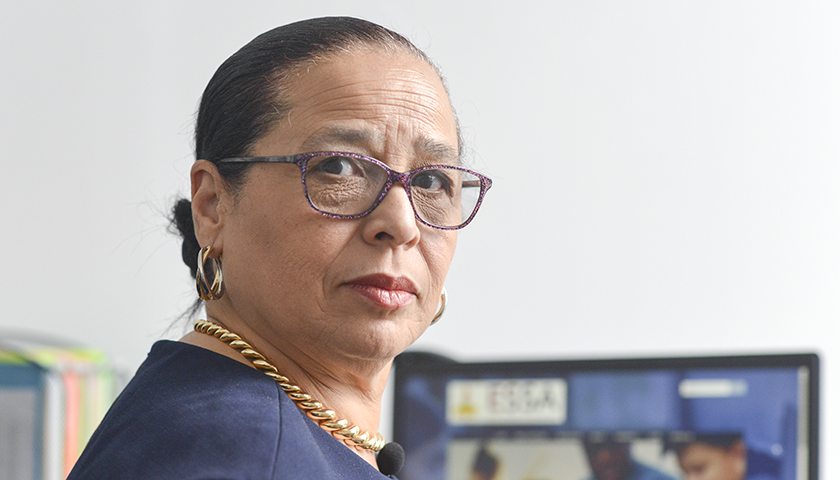
Dr. Elizabeth Primas is an educator, who spent more than 40 years working towards improving education for children of diverse ethnicities and backgrounds. Dr. Primas is the program manager for the NNPA’s Every Student Succeeds Act Public Awareness Campaign. Follow Dr. Primas on Twitter @ElizabethPrima3.
It seems pretty likely that the Trump administration will revise or rescind an Obama-era directive intended to address racial disparities in school disciplinary actions. The “Dear Colleague” letter in question, issued by the U.S. Departments of Education and Justice in 2014, has been the subject of much debate of late. It stated that school districts could be investigated and found guilty of violating students’ civil rights when doling out punishments, even if the discipline policies were race-neutral and implemented in even-handed ways (in other words, even if there was no evidence of discriminatory treatment of students).
Yet, the latest federal discipline data, released earlier this month, show that African-American students continue to be disciplined at higher rates than white students. While U.S. Secretary of Education Betsy DeVos held roundtable meetings with lawmakers in April to hear debates about the guidance from both sides, there is no timeline for the administration’s final decision.
But school discipline reform did not begin with President Barack Obama, and it won’t end with President Donald Trump. Efforts for change have been gaining steam for years, which legislatures and school boards have increasingly codified into laws and practices at state and local levels.
Read the entire article here. May require a subscription to Education Week.
U.S. Secretary of Education Betsy DeVos, who has had difficulty selling her school choice agenda in Washington, railed against state constitutional prohibitions on public funds going to faith-based institutions, in a recent speech to a Roman Catholic organization.
The target of DeVos’ wrath: so-called “Blaine” amendments to state constitutions that prohibit public funds from being used for religious purposes. DeVos said those amendments, many of which originated in the late 1800s, began as “bigoted” against Catholics.
“These Blaine provisions prohibit taxpayer funding of ‘sectarian’—a euphemism at that time for ‘Catholic’—activities, even when they serve the public good,” DeVos said, according to prepared remarks of the speech to the Alfred E. Smith Foundation, which is affiliated with the Archdiocese of New York. “Activities like addiction recovery, hospice care, or—the amendments’ primary target—parochial education.”


 June 5, 2018


 Friday, June 1, 2018

 By Dr. Elizabeth Primas