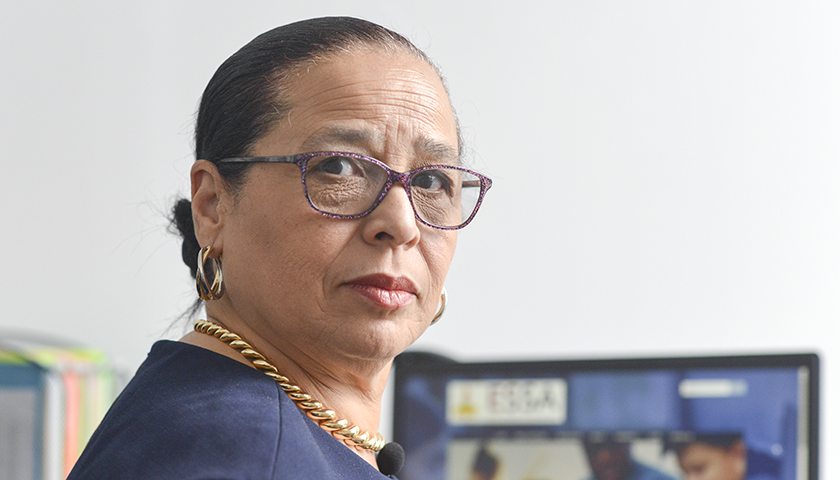
NEW YORK – The Harlem-based media arts organization Black Public Media (BPM) has been awarded an Art Works grant of $40,000 by the National Endowment for the Arts (NEA). The allocation, one of more than $80 million in approved grants by National Endowment for the Arts Chairman Jane Chu as part of the NEA’s second major funding announcement for fiscal year 2018, will help fund BPM’s signature public television series, AfroPoP: The Ultimate Cultural Exchange.
Art Works is the NEA’s largest funding category and supports projects that focus on the creation of art that meets the highest standards of excellence, public engagement with diverse and excellent art, lifelong learning in the arts and/or the strengthening of communities through the arts.
“The variety and quality of these projects speaks to the wealth of creativity and diversity in our country,” said Chu. “Through the work of organizations such as Black Public Media in New York, NEA funding invests in local communities, helping people celebrate the arts wherever they are.”
“NEA’s support for the AfroPoP series reinforces our belief that authentic stories about the African Diaspora are important to keeping the American public informed and engaged about diversity of the African-American and global African experience,” said BPM Executive Director Leslie Fields-Cruz.
For 10 years AfroPoP: The Ultimate Cultural Exchange has been bringing stories about people of African descent around the world to television. Produced by Black Public Media and distributed by American Public Television (APT), AfroPoP is the nation’s only public television series of documentaries on contemporary life, art and culture across the African Diaspora.
Hosts of the series have included Idris Elba, Anika Noni Rose, Gabourey Sidibe, Wyatt Cenac, Anthony Mackie, Yaya DaCosta, Jussie Smollett, Nikki Beharie and Nicholas L. Ashe.
For more information on projects included in the NEA grant announcement, visit arts.gov/news. For more information on Black Public Media, visit www.blackpublicmedia.org, or follow it on Twitter @BLKPublicMedia or on Facebook.
About Black Public Media:
Black Public Media (BPM), formerly the National Black Programming Consortium (NBPC), is committed to enriching our democracy by educating, enlightening, empowering and engaging the American public. The nonprofit supports diverse voices by developing, producing and distributing innovative media about the Black experience and by investing in visionary content makers. BPM provides quality content for public media outlets, including, among others, PBS and PBS.org and BlackPublicMedia.org, as well as other platforms, while training and mentoring the next generation of Black filmmakers. Founded in 1979, BPM produces the AfroPoP: The Ultimate Cultural Exchange documentary series and manages the 360 Incubator + Fund, a funding and training initiative designed to accelerate the production of important Black serial and interactive content.
About The National Endowment For The Arts:
Established by Congress in 1965, the National Endowment for the Arts (NEA) is the independent federal agency whose funding and support gives Americans the opportunity to participate in the arts, exercise their imaginations, and develop their creative capacities. Through partnerships with state arts agencies, local leaders, other federal agencies, and the philanthropic sector, the NEA supports arts learning, affirms and celebrates America’s rich and diverse cultural heritage, and extends its work to promote equal access to the arts in every community across America.
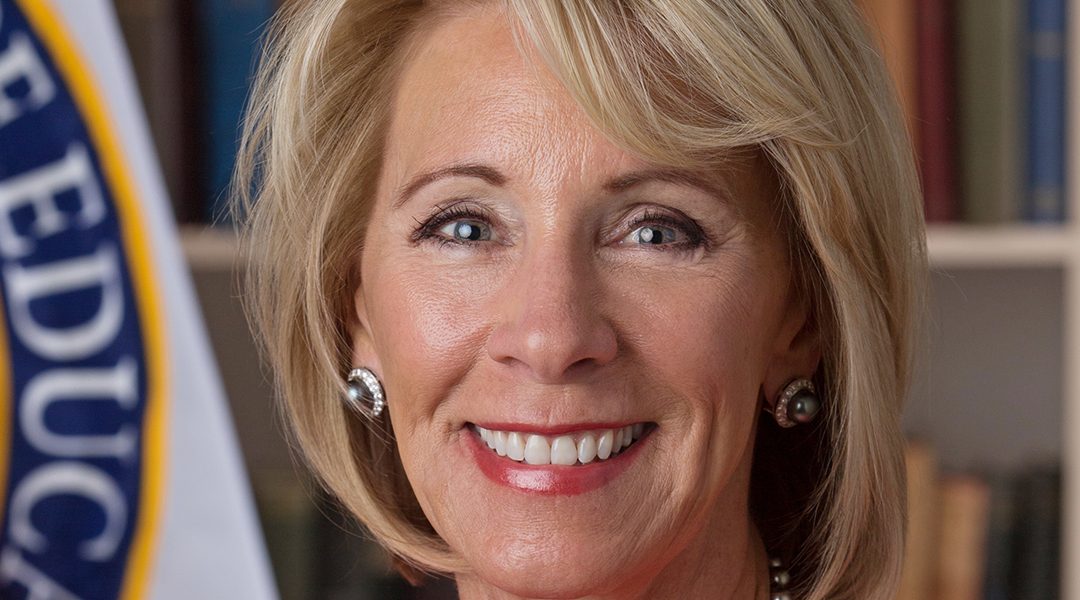
Washington (CNN) Education Secretary Betsy DeVos on Tuesday addressed the deadly shooting at Santa Fe High School in Texas, telling House lawmakers the shooting “was only the most recent, devastating reminder that our nation must come together to address the underlying issues that create a culture of violence.”
“Our commitment to every student’s success is one we must renew every day, but first we must ensure our children are safe at school,” she said.
DeVos also said the school safety commission she oversees, which was created in the wake of the Parkland, Florida, shooting earlier this year, “looks forward to delivering best practices and findings by year’s end” and gave lawmakers some details of the group’s most recent meeting last week. She described that meeting as “one of the first broader listening sessions” and said members heard from parents of students that had been killed in school shootings.
She stressed that the “primary responsibility for the physical security of schools rests with states and local communities, and made no mention of gun measures or reforms.
Betsy DeVos pushes back against criticism over “60 Minutes” interview, March 12, 2018
DeVos’s Capitol Hill testimony Tuesday marked her fifth time testifying before congressional lawmakers and comes on the heels of a trip to New York in which she was criticized for not visiting any public schools. Instead, DeVos toured two Orthodox Jewish schools and spoke in support of public funding for religious schools.
While DeVos was questioned by several lawmakers about school safety in the wake of another deadly shooting, the issue was not the overwhelming focus of the broad hearing. DeVos took questions on a wide variety of topics including her response to teacher walkouts across the nation, the agency’s Office for Civil Rights and her commitment to the rights of LGBTQ students.
She was pressed by Virginia Rep. Bobby Scott — the committee’s top Democrat — over whether she had approved state education plans that violate the law. Scott repeatedly pressed DeVos on plans where school grades don’t include subgroup performance, suggesting that allowed states to ignore disadvantaged groups.
“All of the plans that I have approved follow what the law requires and it will, we will continue to do so,” DeVos said.
“How do you address an achievement gap if subgroup performance isn’t addressed,” Scott asked DeVos.
At one point during the hearing Florida Democratic Rep. Frederica Wilson asked DeVos if she was aware she was “resegregating” the nation’s schools by expanding school choice programs, and in turn, transferring federal funds away from public schools.
New Mexico’s Public Education Department is working on a plan to implement the Every Student Succeeds Act, and held the last of a series of regional meetings Tuesday in Las Cruces to get input from various stakeholders.
New Mexico First helped facilitate regional meetings for New Mexico’s Public Education Department. Pamela Blackwell, Economic Policy Director for New Mexico First says town halls are important to hear from stakeholders.
“They are meant to solicit input from the public,” Blackwell said. “Teachers, administrators, parents, families, business leaders, on how to best implement the Every Student Succeeds Act, and what we can do to implement that for each community.”
David Morales, a Las Cruces Teacher and New Mexico’s 2016 Teacher of the Year everyone in the community should have a voice.
“I think this is an important first step,” Morales said. “I think if the Public Education Department takes this and back and listens to all the contributors, I think they can see a good swath of who their stakeholders are.”
As a teacher, Morales wants to see more time spent finding innovative ways to educate.
“I’d like to see teachers have a little bit more autonomy,” Morales said. “And also have a little more time to plan and collaborate with their peers, so that we can develop fuller more richer lessons for our kids.”
Teresa Tenorio says she’d like to see better communication with parents, and had trouble finding information for this meeting.
“I feel like the information isn’t mainstreamed,” Tenorio said. “It’s difficult to access, they wanted us to register, and when I did it didn’t show up. I think that’s very intimidating to parents.”
Tenorio says she’s also concerned about the amount of testing her young daughter has to take.
“As the parent of a first grader,” Tenorio said. “They’re already starting testing in grades K-3, and that a lot of parents don’t even know how often that it, and that it’s become a culture that probably turns the kids off to what they’re real interests are.”
Pamela Blackwell with New Mexico First says they’ve heard many similar concerns across the state.
“There are a lot of similar concerns,” Blackwell said. “As far as teacher evaluations, and how those are communicated, and how to best use those to inform instruction. That’s a huge piece. Also, parents and student support, how to help further engage parents in the education process and how to help guide their students. Also coursework, there has been more of an emphasis in these meeting on vocational education, as a key to student success.”
Blackwell says in addition to concerns they also heard innovative solutions.
In a Mobile, Ala., elementary school, students regularly don hard hats, goggles, and lab coats to conduct science experiments. They design ramps for toy cars, observe the process of chicks hatching in an incubator, and build beaver dams by using materials from nature and design.
“I don’t want them to pretend to be scientists,” said Julie Neidhardt, the instructor and founder of the Nurturing Engineering, Science, and Technology (N.E.S.T) lab at Hutchens Elementary School, which serves grades pre-K-2. “I talk to them like they are scientists.”
That sort of inquiry-based, hands-on instruction in science, technology, engineering, and mathematics is rare in elementary grades, experts say—despite the fact that young children can be sponges for the kind of information taught in those subjects.
STEM Education: Opening Gateways to Learning & Careers
“Young kids are, all on their own, completely committed to being excited and interested in STEM topics,” said David Evans, the executive director of the National Science Teachers Association. “The sad thing is, if there isn’t good support in schools, they lose that by the time they get to middle school.”
By Dr. Elizabeth Primas, Program Manager, NNPA/ESSA Public Awareness Campaign
When the best educators in America traveled to Washington, D.C. for a series of events celebrating innovation in the classroom and to share best practices in K-12 education, they let officials at the Department of Education and the White House know exactly how they felt about the Trump Administration’s current push for school choice programs.
According to edchoice.org, school choice programs allow, “public education funds to follow students to the schools or services that best fit their needs—whether that’s to a public school, private school, charter school, home school.”
In April 2018, the Department of Education (ED) hosted the “Honoring Martin Luther King Jr.’s Drum Major Legacy: Innovative Pathways to Success” celebration; the event was sponsored by the White House Initiative on Educational Excellence for African Americans in collaboration with the Center for Faith-Based and Neighborhood Partnerships.
The Education Department’s MLK Legacy event honored individuals who perform extraordinary acts of service in their communities, specifically those individuals who support high-quality education for children of color. Many of the awardees work with parents or community groups that provide primary care for children; some even provide educational support services outside of the traditional public school model.
School choice became a hot topic during the event, as several attendees were visibly disgruntled at the mention of the controversial approach.
The Trump Administration has proposed to decrease funding to authorized investments for public schools while increasing funding opportunities for school choice programs and private school vouchers. Ninety percent of children in America attend public schools. Increased funding to school choice programs, while reducing funding to public schools is a strategy that leaves behind our most vulnerable students.
Secretary of Education Betsy DeVos has repeatedly said that she’s committed to uphold the intentions of the Every Student Succeeds Act (ESSA), the education law signed by President Barack Obama. However, the prioritization of school choice programs in the proposed FY2019 budget contradicts one of the original intentions of the law: to promote equity and increase access to high-quality education for all students. Furthermore, prioritization of school choice isolates homeless children, migrant children, youth in foster care and children from military families. In fact, ESSA requires that school districts report student outcomes for these groups for the very first time.
The 2018 Teacher of the Year awardees echoed similar concerns during their annual White House visit in April. The top teachers in the country reported that they did not approve of funding private schools at the expense of their most vulnerable, at-risk students.
Every child should be entitled to high-quality education in the United States of America. Every neighborhood school should be equipped to provide high-quality courses and curriculum. Every student should have highly-qualified teachers and a menu of extra-curricular activities to choose from. Until the administration prioritizes the equitable improvement of all schools, their verbal commitment to uphold the original intent of ESSA is just another “alternative fact.”
Learn more about the Every Student Succeeds Act at nnpa.org/essa.
House Democrats and Secretary of Education Betsy DeVos sparred over civil rights, the Every Student Succeeds Act, and teachers’ salaries at a hearing Tuesday, but lawmakers from both parties largely avoided controversial questions about school safety in the aftermath of a Texas high school shooting last week that left 10 students and staff dead.
Appearing before the House education committee, DeVos emphasized that the federal school safety commission she leads is working quickly, and that its ultimate goal is to ensure that schools “have the tools to be able to make the right decisions to protect their own buildings and their own communities.”
She said the commission was developing a timeline for its work, but also said that she planned to have the commission report its findings by year’s end.
“We are looking forward to [hearing from] every interest group, every constituency, particularly teachers, parents, and law enforcement and school leadership,” DeVos told lawmakers, later adding that, “We seek to look at models across the country.”
The commission has only met once since it was created in March after the deadly school shooting in Parkland, Fla., although the secretary met last week with school safety researchers, as well as parents of children killed in school shootings. Its other members are Secretary of Health and Human Services Alex Azar, Secretary of Homeland Security Kirstjen Nielsen, and Attorney General Jeff Sessions. DeVos previously has said that schools should be able to decide if they want to provide staff with firearms to improve safety, but did not share detailed personal opinions on school safety in general with the committee…
Read the full article here: May require an Education Week subscription.
Source: Education Week Politics K-12. May require Education Week subscription.
The secretary will speak to lawmakers on the House education committee about the “policies and priorities” of the U.S. Department of Education. Compared to her predecessors, DeVos hasn’t been on Capitol Hill a lot during her roughly 16 months as education secretary, at least in terms of public appearances: She’s testified before spending committies three times, and once to the Senate education committee for her rocky confirmation hearing in January 2017. Tuesday’s hearing would be the first time she’s testified before the House committee that deals with K-12 issues.
DeVos has met privately a few times recently with lawmakers on Capitol Hill. But education committee lawmakers haven’t had the chance to ask DeVos detailed questions in public about her track record. In fact, on Friday, House committee Democrats sent out a fact sheet pointing out that her predecessors spent significantly more time testifying to Congress over comparable periods of time. In former Secretary Arne Duncan’s first 15 months, for example, he testified to Congress nine times.
With a big House election in November coming up, Dems on Tuesday might be particularly eager to trip DeVos up during her testimony and spin what they see as embarassing sound bites into campaign ads.
So what might lawmakers ask DeVos? Democrats in particular will have pointed questions for her in the name of opposition party oversight; here are a few prominent items that might come up…
Read the full article here: May require an Education Week subscription.
By Lynette Monroe (Program Assistant, NNPA ESSA Public Awareness Campaign)
Salome Thomas-EL, a charter school principal and award-winning national education expert, captivated an audience of over 500 educators with his keynote address on overcoming barriers to success at the 2018 National Title I Conference in Philadelphia, Penn.
Title I schools are characterized by the additional funds they receive to meet the needs of their most vulnerable students. Title I funding provisions are designed to improve the academic achievement of the disadvantaged and to ensure that all children have a fair, equal, and significant opportunity to obtain a high-quality education. The National Title I Conference engaged educators at all levels around the relationship between cultural competence and best academic practices.
Principal EL leads Thomas Edison Charter School, a tuition-free, public charter school in Wilmington, Del. According to the school’s website, more than 95 percent of students that attend Thomas Edison live at, or below the poverty level.
Principal EL shared the story of the Thomas Edison Charter School chess team that competed and won the United States Chess Federation (USCF) National Elementary Chess Championship in Dallas, Texas on Sunday, May 11, 2014.
Edison was the only school from Delaware competing in the National Tournament, but persevered to bring home Delaware’s first National Scholastic Chess Championship, the school’s website said.
“Thomas Edison is the home of one of the most-fierce, all-female chess teams in the nation,” the school’s website said. “They have won the Mid-Atlantic All-Girls Chess Championship three of the past four years.”
Principal EL left the crowd with four C’s (Crazy, Curious, Consistent and Culture of Love) that he has used to overcome barriers to success in the classroom:
Crazy—Every child deserves to have at least one person be crazy about them.
Curious—It is not enough for educators to care about their students; they must be curious about their lives outside of school, as well.
Consistent—Often times vulnerable youth grow accustomed to inconsistencies from adults in their lives. Principle EL challenges educators to stay consistent, despite the challenges that may occur.
Culture of Love—Sometimes the children who need love the most, ask in the most unloving ways. Principal EL also challenges educators to create a culture of love for all students.
Similar stories of triumph were shared from educators from all over the country, highlighting why diversity and representation in teaching is so important.
Dr. Tommy A. Watson, the principal of Palmer Lake Elementary School in Brookland Park Minn., grew up in Denver, Colo. As a child, both of his parents were addicted to heroin and were professional shoplifters. He also spent a lot of time in foster care and was homeless as a senior in high school. Today, Dr. Watson travels the country sharing his story with at-risk youth, leaving behind a message of hope.
“When I went off to college, my mother was in prison, my father was in prison and my older brother was in prison. My older sister was back in Denver on drugs…I really saw education as my only way out,” Dr. Watson explained, as he detailed his motivation to share the power of education in his life.
Dr. Robert Kirton, the CEO for DNA Educational Solutions and Support also talked about his personal experiences as an adolescent and how he uses those experiences to shape the education policies that he advocates for.
[/media-credit] Dr. Robert Kirton, the CEO for DNA Educational Solutions and Support delivers remarks during the 2018 National Title I Conference in Philadelphia, Penn. (Travis Riddick/NNPA)
“My thing is going from risk to resiliency. I started off pretty sluggish. I got in trouble all the time while in school. I got a young lady pregnant, while in high school,” Dr. Kirton said. “She left me with the baby; she didn’t see him again until we both graduated from college. He graduated with his bachelor’s and I graduated with my doctorate.”
According to Dr. Kirton’s biography, the educator has a documented success that includes a cumulative graduation rate above 95 percent.
Dr. Kirton’s personal story of risk to resiliency supports his educational approach. His straight-forward, disciplined strategy focuses on ensuring students feel safe and understand the connection between their actions and consequences. His method to “suspend students to school” is a refreshing approach in an educational system that disproportionately suspends and expels Black children.
When asked about the importance of parental engagement, Dr. Kirton answered, “I engage parents as partners…[you have to] bring them into the fold and make them apart of the team.”
Dr. Kirton continued: “When parent participation is not an option, I find a parent-like figure to fulfill that crucial part.”
Learn more about the Every Student Succeeds Act and the importance of diversity and inclusion in teaching at nnpa.org/essa.
Lynette Monroe is the program assistant for the NNPA’s Every Student Succeeds Act Public Awareness Campaign and a master’s student at Howard University. Lynette’s research areas are public policy and national development. Follow Lynette on Twitter @_monroedoctrine.
“It was a great feeling watching the returns come in!” said Jonas Knotts, a high school teacher and president of the Webster County Education Association, an affiliate of the West Virginia Education Association (WVEA). “People and educators are really starting to see the power that they possess. We have a voting bloc that, if we turn out to the polls, can outvote anybody. Teachers are realizing this. It’s something that fills us with a very empowering feeling.”
Early this spring, WVEA members kicked off what NEA President Lily Eskelsen García has called an “education spring” with a statewide, nine-day strike that brought red-shirted educators from every one of the state’s 55 counties to the state Capitol.
Their massive show of solidarity, which ended with significant pay raises for all public workers, including teachers and education support professionals, and the establishment of a state task force to address public-worker health insurance, inspired educators across the nation and has been followed by statewide educator walkouts in Oklahoma, Arizona, and Kentucky, and huge Capitol demonstrations in Colorado and North Carolina.
Now, WVEA members are modeling what happens next: They’re taking their energy and passion for public education to the ballot box. In this May’s primary races, WVEA endorsed 115 pro-public school candidates for U.S. Senate, U.S. House, and the state’s House of Delegates and Senate. Of those, 99 candidates—or nearly 90 percent—won. One state lawmaker who had called union members “free riders” was shown the door.
This is exactly what public-school educators across the nation have promised to do in the mid-term elections this November. With this latest show of union strength, WVEA members have shown how it can be done—and how good it feels.
“This election was a huge vindication for the power of the movement because, of course, the opposition was saying ‘they’re going to forget, they’re going to stay home,’” said Knotts. “But we know it’s only one victory in a long war. We have to keep up those conversations, we have to keep people engaged, we have to show them how we’re working to improve everybody’s status—from teachers to support personnel to students to communities…”





 In a Mobile, Ala., elementary school, students regularly don hard hats, goggles, and lab coats to conduct science experiments. They design ramps for toy cars, observe the process of chicks hatching in an incubator, and build beaver dams by using materials from nature and design.