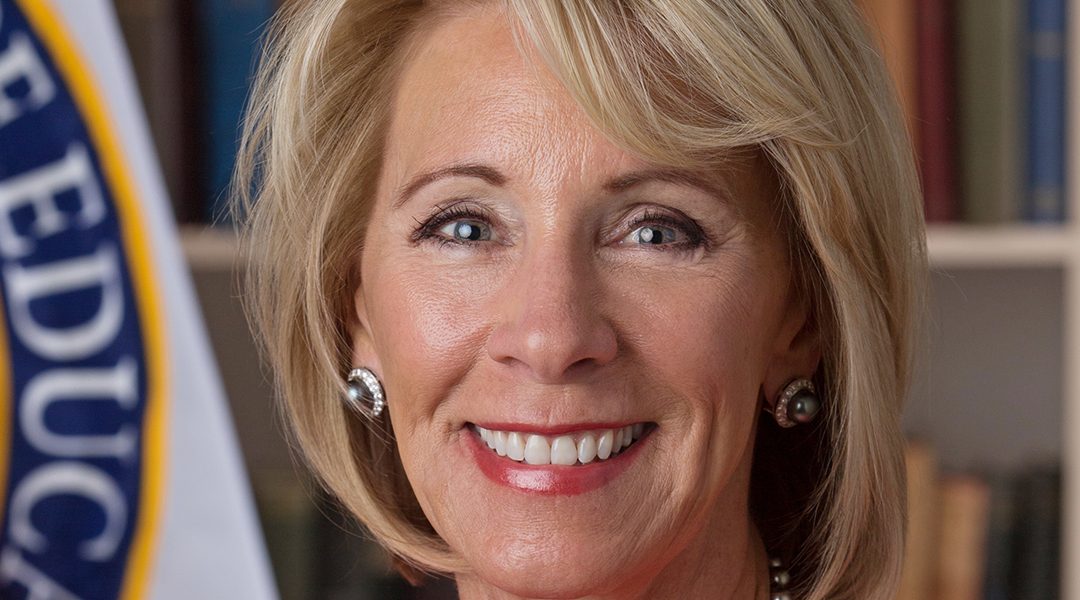
The Arizona State University and Phoenix Seminary graduate has been on that mission since she gave birth to a son, years ago.
Her prayer, she said, is that she’ll be a “radiant light in dark spaces” who leaves a legacy of hope, peace and love.
Wood and other parents in the Phoenix area’s Black Mothers Forum are seen as game-changers in the fight for education equality for Black children.
Led by Wood, who has served as a pastor in a women’s prison and as Chief of Staff for the Phoenix City Council, the group has taken the Every Student Succeeds Act (ESSA), the education law passed during the Obama Administration, very seriously. The Black parents’ group is using ESSA to leverage their awareness and involvement in their children’s education and to ensure that African American students excel in the public school system.
“We, as Black mothers, have come together to collectively address the concerns that we have with our Black sons and daughters being pushed out of their schools at an alarmingly higher rate than their White peers all over the nation,” Wood said.
The mission of the Black Mothers Forum, Wood explained, is to educate parents on their rights with respect to student discipline and a culturally-inclusive curriculum, while also getting organized through focus groups that allow members of the forum to execute a course of action to effectively make structural changes.
“We do this by meeting multiple times a month and having various experts come in from various organizations to educate and train our mothers on knowing their rights, sharing a culturally-integrated curriculum and learning [the signs and symptoms] of any mental health challenges our children may be experiencing,” Wood said.
For instance, the group has entered partnerships with the ACLU’s Demand 2 Learn program, Arizona State University’s Center for the Study of Race and Democracy, and other initiatives.
Members of the Black Mothers Forum, also completed a 13-week course on Black history to help develop a deeper understanding of their ancestors so that they could properly inform their children.
“We attend high school and grade school district board meetings regularly and address the disproportionate suspensions and dismissals of our students of color for minor infractions,” said Gwendolyn Payton, a Black Mothers Forum member, who also serves in the Equality division of the organization. “As a result of speaking out, schools are contacting us to come on campus and be visible and interact with our students of color. We challenge the schools to include more culturally diverse curriculum and activities and to hire more teachers and principals of color.”
In February, when a Black Phoenix charter school student was pulled out of school after officials claimed the boy’s hair braids violated school policy, the Black Mothers Forum sprang into action to defend the youth causing the district to issue a mea culpa and welcome the child back to school.
“The dress code at the school was specifically created as another means of targeting and harassing our Black children,” Wood said.
But, it’s just one reason why the group must encourage Black mothers to attend school board meetings and request study sessions be conducted publicly to address the disproportionate disciplinary practices with respect to Black children, Wood said.
“When we show up in large numbers to address an issue we have seen positive results,” Wood said. “We have found that in order to dismantle the school to prison pipeline it starts with us focusing in on ensuring our children are in safe and supportive learning environments and that means we need to address the punitive disciplinary actions administered by implicitly biased school administers and teachers.”
Wood continued: “We strongly believe that, as parents, we have the power to change the current school system when we collectively communicate the same message.”
According to Wood, that message is simple:
“We, as Black mothers, will no longer remain silent while our children are blatantly disrespected, threatened, harassed, intimidated, provoked, neglected and set up to fail through policies, disciplinary practices, curriculum, regulations and/or laws deeply rooted in racial stereotypes.”
U.S. Secretary of Education Betsy DeVos has given the thumbs up to two more state Every Student Succeeds Act plans: Alaska and Iowa.
That brings the total number of states with approved plans to 44, plus the District of Columbia and Puerto Rico. Still waiting for the OK: California, Florida, Nebraska, North Carolina, Oklahoma, and Utah.
Alaska is working local interim tests into its accountability system, as a measure of school quality or student success for elementary schools. The state will also consider chronic absenteeism and literacy by 3rd grade. High schools will be measured on chronic absenteeism, “on track” freshmen, and how many students are eligible for “Alaska Performance Scholarships,” which are based on GPA, completion of a certain curriculum, and achieving a certain score on tests such as the ACT. The state also makes it clear it can’t ‘”coerce” a parent to make a child take standardized tests…
Read the full article here: May require an Education Week subscription.
One of the biggest changes in the Every Student Succeeds Act is that states and districts get to come up with their own school improvement ideas, as long as they are backed by evidence.
Here’s how that works: Schools that get Title I money that’s been specifically set aside for school improvement have to come up with a plan with at least one component that has at least one well-designed “correlational study” to back it up. Ideally, the law encourages districts and states to push schools toward ideas that have at least one strong randomized control trial behind it. (A randomized control trail is considered a better test of a strategy than a correlational study, researchers say.)
So what about schools that have been flagged as low-performing but aren’t getting school improvement funds? Schools don’t have to choose a strategy with a particular study to back it up, but they do need to come up with a plan that has a rationale behind it, and then carefully study the results.
So how should states go about that? Results for America, a research organization, and Chiefs for Change, an advocacy organization for state and district officials, have some thoughts and recommendation, outlined in a new report released Thursday…
Read the full article here: May require an Education Week subscription.
In a heated primary battle between two prominent supporters of school choice on Capitol Hill, a third candidate stepped in and beat them.
Indiana GOP Reps. Luke Messer and Todd Rokita lost in a three-way race for the GOP nomination to run for Indiana’s U.S. Senate seat to Mike Braun, a businessman. Braun will be the Republican nominee against Sen. Joe Donnelly, D-Ind., in the November Senate election. He captured 41.2 percent of the vote on Tuesday with 99 percent of precincts reporting, with Rokita getting 30 percent and Messer earning 28.9 percent.
On the section of his campaign website covering his main positions, Braun did not highlight education, although he does advocate for less government spending. His campaign did not respond to a request for comment about his positions on K-12 issues.
We profiled the potential face-off between Messer and Rokita last summer, before either had officially declared their candidacy for the GOP nomination. The two have been rivals for some time, and traded personal accusations as they sought the nomination, which may have created an opening for Braun to step in and win the primary…
Read the full article here: May require an Education Week Subscription.
By Lynette Monroe (Program Assistant, NNPA ESSA Public Awareness Campaign)
Dr. Tiffany G. Tyler is the president and CEO of Communities in Schools (CIS) Nevada. CIS creates school-based strategies for improving the academic outcomes of students by addressing their basic needs. This work centers on helping school leaders understand the needs of their school populations apart from over-simplified ethnic and income categories.
As a former high school dropout, Dr. Tyler used the motivation from the birth of her first son (she said she didn’t want her son to “have a dropout as a mom.”) to propel her to the highest levels of academia, as an education psychologist. While studying for her dissertation, she happened upon a report detailing circumstances that contribute to student dropouts, as well as preventative practices that retain enrollment. She uses her experiences as a former beneficiary of many of the services she now provides to inform her role as chief Advocate.
“Having the benefit of people, over the course of my return to school, who not only encouraged me to continue my education, but helped in many ways, I now have the opportunity to pay it forward every day,” Dr. Tyler said, speaking of her daily motivation to make a difference.
Dr. Tyler said that her primary responsibility is to shepherd the vision and mission of the organization: to provide children with the resources and support they need to not only graduate, but to lead a successful life. Communities in Schools operates in South Nevada, encompassing 50 schools in the Las Vegas metropolitan area, Marshall County, and Elko County. An impressive 66,720 K-12 students benefit from the integrated services provided by CIS, yet the need still outweighs access to resources.
Dr. Tyler believes in the power of the work, but also in the power of action. In order to really move the needle on reducing dropout rates she believes we need everyone at the table; not only to discuss the challenges faced, but to also develop a course of action for moving forward. Dr. Tyler is consistently looking to partner with stakeholders and other like-minded organizations to bring more assets to schools. She serves as the co-chair of the Juvenile Justice Services Citizens Advisory Committee in Clark County and maintains board memberships on a number of organizations in the community.
The Every Student Succeeds Act, memorializes integrated support services as a successful practice and allows federal use of resources to be leveraged to provide more resources to communities. For the first time in federal education policy, integrated support services are explicitly noted as an allowable intervention for funding and noted as a strategy that districts and states can employ or use to turn around underperforming schools. ESSA recognizes that family and student support play a key role in improving academic outcomes for students.
Dr. Tyler encourages educators to uphold principles like equity, social justice, and community that transcend any one administration. Principles such as these are at the core of legislation like ESSA. Furthermore, parent engagement is a crucial part in ensuring student success.
Parents should see themselves as partners. Parents should show up and share their vision for their children; what they see as their child’s strengths and how they would like to partner in assisting with their challenges. Parents should advocate for what they perceive are their needs.
Dr. Tyler charges parents to get informed about the policies that directly impact their household and remain consistent in their engagement to ensure staff accountability.
Learn more about the Every Student Succeeds Act at www.nnpa.org/essa.
Lynette Monroe is the program assistant for the NNPA’s Every Student Succeeds Act Public Awareness Campaign and a master’s student at Howard University. Her research areas are public policy and national development. Follow Lynette on Twitter @_monroedoctrine.
New federal data on bullying, discipline, and school safety should prompt tough questions about why certain groups of students are unfairly singled out. Could it also prevent Education Secretary Betsy DeVos from rescinding Obama-era guidance on school discipline? Today’s Federal Flash addresses that question, highlights new people taking over top positions at the U.S. Department of Education, and covers interesting comments on education coming from top Republicans on Capitol Hill.
On Tuesday the U.S. Department of Education released the 2015-2016 Civil Right Data Collection or CRDC, a biennial snap shot of data on bullying, discipline, and school safety among other items.
The data shows that black students and students with disabilities are suspended and arrested far more often than their peers. Given the information, many are hoping this will prevent the department from rescinding Obama-era guidance on school discipline that was designed to address those problems.
The data also confirms racial disparities across students when it comes to success in science, technology, engineering and math courses. For example, 85 percent of white eighth graders who were enrolled in Algebra I passed the course, compared to only 72 percent of Latino students and 65 percent of black students. Among Native American students and students of two or more races, fewer than 50 percent passed the course.
The data also show that high schools with high percentages of black and Latino students are less likely to offer advanced math and science courses like calculus, physics, chemistry and advanced math.
In other news from the Education Department, several empty positions have been filled. On April 18, the Senate confirmed Carlos Muñiz to serve as the Education Department’s top lawyer.
In his role as General Counsel, Muñiz will be charged with tackling some of the stickiest legal issues confronting the Department including determining whether states are complying with the Every Student Succeeds Act (ESSA), deciding whether to rescind the school discipline guidance mentioned earlier, and laying out new rules for colleges handling allegations of sexual assault on campuses under Title IX.
U.S. Secretary of Education Betsy DeVos is a big cheerleader for school choice. And way before she came into office, states around the country were adopting tax-credit scholarships, education savings accounts, and more.
So has all that translated into a big bonanza for school choice in states’ Every Student Succeeds Act plans? Not really.
To be sure, ESSA isn’t a school choice law. School choice fans in Congress weren’t able to persuade their colleagues to include Title I portability in the law, which would have allowed federal funding to follow students to the public school of their choice.
However, the law does has some limited avenues for states to champion various types of school choice options. But only a handful of states are taking advantage of those opportunities, according to reviews of the plans by Education Week and the National Alliance for Public Charter Schools.
School Improvement: At least 12 states say they want schools that are perennially low-performing to consider reopening as charter schools to boost student achievement. Those states are Arizona, Florida, Georgia, Indiana, Louisiana, Minnesota, New Mexico, Nevada, Rhode Island, Tennessee, Texas, and Utah.
Read the full article here: May require an Education Week subscription.
The U.S. Department of Education has started informing a small group of states that they will have to make changes to the way they test students with severe cognitive disabilities, because of accountability changes brought about by the Every Student Succeeds Act.
Federal law permits students with the most severe cognitive disabilities to take an alternate assessment aligned to alternate achievement standards. Under the No Child Left Behind Act, the predecessor to the Every Student Succeeds Act, that assessment could be in the form of a portfolio, or collection of student work. But ESSA states that student assessments for accountability can only “be partially delivered in the form of portfolios, projects, or extended performance tasks,” meaning that states relying solely on portfolios have to make a change.
Officials at the U.S. Department of Education said that only a few state education agencies are expected to be affected by the requirement, and that so far, Georgia and Puerto Rico have been notified that they will have to change their testing procedures.
Allison Timberlake, Georgia’s deputy superintendent for assessment and accountability, said the state is reviewing the law and regulations but doesn’t anticipate a problem. The state is developing a new alternate assessment that will require students to perform standardized tasks, rather than relying solely on teachers collecting evidence of student performance.
“As we develop the new alternate assessment, we will review it to ensure it meets all federal requirements,” Timberlake said…
Read the full article here: May require an Education Week Subscription.
The selection of Johnny Collett, confirmed in December to oversee special education for the U.S. Department of Education, was a rare point of agreement between the Trump administration and the disability-advocacy community.
U.S. Secretary of Education Betsy DeVos was tripped up on disability-policy questions during her confirmation hearing last year, and her staunch support of school choice options has left some advocates worried that parents may not understand that choosing private schools means losing the rights guaranteed under the Individuals with Disabilities Education Act.
But Collett’s special education bona fides were not in question: A former special education teacher, he has served as a special education director for Kentucky and was the director of special education outcomes for the Council of Chief State School Officers.
Four months into his tenure, Collett, the assistant secretary for the office of special education and rehabilitative sevices, is trying to position the department as a supportive partner to states.
In an interview with Education Week, Collett discussed a wide range of issues involving special education responsibilities, including the Education Department’s oversight of the Every Student Succeeds Act; discipline and discrimination; school choice and students with disabilities; and the department’s leadership role.
He talked about the complex interplay special educators face between complying with federal law, supporting high expectations for all children, and recognizing each student’s individual educational needs.
Collett’s comments have been edited for space and clarity…
Read the full article here: May require an Education Week subscription.
The Every Student Succeeds Act is supposed to bring about a big change in school improvement. The law says states and districts can use any kind of interventions they want in low-performing schools, as long as they have evidence to back them up.
But the provision has some experts worried. They’re concerned that there just aren’t enough strategies with a big research base behind them for schools to choose from. These experts also worried that district officials may not have the capacity or expertise to figure out which interventions will actually work.
Districts, they’ve said, may end up doing the same things they have before, and may end up getting the same results.
“My guess is, you’ll see a lot of people doing the things they were already doing,” said Terra Wallin, who worked as a career staffer at the federal Education Department on school turnaround issues and is now a consultant with Education First, a policy organization that is working with states on ESSA implementation. “You’ll see a lot of providers approaching schools or districts to say, ‘Look, we meet the evidence standard,'” Wallin said…
Read the full article here: May require an Education Week subscription.



 U.S. Secretary of Education Betsy DeVos has given the thumbs up to two more state Every Student Succeeds Act plans: Alaska and Iowa.


 https://youtu.be/YF3zO2shiQc