
by NNPA ESSA | Oct 25, 2017 | District of Columbia, ESSA, Every Student Succeeds Act, Every Student Succeeds Act (ESSA), Iowa, K12 Education, New Hampshire, New Mexico, New York, No Child Left Behind, Ohio
Law gives flexibility on subgroup reports
As unpopular as No Child Left Behind was by the time it was ushered off the stage in 2015, advocates for students with disabilities could always point to one aspect of the law that they liked: by requiring that test scores of different student groups be reported separately, the law exposed the low academic performance of students in special education and required schools to do something about it.
The replacement for NCLB, the Every Student Succeeds Act, still requires that the academic performance of students with disabilities be reported, along with other student subgroups.
But the law trades federal mandates for state flexibility on what should happen to a school whose students with disabilities are consistently lagging their peers.
States and some lawmakers have cheered the end of what they call federal overreach. But some advocates worry that the accountability goals states have set for themselves won’t move the needle for a group of students who have long struggled with low achievement. At worst, they worry, states can create rules that allow the performance of students with disabilities to again be obscured by the relatively higher test scores of the general student population.
Lower Goals
“A lot of the really crucial decisionmaking got left to the states,” said Ricki Sabia, the senior policy advisor at the National Down Syndrome Congress. “Our concern was with how they would use this discretion.”
Sabia and Candace Cortiella, the founder of the Advocacy Institute, examined drafts of the accountability roadmaps developed by 37 states. All of the states have submitted ESSA plans to the U.S. Department of Education for evaluation; the department has given its stamp of approval to 14 states and the District of Columbia.
A reading of the draft plans illustrates some of Sabia’s and Cortiella’s concerns. In New Mexico’s accountability blueprint, for example, it set a goal for itself to increase the high school graduation rate of students with disabilities to 79 percent in 2022, up from 62 percent in 2016.
At the same time, however, the plan sets a goal to have 50 percent of students with disabilities scoring proficient on the state’sEnglish/language arts and math assessments by 2022. That’s an ambitious goal—less than 7 percent of New Mexican special education students meet that bar now.
But “it is difficult to understand how [students with disabilities] can be expected to graduate at a rate of 79 percent in 4 years while just 50 percent are expected to be proficient in reading and math,” Sabia and Cortiella wrote in a letter intended to support local advocates.
Plan Omissions
Another concern is that the goals for students with disabilities are too low. New York, for example, is aiming for 63 percent of its students with disabilities to graduate with a standard diploma by 2022, up from 55 percent in 2016. New York notes that its end goal for all students, including students with disabilities, is a 95 percent graduation rate. But it also proposes resetting its goals each year.
Educators didn’t like the 100-percent proficiency goal that was embedded in the old law, Sabia said. “But how do you say that some students aren’t going to be proficient? How do you say it’s OK if 5 percent or 10 percent aren’t? That’s what some of these new plans do.”
The education nonprofit Achieve, in its analysis of state plans, found that 26 states and the District of Columbia set the same long-term graduation goal for all subgroups. Twenty-four states set different end point goals for students with disabilities and other subgroups.
Others have pointed not to what’s in the state plans, but what they believe has been left out. Laura Kaloi is a government relations policy consultant with the Council of Parent Attorneys and Advocates, a group that represents children in special education and their families. COPAA was looking for states to offer specific plans about how to prevent bullying and harassment, discipline that removes children from the classroom, and “aversive behavioral interventions that compromise student health and safety.”
In an examination of the state plans that were submitted this spring, she said, those topics were not addressed.
“We know many, many school districts need work in this area,” Kaloi said.
The plans are light on some details because states were not required by the law to provide them. In March, the Senate overturned some accountability guidelines that were passed during the Obama administration, saying they were too prescriptive and not keeping in the spirit of the law and its focus on state-based accountability. For example, the law requires states to identify a minimum number of students in a particular subgroup that a school would have to enroll in order for that group to be counted in school accountability, known as the N-size. Under the ESSA accountability rules that the Senate threw out, states could select any N-size but had to offer a justification if they chose a number over 30. The Education Department does not require states to provide a justification for its N-size selection.
Some states, such as Ohio, have chosen to provide such justification, however, suggesting that in some cases states are committing to a more rigorous standard.
Ohio is moving from an N-size of 30 down to 15 by the 2019-2020 school year, which means that more schools will potentially be subject to accountability measures. After the change, 86 percent of the state’s schools will have to report on the progress of the special education subgroup, compared to 58 percent that are required to do so now.
Melissa Turner, the senior manager for state policy for the National Center for Learning Disabilities, said her organization is also examining the state plans, with an eye to strong accountability for student subgroups, clearly defined policies that explain how states will help struggling groups of students, and greater use of accommodations and the appropriate use of “alternate assessments.”
ESSA places a 1 percent cap on the percentage of all students who can take alternate assessments. That equates to about 10 percent of students with disabilities. Such alternate assessments are intended for students with the most significant cognitive disabilities. Some groups, such as NCLD, have been concerned that schools have steered students to the alternate assessments in the past, instead of providing the teaching and support that would allow students to take the same tests as their peers in general education.
Positive Implications
Turner mentioned some plans that stand out as potentially positive for students with disabilities. Iowa, for example, has organized its ESSA accountability blueprint around “multitiered systems of support,” which are intended to provide research-backed instruction for all students in academics and in social-emotional development.
Turner also singled out New Hampshire for its plans for personalized learning. “That’s something that we applaud. We think that’s a strong opportunity for states to meet the needs of all kids,” she said.
The organization is concerned, as other groups are, about different goals for different student subgroups. If the overall graduation rate goal is 95 percent, it should be the same for students with disabilities, she said.
“We’re really hoping to see that gap narrow in the long-term goals,” she said.

by Andrew Ujifusa | Oct 23, 2017 | Education Week, ESSA, Every Student Succeeds Act, Every Student Succeeds Act (ESSA), K12 Education, National, School Choice, South Carolina
President Donald J. Trump’s administration may support a school choice measure for children from miltiary families.
That’s according to Crooked, a news and opinion website run by several high-profile former staffers from President Barack Obama’s administration, among others. On Thursday, the site posted what it characterized as a Trump White House “wish list” for several policy areas.
Included on that list, which isn’t dated, is “1 billion dollars to create an education savings account for military families living on bases.” There’s also an item for “a state opt-in funding stream that allows…
Read the full article here. May require an Education Week subscription.

by NNPA ESSA | Oct 23, 2017 | Esea, ESSA, Every Student Succeeds Act, Every Student Succeeds Act (ESSA), K12 Education, Kansas
Last week, the Bill & Melinda Gates Foundation announced it was changing course in its K-12 education investments, including by ending funding for initiatives related to teacher evaluations.
The group, co-founded by billionaire entrepreneur Bill Gates, has been undeniably influential in shifting how states and districts have approached teacher quality over the last decade.
Between about 2008 and 2013, the group spent $700 million in grantmaking toward its teacher agenda. (Its total education grantmaking budget was about $2 billion.) That included about $45 million for its Measures of Effective Teaching study, which looked at different ways of gauging teacher effectiveness, including by using student test scores.
(Education Week receives financial support from the Gates Foundation for coverage of continuous improvement strategies in education. Education Week retains sole editorial control of its content.)
Early results from the teacher evaluation research showed that a mixture of classroom observations, student input, and measures of student growth could provide an accurate picture of teacher performance.
So if Gates has been so influential here, what does it mean that the foundation is pulling out of this teacher evaluation work?
Well, in the immediate sense, probably not too much. The majority of states currently have laws on the books requiring the sorts of teacher evaluation reforms that Gates was championing.
But other factors—mainly, the new federal education law—may soon cause real changes in this space.
Federal Incentives Push State Change
Here’s a bit of back story: While Gates’ MET research fueled interest in using student test scores as part of a teacher’s evaluation, states were already headed in that direction for several other reasons.
Back in 2009, TNTP (formerly called the New Teacher Project) published “The Widget Effect“—a seminal report finding that 99 percent of teachers were being rated as satisfactory. Many began to question the validity of these evaluation systems. At the end of that year, the federal Race to the Top program began offering states incentives to rework their evaluation systems, including by incorporating student test data. (The multiyear MET study got going at right about the same time.)
A couple years later, the federal government strengthened its push for including student achievement measures in teacher evaluations through its waiver system. In order to get relief from some of the mandates in No Child Left Behind, which was then the main federal education law, states had to commit to linking student outcomes to their teacher evaluation systems. Most states got those waivers.
As of right now, 39 states are using objective student measures (including test scores) in their teacher evaluation systems. That’s up from 15 states in 2009, according to the National Council on Teacher Quality.
Many teachers and their unions have been sharply critical of using student achievement measures to rate teachers, claiming doing so is an inexact science and causes too much emphasis on testing.
The latest federal education law, the Every Student Succeds Act, passed in December 2015, allows states to back off on using student growth measures to gauge teacher effectiveness.
Over the last two years, six states—Alaska, Arkansas, Kansas, Kentucky, North Carolina, and Oklahoma—have moved away from including student growth measures, according to NCTQ. (And a couple of other states have strengthened their commitment to it.)
Whether more states will back off remains to be seen. But if they do, it’s probably a consequence of the federal education law—and not so much a result of the end of the Gates funding stream.
And an important side note in any conversation about teacher evaluation: Research shows that even in states that have significantly overhauled their evaluation systems, nearly all teachers continue to be rated as effective.
by NNPA ESSA | Oct 18, 2017 | Education, ESSA, Every Student Succeeds Act, Every Student Succeeds Act (ESSA), K12 Education, Mississippi
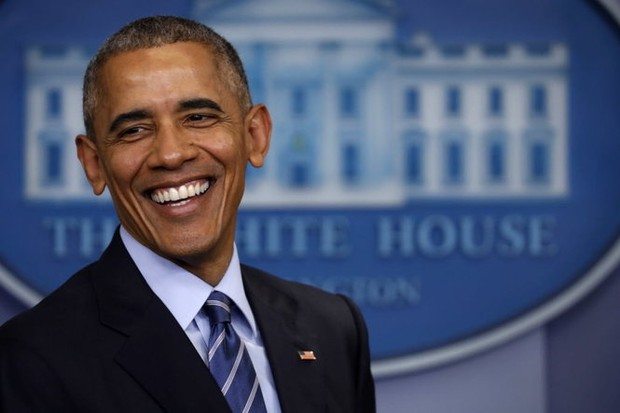
A Mississippi school named after Confederate leader Jefferson Davis is changing its name to honor former President Barack Obama, The Clarion-Ledger reports.
The newspaper reports Davis Magnet International Baccalaureate World School is in Jackson, Miss, and is a predominantly black public elementary school. The president of the school’s Parent-Teacher Association told the Jackson Public Schools Board of Trustees on Tuesday night (Oct. 17) that “school stakeholders” voted to change the school’s name to Barack Obama Magnet IB. The report did not say who the stakeholders were.
“Jefferson Davis, although infamous in his own right, would probably not be too happy about a diverse school promoting the education of the very individuals he fought to keep enslaved being named after him,” the PTA president told the board, according to the report.
Read the The Clarion-Ledger’s full story.

by NNPA ESSA | Oct 18, 2017 | ESSA, Every Student Succeeds Act, Every Student Succeeds Act (ESSA), Illinois, K12 Education
CHICAGO — The American Library Association (ALA) is accepting nominations for the Coretta Scott King-Virginia Hamilton Author/Illustrator Lifetime Achievement Award. The award is named for award-winning children’s author Virginia Hamilton (1936-2002), recipient of the 1983, 1986 and 1996 Coretta Scott King Book Award, 1974 National Book Award and the 1975 John Newbery Medal. In 1994, she was awarded the prestigious Hans Christian Anderson Author Award for the body of her work and was named a fellow of the John D. and Catherine T. MacArthur Foundation in 1995.
The award pays tribute to the quality and magnitude of Hamilton’s exemplary contributions through her literature and advocacy for children and youth, especially in her focus on African-American life, history and consciousness. Authors, illustrators or author/illustrators will be honored in even-numbered years, while practitioners will be recognized in odd-numbered years. Previous recipients of the Coretta Scott King – Virginia Hamilton Author/Illustrator Lifetime Achievement Award include Jerry Pinkney, Patricia and Fredrick McKissack and Ashley Bryan.
The Author/Illustrator Award honors an African American author, illustrator or author/illustrator for a body of his or her published books for children and/or young adults who has made a significant and lasting literary contribution. The body of work selected must represent distinguished writing and/or illustrations by and about the African American experience for children and/or young adults over a period of time. Committee members may also pay particular attention to bodies of work whose interpretation consistently motivates youth readers to stretch their imagination and thinking; that denote exceptional examples of specific types of literature; and that represent trend-setters, innovations or fresh explorations of themes or topics or perspectives in African American literature for children and/or young adult. The body of work must include at least one CSK Award winner (Author, Illustrator, New Talent winner or Honor Book for either category).
All nominees must be living at the time of the award to be considered. The winning recipient will be announced during the ALA Youth Media Awards during the ALA Midwinter Meeting on Monday, Feb. 12, 2018 in Denver. The winner will be honored at the Coretta Scott King Book Awards Breakfast during the 2018 ALA Annual Convention Conference in New Orleans and will receive a medal and a $1,500 cash award.
Nominations will be accepted through Monday, Dec. 4, 2017. The winning recipient will be notified on Monday, Feb. 12, 2018 during ALA Midwinter. To view the Award criteria and submit a nomination, please visit http://www.ala.org/emiert/cskhamilton-submit.
The recipient will be selected by a five-member award jury from the Coretta Scott King- Virginia Hamilton Award for Lifetime Achievement Committee of the Ethnic and Multicultural Information Exchange Round Table (EMIERT). The award is administered by the Coretta Scott King Book Awards Committee of EMIERT and is supported by the ALA Office for Diversity, Literacy and Outreach Services.
The Coretta Scott King-Virginia Hamilton Lifetime Achievement Award is part of the Coretta Scott King Book Awards, which honor African American authors and illustrators of outstanding books for children and young adults that demonstrate sensitivity to “the African American experience via literature and illustration.” The award is designed to commemorate the life and works of Dr. Martin Luther King Jr. and to honor the late Mrs. Coretta Scott King for her courage and determination to work for peace and world brotherhood.

by NNPA ESSA | Oct 17, 2017 | ESSA, Every Student Succeeds Act, Every Student Succeeds Act (ESSA), K12 Education, resources, West Virginia
CHARLESTON, W.Va. – The West Virginia Board of Education (WVBE) received an update on the SecondLaunch Initiative at its October board meeting. The initiative, which was created by the West Virginia Department of Education in June 2015, continues to expand its reach, providing much needed technology to students throughout the state. Now, in its third year, SecondLaunch has saved the state $3 million in technology costs and has provided more than 8,000 computers to students in 47 counties.
Computers and other technology equipment are donated to SecondLaunch from West Virginia government agencies as well as private industry. Equipment is then wiped, cleaned and upgraded to meet the requirements of the programs used in schools. Computers, monitors, keyboards and mice are packaged together for ease of use and assembly, and schools can pick the computers up at the SecondLaunch warehouse in Charleston.
“Through the SecondLaunch Initiative, we are working to ensure that all students have access to technology and resources they need” said West Virginia Superintendent of Schools, Dr. Steven Paine. “Our goal is to have the program in all 55 counties, and work with educators to make sure that a lack of resources is never an obstacle for educators to provide the best education possible for our students.”
In addition to state agencies, private industry has also joined in and donated equipment to SecondLaunch.
“The program’s success depends on the donations we receive,” said David Cartwright, who oversees the program. “We have been fortunate to form a partnership with Toyota Motor Manufacturing in West Virginia, who has become a generous and recurring participant. Our hope is to expand our private partnerships so we can continue to see the program grow.”
SecondLaunch helps students interact with the technology they will encounter in life after high school, whether it be college or the workforce. Some of the state’s earliest learners also have access to the SecondLaunch materials, allowing West Virginia students to utilize 21st century learning resources every day.
Learn more about the SecondLaunch initiative by visiting: http://wvde.state.wv.us/technology/showcase/
Those interested in donating equipment to SecondLaunch can email David Cartwright: dcartwri@k12.wv.us.
Be sure to follow us on Facebook and Twitter.
by NNPA ESSA | Oct 17, 2017 | ESSA, Every Student Succeeds Act, Every Student Succeeds Act (ESSA), K12 Education, Wisconsin
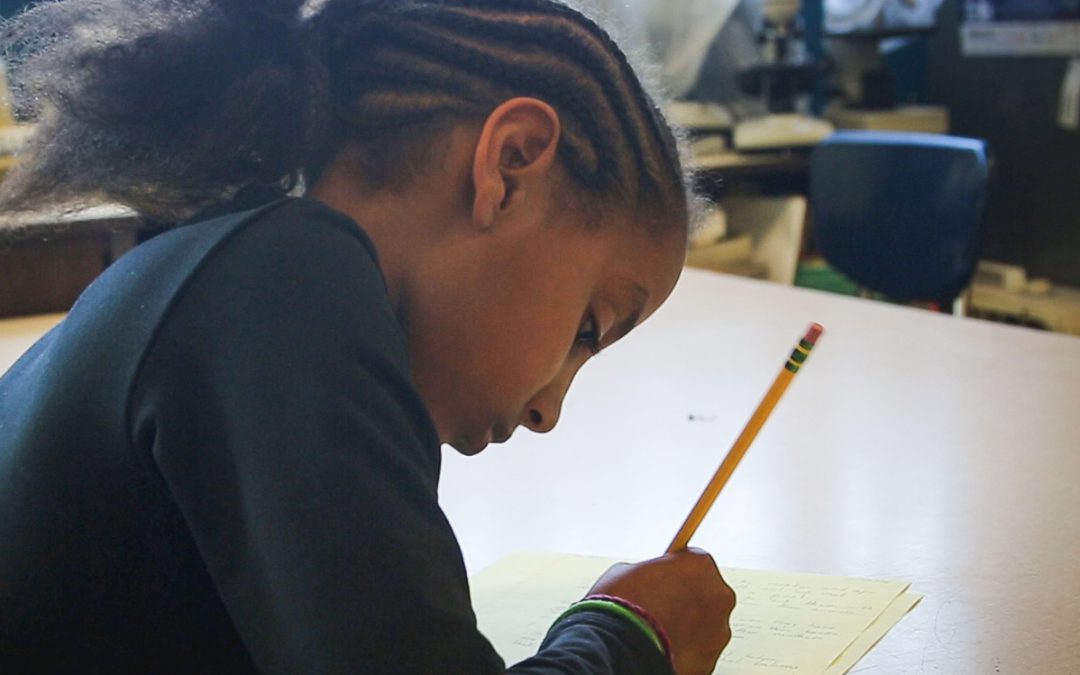
When asked to share part of her writing process, fourth grade Wisconsin student, Aster Anderson focused on her love for animals. She also kept her audience in mind as she detailed, “I made a new paragraph to divide it up so people can see what they would like to read about most.”
Aster participated in the Wisconsin Writes series, which, before this year, featured professional writers from across the state. For the 2017-18 school year, the series will feature student writers, celebrating their talents, viewpoints, and passion for writing. Aster is the first student to share her writing process for the year.
Aster’s advice for students about writing surrounds the importance of reading what you write. She says she likes to “read it over after I’m done. I like to go back and look at stuff. If I make a mistake and keep on going I can go back and look at it in the end.”
You can find Aster’s videos on the Wisconsin Writes Department of Public Instruction web page. The first video is of her writing process, where she writes about baboons, focusing on factual information and structure. In Aster’s second video, she answers interview questions about writing, concentrating mainly on revision and editing, with the biggest focus on spelling and punctuation.
Questions about Wisconsin Writes?
For more information and to follow the series featuring students this year, go to: https://dpi.wi.gov/wisconsin-writes.
Contact Marci Glaus, English Language Arts Consultant for additional information.

by NNPA ESSA | Oct 17, 2017 | ESSA, Every Student Succeeds Act, Every Student Succeeds Act (ESSA), K12 Education, Wisconsin
Ready for a math challenge?
The Wisconsin Mathematics, Engineering, and Science Talent Search is an annual competition for middle and high school students from Wisconsin. The organizers create five problem sets each consisting of five unusual and challenging math problems. The solution of these problems does not require advanced mathematical knowledge, just hard work and creativity. The participants have one month to work on each problem set and can send in their solutions via email or regular mail.
Top problem solvers will be invited to participate in the Honors Day Celebration in May, 2018 and will be eligible to compete in the Van Vleck Scholarship. The scholarship will pay $6,000 per year for four years at the University of Wisconsin in Madison.
The first problem set is now available online. Please visit the Talent Search website to access the problems and additional information. If you have any questions about the Talent Search, feel free to contact the organizers at talent@math.wisc.edu.
by NNPA ESSA | Oct 16, 2017 | Betsy DeVos, ESSA, Every Student Succeeds Act, Every Student Succeeds Act (ESSA), K12 Education, National, US Department of Education
WASHINGTON – U.S. Secretary of Education Betsy DeVos today released the following statement on the announcement of new members to the President’s Task Force on Apprenticeship Expansion.
“Apprenticeships have the potential to offer America’s students the hands-on education needed for today’s in-demand jobs, and expanding these opportunities will prepare them for success in the 21st century economy,” said Secretary DeVos. “As a Vice Chair of the Task Force on Apprenticeship Expansion, I am excited to be part of this Administration’s efforts to strengthen workforce readiness and increase the number of postsecondary pathways available to students. I look forward to working with state and local educators, business and industry leaders and other key stakeholders as we continue our work to put the needs of America’s students and businesses first.”
by NNPA ESSA | Oct 15, 2017 | ESSA, Every Student Succeeds Act, Every Student Succeeds Act (ESSA), K12 Education
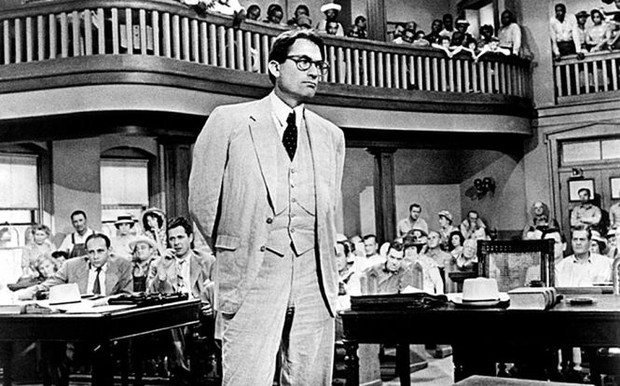
“To Kill a Mockingbird” is being removed from a junior-high reading list in a Mississippi school district.
The Sun Herald reports that Biloxi administrators pulled the novel from the 8th-grade curriculum this week. School board vice president Kenny Holloway says the district received complaints that some of the book’s language “makes people uncomfortable.”
Published in 1960, the Pulitzer Prize-winning novel by Harper Lee deals with racial inequality in a small Alabama town.
A message on the school’s website says “To Kill A Mockingbird” teaches students that compassion and empathy don’t depend upon race or education. Holloway says other books can teach the same lessons.
The book remains in Biloxi school libraries.
Read the full story here.
