By Donna Fletcher (Conference Coordinator, National Science Teachers Association)
As a parent, I recognize that I am my children’s biggest advocate and I work hard to make sure that they have the best learning opportunities inside and outside of the classroom.
When I relocated from Washington, D.C. to Florida, I struggled to find schools that were rigorous in their instruction, included strong community and parental involvement, provided a diverse selection of extra-curricular activities, and offered the support services my children needed. Eventually, I found a school that met the majority of my expectations, but that school was located in a different county. As a result, I relocated to an address within that area. With a background in education and familiarity with the District of Columbia Public Schools system (DCPS) through my older children, I constantly found myself comparing the materials being taught at my children’s elementary school to the lessons that were taught in DCPS over 15 years earlier. To my chagrin, my younger children were lagging far behind, academically.
Therefore, my search to find a more rigorous academic program led me to placing my younger children in a private, Christian-based school. However, I have found that while private schools promote a superior academic experience, in actuality, they lack more than they deliver. Academic rigor, community and parental involvement, extracurricular activities, and the passion needed to encourage the love of learning were all missing from the private school my children attended. Thus, my search continues.
The new national education law, the Every Student Succeeds Act (ESSA), gives more power back to states to determine their own academic standards, but provides several grant opportunities to ensure school districts are implementing evidenced-based interventions to improve academic achievement. Student Support and Enrichment Grants combine several programs from No Child Left Behind to improve academic achievement by providing all students with funding for improved school conditions, well-rounded learning, and efficient use of technology. Title IV, Part B of ESSA also provides opportunities for communities to expand or establish community learning centers, which provide a broad array of resources; including meaningful parent engagement.
Florida has updated its academic standards in an attempt to align them with college-and-career-ready expectations twice, since 2011; the most recent update occurred in 2015. However, Florida’s ESSA plan does not explain the process through which updates have occurred. Florida does attempt to emphasize a well-rounded education by including progress in science and social studies as an indicator of school success. However, Florida fails to include progress in English Language Proficiency (ELP) as an indicator of school success and will only provide assessment instructions in English; despite a diverse student population. Furthermore, Florida does not incorporate student subgroup (race/ethnicity) data in its school grading system. Student subgroup data will only be reported on school report cards. This process does not guarantee struggling subgroups will be identified and supported. Florida proposes to use a simple A-F grading system to identify underperforming schools. For schools that do not earn a “C” grade after two years, the plan calls for the schools to close or turn over operations to a charter or an external operator. While schools are held accountable for continued failure, as a parent, I am concerned about the impact on students who are enrolled during the two-year improvement period. Lastly, Florida does not explain how it will use the set-aside Title I dollars for school improvement or how the state will encourage the equitable distribution of funds.
Overall, while the plan clearly articulates its intentions, it provides little explanation for how the stated goals will be achieved. How can I, as a parent, get more involved and engaged to help advocate for my children? For my children, who are in the middle of the pack, how can they receive resources to accelerate their abilities to the next level? How does Florida’s ESSA Plan empower parents to choose higher-performing schools with very few available spots for students zoned to under performing schools?
Florida’s ESSA plan is not an all-encompassing document; specifically as it relates to the lack of information regarding explanations for funding, school accountability, and amended academic standards. The consolidated state plan should be viewed as one additional resource in the search to find answers and be empowered to impact our children’s education. As a parent, my goal is to support instruction received inside the classroom by fostering added learning through enriching opportunities outside the classroom and like all parents I want the best for my children.
Donna Fletcher is a mother to eight children, Conference Coordinator for the National Science Teachers Association, and a fierce parent advocate. Fletcher has a Bachelor of Arts in Psychology from the University of the District of Columbia and a Masters in Human Development from George Washington University.
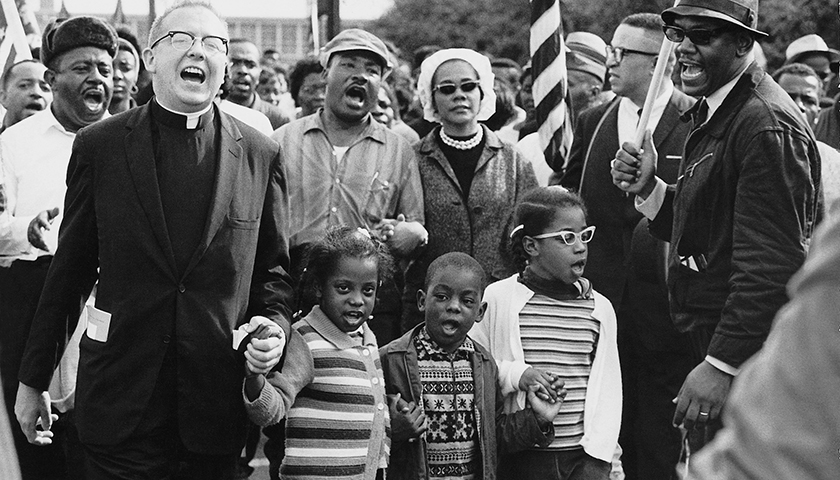
Dr. Martin Luther King, Jr.’s influence on the Civil Rights Movement is indisputable, but his fight for equity in education remains a mystery to some.
That fight began with his own education.
“He clearly had an advanced, refined educational foundation from Booker T. Washington High School, Morehouse College, Crozer Theological Seminary, and Boston University,” said Reverend Jesse Jackson, Sr., the founder of the Rainbow PUSH Coalition. “His education in his speeches and sermons and writings were apparent and he wanted us all to have that type of education.”
King completed high school at 15, college at 19, seminary school at 22 and earned a doctorate at 26.
“Dr. King laid down the case for affordable education for all Americans, including Polish children—from the ghetto and the barrios, to the Appalachian mountains and the reservations—he was a proponent for education for all and he believed that strong minds break strong chains and once you learn your lesson well, the oppressor could not unlearn you.”
Rev. Al Sharpton, the founder and president of the National Action Network (NAN), said that NAN works with Education for a Better America to partner with school districts, universities, community colleges, churches, and community organizations around the country to conduct educational programming for students and parents.
“The mission of the organization has been to build bridges between policymakers and the classrooms by supporting innovations in education and creating a dialogue between policymakers, community leaders, educators, parents, and students,” Sharpton said. “We’re promoting student health, financial literacy, and college readiness in our communities, just like Dr. King did.”
King was a figure to look up to in both civil rights and academia, Sharpton told the NNPA Newswire.
“Then, when you look at his values, he always saw education, especially in the Black community, as a tool to uplift and inspire to action,” Sharpton said. “It’s definitely no coincidence that a number of prominent civil rights groups that emerged during Dr. King’s time, were based on college campuses.”
Sharpton added that King routinely pushed for equality to access to education.
“Just as importantly, he always made a point to refer education back to character—that we shouldn’t sacrifice efficiency and speed for morals,” Sharpton said. “A great student not only has the reason and education, but a moral compass to do what’s right with his or her gifts. It’s not just important to be smart, you have to know what’s right and what’s wrong.”
Dr. Wornie Reed, the director of Race and Social Policy Research Center at Virginia Tech who marched with King, said when he thinks of King and education, he immediately considers the late civil rights leader’s advocating that “we should be the best that we could be.”
“King certainly prepared himself educationally…early on he saw that education played a crucial role in society, but perceived it as often being misused,” Reed said. “In a famous essay that he wrote for the student newspaper at Morehouse in 1947, he argued against a strictly utilitarian approach to education, one that advanced the individual and not society.”
Maryland Democratic Congressman Elijah Cummings, who remembers running home from church on Sundays to listen to King’s speeches on radio, said King had a tremendous impact on education in the Black community.
“Dr. King worked tirelessly to ensure that African Americans would gain the rights they had long been denied, including the right to a quality education,” said Cummings. “His fight for equality in educational opportunities helped to tear down walls of segregation in our nation’s schools.”
Cummings continued: “He instilled hope in us that we can achieve our dreams no matter the color of our skin. He instilled in us the notion that everyone can be great, because everyone can serve and there are so many great advocates, who embody this lesson.”
In support of education equality, civil rights leaders across the country are still working to ensure all students, regardless of color, receive access to experienced teachers, equitable classroom resources and quality education, Cummings noted further.
For example, the NAACP has done a tremendous amount, across the country, to increase retention rates, ensure students have the resources they need, and prepare students for success after graduation—whether it be for college or a specific career path, Cummings said.
During his Nobel Peace Prize acceptance speech in Oslo, Norway, King said: “I have the audacity to believe that peoples everywhere can have three meals a day for their bodies, education and culture for their minds, and dignity, equality, and freedom for their spirits.”
The need for high quality education in the Black community is universal and the route to get there may be different, but education does matter, Jackson said.
“Dr. King told me he read a fiction and a non-fiction book once a week. He was an avid reader and, in the spirit of Dr. King, today we fight for equal, high-quality education,” said Jackson. “We fight for skilled trade training, affordable college education and beyond.”
WASHINGTON – U.S. Secretary of Education Betsy DeVos today announced the approval of Minnesota and West Virginia’s consolidated state plans under the Every Student Succeeds Act (ESSA).
“States continue to embrace the flexibility and power given to them under ESSA,” said Secretary DeVos. “I am pleased to approve these plans, which comply with the requirements of the law. I look forward to seeing how the states turn ideas into action to improve outcomes for all students.”
Allowing states more flexibility in how they deliver education to students is at the core of ESSA. Each state crafted a plan that it feels will best offer educational opportunities to meet the needs of the state and its students. The following are some of the unique elements from each state’s approved plan as highlighted by each state:
Minnesota
Plans to ensure that by 2020, 90 percent of all students will graduate from high school in four years and that the state aligns its efforts with its workforce development goals.
Identifies 25 percent of the lowest-performing schools across three domains—math, reading and English learner proficiency—to ensure all schools in need of support are identified and assisted, with the greatest support directed to the most acutely low-performing schools.
“Nothing is more important to Minnesotans than making sure every child has access to a great education,” said Minnesota Commissioner of Education Brenda Cassellius. “That consensus was shared by a broad majority of parents, community members and stakeholders across our state who made equity and ambitious goals the central tenants of our ESSA plan. Together, we created a shared definition of equity that serves as the foundation for a plan that is actionable, research-based and rooted in the best practices for supporting schools. Combined with rigorous accountability expectations, strategic support for schools that need it most, and the promise of easy-to-understand and transparent reporting for teachers, parents, and the public, this plan is a significant step forward in our shared vision for all kids. I look forward to implementing our new plan, and supporting every Minnesota educator as they work even harder to ensure every child has the same opportunity to learn, succeed and thrive.”
West Virginia
Plans to reduce the number of non-proficient students, overall and for each subgroup, in half by 2030.
Provides LEAs access to evidence-based interventions and professional development based on performance on individual indicators within the Statewide Accountability System, so that any school struggling with a single indicator receives support.
“The intent of our ESSA plan is to be a catalyst for economic growth and development in West Virginia. Our goal is to ensure that every student is provided the opportunity to be successful after graduating high school in their chosen career and/or post-secondary endeavors. Our comprehensive system will individualize support and capitalize on a network of education partnerships, while supporting Gov. Jim Justice’s focus on education and economic development,” said Steven Paine, West Virginia’s state superintendent of schools.
Washington, DC- The DC State Board of Education (SBOE) will hold its monthly public meeting on Wednesday, January 17, 2018, at 5:30 p.m. in the Old Council Chambers at 441 4th Street NW. The SBOE wants to hear the community’s thoughts on the proposed content of a new school report card that will provide the same information about every public and public charter school in the District. The school report card will contain two kinds of data: information that is required by the federal Every Student Succeeds Act (ESSA) and information that is important to the residents of the District. The public may sign up online to testify at this month’s SBOE Public meeting about the school report card. The deadline to sign up is 5:00 p.m. on Tuesday, January 16, 2017. Residents who testify will have three minutes to provide their input and recommendations to the SBOE.
At Tuesday night’s SBOE ESSA Task Force meeting, representatives from the Office of the State Superintendent of Education (OSSE) outlined updates to their content and format proposal for the new report card. Task force members reviewed the proposal and provided comments and recommendations. This proposal was based on feedback from State Board members, community members, and the members of the ESSA Task Force. Over the next few weeks, OSSE will work with the SBOE to finalize the content proposal with the intention that the State Board will vote on the proposal at its February public meeting.
At this month’s public meeting, the State Board will also honor the recently named District Tier 1 public charter schools and organizers of National School Choice Week with ceremonial resolutions.
Individuals and representatives of organizations who wish to comment at a public meeting may also submit testimony via email at sboe@dc.gov. Individuals should furnish their names, addresses, telephone numbers, and organizational affiliation.
The draft agenda of the meeting is below. Please note that the agenda may be altered, modified or updated without notice.
Call to Order
Announcement of a Quorum
Leadership Election
Approval of the Agenda
Approval of Minutes
Comments from the President of the DC State Board of Education
Comments from the State Superintendent of Education
Public Comment
2017 Tier 1 Public Charter School Ceremonial Resolution (VOTE)
National School Choice Week Recognition Ceremonial Resolution (VOTE)
2018 Committees Resolution (VOTE)
ESSA Report Card Recommendations
Adjournment
The DC State Board of Education is an independent agency within the executive branch of the Government of the District of Columbia that works to advise the Office of the State Superintendent of Education (OSSE), which is the District’s state education agency. The Board is comprised of nine elected representatives, each representing their respective wards, with one member representing DC at large, in addition to two student representatives. While OSSE oversees education within the District and manages federal education funding, the Board approves education policies, sets academic standards, and determines teacher qualifications. The State Board views its role in the achievement of this mission as one of shared responsibility, whereby it engages families, students, educators, community members, elected officials and business leaders to play a vital role in preparing every child for college and/or career success. More information about the SBOE can be found at sboe.dc.gov.
The Every Student Succeeds Act may have kept annual testing as a federal requirement. But it also aims to help states cut down on the number of assessments their students must take by giving districts the chance to use a nationally-recognized college entrance exam, instead of the regular state test, for accountability purposes.
When the law passed back in 2015, some superintendents hailed the change, saying it would mean one less test for many 11th graders, who would already be preparing for the SAT or ACT. Assessment experts, on the other hand, worried the change would make student progress a lot harder to track.
Now, more than two years after the law passed, it appears that only two states—North Dakota and Oklahoma—have immediate plans to offer their districts a choice of tests. Policymakers in at least two other states—Georgia and Florida—are thinking through the issue. Arizona and Oregon could also be in the mix.
That’s not exactly a mad dash to take advantage of the flexibility.
Offering a choice of tests can be a tall order for state education officials, said Julie Woods, a senior policy analyst at the Education Commission of the States. They have to figure out how to pay for the college entrance exams, design a process for districts to apply for the flexibility, and find a way to compare student scores on the state test to scores on the SAT, ACT, or another test.
That’s “potentially a lot more work than states are currently doing,” Woods said. “States have to decide what the payoff is for them…”
Read the full story here: May require an Education Week subscription.
CHARLES CITY – Though the vast majority of students who are deaf or hard of hearing have no additional disabilities, an astounding percentage of them are falling behind their peers in the areas of language and literacy skills. The problem? Lack of access to interpreters and limited access to daily instruction from staff who are specially trained to teach the students.
While larger districts with deeper pockets can provide full-time access to interpreters, smaller districts are often left blowing in the wind, relying on services by itinerant teachers provided by their Area Education Agencies. While that’s sufficient for some students who are deaf or hard of hearing, it creates an educational barrier for others.
“We are talking about access to education,” said Jay Colsch, regional director for the Iowa Educational Services for the Blind and Visually Impaired and Iowa School for the Deaf. “If the student cannot communicate with teachers and their peers, how are they going to learn?”
It is estimated that the number of deaf and hard of hearing students in the state is nearly 1,600. While the state offers full-time class instruction at its School for the Deaf in Council Bluffs, for many parents the notion of sending their child far away isn’t an option.
And to that end, a state leadership team consisting of administrators from the Iowa Department of Education, Area Education Agencies, Iowa Vocational Rehabilitation Services, Iowa Educational Services for the Blind/Visually Impaired, Iowa School for the Deaf and the Des Moines Public Schools has developed a plan to create what’s known as regional academies. Regional academies are designed to be dotted across the state for the purpose of providing interpreters and full-time teachers of the deaf to students with hearing impairments. In addition, plans are under way to provide full-time teachers of the visually impaired and vision assistants (paraprofessionals) to students who are blind/visually impaired at various locations throughout the state.
The purpose of regional academies is to expand the continuum of services to students with sensory impairments by providing instructional services that supplement itinerant services currently provided by Area Education Agencies and Iowa Educational Services for the Blind/Visually Impaired.
At present, there’s only one regional academy – North East Iowa Regional Academy – located in Charles City, and it currently only serves students with hearing impairments. But the academy, known by its acronym NERA, is the pilot.
“The AEAs provide support through itinerant teachers,” Colsch said. “But they are limited with the time they can spend with each student and cannot provide full-time itinerant teachers. All too often I have been at IEP (Individualized Education Programs) meetings where the amount of service received is based on the availability of itinerant teachers, not based on what the student needs.”
If the itinerant teacher cannot provide sufficient support – typically, itinerant teachers can spend no more than one hour a day, twice per week, with individual students – those who are deaf or hard of hearing are often staffed into multi-disability special education programs.
“There is a seismic gap in the continuum of services” Colsch said. “If the amount of support from an itinerant teacher of the deaf/hard of hearing isn’t sufficient, the student often is placed in multi-disability special education programs taught by special education teachers who have little or no educational background or experience teaching students with sensory impairments. Special education teachers are inclined to rely on instructional strategies that are effective with students with learning disabilities or cognitive impairments rather than evidence-based strategies that are specially designed for students who have sensory impairments.”
Academic achievement data being collected by local school districts would suggest that the overall rate of progress among students with sensory disabilities is not sufficient to keep pace with their non-disabled peers.
“Deafness does not preclude children from learning at a rate commensurate with their peers,” Colsch said. “But it does require that they are taught in a different manner.”
In 2013, only 39 percent of Iowa students who were deaf/hard of hearing achieved proficiency in reading as measured by the Iowa Assessments. Another study was conducted last year of reading proficiency among Iowa’s children in grades K-3 who are deaf/hard of hearing using FAST Assessment results and other measures of early literacy skill development. Preliminary results indicate that less than 30 percent of Iowa’s children with significant hearing loss achieved proficiency.
“Our state leadership team recognizes that we can’t embrace the status quo,” Colsch said. “There is too much at stake here. Regional academies represent a systems change that is much needed.”
Susan Rolinger, director of extended learning for the School for the Deaf and Iowa Educational Services for the Blind and Visually Impaired, said it comes down to the matter of the law for providing all students free and appropriate public educations, known as FAPE.
“What is appropriate for a child who is deaf?” she said. “How you know something is appropriate is access – communication access. We have a communication plan for our IEPs. There is a reason for that. Now, if you have a student who is hard of hearing and they are falling farther behind, putting them into a special education room gets them in with a teacher with more hours dedicated, but it isn’t necessarily appropriate. The child needs education access, but the teacher doesn’t have the ability.”
In no way is the regional academy concept meant to impinge upon the work going on at the AEAs. Rolinger, whose daughter Madeline is deaf, thrived under the itinerant teacher model.
“But many kids who are deaf and hard of hearing are at significantly higher risk of having behavior problems,” she said. “The regional academy offers a critical mass where students who are deaf and hard of hearing have access to education, access to communication. We’re not saying that every deaf or hard of hearing child should be educated at a regional academy. But there is a significant chunk of students who need more.”
“During IEP meetings, the concept of an appropriate public education in the least restrictive environment must be considered,” he said. “Least restrictive environment isn’t a specific place; it is a learning environment where the child can receive an appropriate education with their non-disabled peers to the maximum extent appropriate. If a child is the only one who is deaf or hard of hearing, their communication needs must be addressed in an environment where learning is not restricted by lack of communication access. Placement in a regional academy is less restrictive than placement in a child’s home district, general education classes and multi-disability special education programs where they don’t have access to effective communication with their peers.”
As for Rolinger’s daughter, Madeline is attending the Rochester Institute of Technology in Rochester, N.Y., where she is studying public policy with the goal of becoming a disability rights attorney.
“She has critical mass for the first time in her educational career,” she said. “There are 1,200 deaf and hard of hearing students there. You can imagine she loves it.”
Rolinger considers her daughter lucky to have thrived in the mainstream. But she worries about those who don’t.
“Let’s not wait for them to fail before we send them to the regional academy,” she said.
With the 2018-19 school year in full swing, U.S. Secretary of Education Betsy DeVos has finished approving nearly every state’s plan to implement the Every Student Succeeds Act. But in some ways, the federal government’s work on ESSA is just beginning.
The federal K-12 law’s hallmark may be state and local control, yet the Education Department still has the responsibility to oversee the more than $21 billion in federal funding pumped out to states and districts under ESSA. That will often take the form of monitoring—in which federal officials take a deep look at state and local implementation of the law.
And the department has other oversight powers, including issuing guidance on the law’s implementation, writing reports on ESSA, and deciding when and how states can revise their plans.
Even though ESSA includes a host of prohibitions on the education secretary’s role, DeVos and her team have broad leeway to decide what those processes should look like, said Reg Leichty, a co-founder of Foresight Law + Policy, a law firm in Washington.
Given the Trump team’s emphasis on local control, “I think they’ll try for a lighter touch” than past administrations, Leichty said. But there are still requirements in the law the department must fill, he added.
“States and districts shouldn’t expect the system to be fundamentally different [from under previous versions of the law.] They are still going to have to file a lot of data,” Leitchy said.
But advocates for traditionally overlooked groups of students aren’t holding their breath for a robust monitoring process, in part because they think the department has already approved state plans that skirt ESSA’s requirements…
Read full article click here, may require ED Week Subscription
This year featured a new president, a new education secretary, and the first year schools began shifting to the Every Student Succeeds Act. It’s been a busy year for us, and to cap it off, we’re highlighting the 10 blog posts we wrote that got the most readership in 2017. Here we go, from the post with the 10th-most views to the post with the most views:
President Donald Trump repeatedly said on the campaign trail in 2016 that he wanted to end the Common Core State Standards. So when U.S. Secretary of Education Betsy DeVos said this to a TV news anchor in April, she was channeling Trump’s stated desire. But DeVos’ statement wasn’t accurate, since more than three dozen states still use the content standards. The Every Student Succeeds Act also prohibits DeVos from getting involved in states’ decisions about standards.
Along with promoting school choice, one of DeVos’ big goals this year has been to restrain the federal government’s role in education when it comes to regulations, as well as the size and scope of the U.S. Department of Education. It doesn’t look like her push to significantly slash the department’s budget has the support of Congress, but DeVos has been trying to trim the department’s staffing levels recently.
Washington, DC – The DC State Board of Education (SBOE) announces that its High School Graduation Requirements Task Force will be taking a strategic pause during the month of January 2018 to take advantage of upcoming information that will influence the task force’s work. Stepping back for a month will allow staff and task force members to reflect on constituent feedback received thus far, as well as consider information from the ongoing investigation of the implementation of high school graduation requirements at Ballou High School and other schools across the city. The results of the citywide investigation being led by the Office of the State Superintendent of Education are expected at the end of January. Members will reconvene in February to continue their work.
“Too often, policymakers race forward with changes without pausing to consider how changing contexts may influence the direction of their work. We are taking the month of January to reflect on the work done so far by the task force, the input we have received to-date and to ensure we consider the outcomes of the ongoing investigation before moving forward,” said Laura Wilson Phelan, Ward 1 representative and task force co-chair.
“Recent developments make the work and forthcoming recommendations of this task force even more critical for our students and families”, said Markus Batchelor, Ward 8 representative and task force co-chair. “The promise of our work together with the broad representation that exists from across the city will be essential in the creation of groundbreaking new opportunities for our students. We want to seize this moment by ensuring our work incorporates new information as it becomes available.”
This task force marks an historic citywide effort to review, analyze and, as necessary, make thoughtful, implementable recommendations to adjust DC’s high school graduation requirements for all DCPS and public charter school students. Under the leadership of Ward 1 representative Laura Wilson Phelan and Ward 8 representative Markus Batchelor, the 26 members of the task force mirror our school-aged population, with half of the task force members living or working East of the Anacostia River. After the pause, the task force will resume its regular meetings with the goal of presenting recommendations to the State Board in the spring.
All task force meetings are open to the public. However, individuals and representatives of organizations are not permitted to speak or participate during task force sessions. District residents may stay involved and provide input throughout this process in a variety of ways. Individuals and representatives of organizations may submit written testimony or information for consideration by the task force by emailing sboe@dc.gov or by filling out this online form. Members of the public can also request to join our discussion group here to share input regarding the work of the task force.
The DC State Board of Education is an independent agency within the executive branch of the Government of the District of Columbia which works to advise the Office of the State Superintendent of Education (OSSE), which is the District’s state education agency. The Board is comprised of nine elected representatives, each representing their respective wards, with one member representing DC at large, in addition to two student representatives. While OSSE oversees education within the District and manages federal education funding, the Board approves education policies, sets academic standards, and determines teacher qualifications. The State Board views its role in the achievement of this mission as one of shared responsibility, whereby it engages families, students, educators, community members, elected officials and business leaders to play a vital role in preparing every child for college and/or career success.
For the latest updates on the work of the task force, please visit sboe.dc.gov/gradreqs.







 With the 2018-19 school year in full swing, U.S. Secretary of Education Betsy DeVos has finished approving nearly every state’s plan to implement the