It’s not a required course or an exam, but Louisiana’s estimated 40,000 public high school seniors won’t be allowed to graduate without completing it.
“It” is the FAFSA – the free application for federal student aid – and the graduating class of 2018 is the first to be affected by the policy approved by the Board of Elementary and Secondary Education in 2015.
The form is used to determine student eligibility for financial aid, such as Pell grants, work study programs and federal student loans.
BESE, the governing and policymaking board for K-12 public schools, tethered completion of the federal application as a requirement for getting a high school diploma because of the historically low number of Louisiana students using the form. The state department of education officials said when students didn’t fill out the form, it created unnecessary financial barriers to postsecondary schools or training.
“We wanted to ensure equitable access to all students,” state education department spokeswoman Sydni Dunn said. “Too few students take advantage of state and federal aid.”
Although the state’s number of submissions is improving, Louisiana’s rank near the bottom among states for submission of the FAFSA form was the impetus for the policy two years ago, Dunn said. The amount of money left on the table is “staggering,” she said.
“By not completing the FAFSA, Louisiana students forego millions of dollars each year in federal grants, state opportunities and other post-secondary funding,” Dunn said. “This year, for example, it is estimated the 25 percent of students who did not submit the FAFSA, to date, may be missing out on more than $150 million in aid…
The live video stream is from the California State Board of Education (SBE) meeting originating from the California Department of Education at 1430 N Street in Sacramento, CA.
The meeting on November 8-9, 2017 will start at 8:30 a.m. Pacific Time ±
Republican lawmakers’ proposed changes to the federal tax code are causing a stir in the education community. Teachers and others are zeroing in on the bill’s repeal of the $250 tax deduction teachers and principals can take for spending their own money on classroom supplies. But, aside from that, how could the bill impact an individual teacher’s tax bill?
Let’s examine how a couple of hypothetical teachers would fare under the legislation introduced in the U.S. House of Representatives last week and try to tease out an answer.
The following scenarios are in a world where the GOP tax bill is approved as released. Will it pass? Will lawmakers amend it? If so, how? Nobody knows the answers to those questions. Right now, House lawmakers are vigorously debating it. But let’s figure things out based on what we know is in the bill. For this analysis, we’re leaving out a lot of factors that could affect these hypothetical teachers’ taxes. We’ve also tried to keep it relatively simple, in order to get a basic idea of how the proposed tax changes could work for many teachers.
EDUCATION WEEK — Secretary of Education Betsy DeVos is visiting Puerto Rico and the U.S. Virgin Islands to see schools’ recovery efforts after damage caused by recent hurricanes.
DeVos will visit the Escuela Libre de Música Ernesto Ramos Antonini in San Juan, Puerto Rico, on Wednesday, and then Charlotte Amalie High School on St. Thomas later in the day. She is slated to meet Puerto Rico Secretary of Education Julia Keleher, as well as the president of the University of the Virgin Islands, David Hall, during her trip. It’s the first time the secretary has visited the U.S. territories since Hurricane Maria struck roughly six weeks ago.
We traveled to Puerto Rico in early October to document how educators and the island’s school system were coping with Hurricane Maria’s aftermath, as well as how they were aiding general recovery efforts. Schools are reopening on the island, although many are doing so without electricity. For the first few weeks after the storm, schools that did reopen were largely serving as community centers.
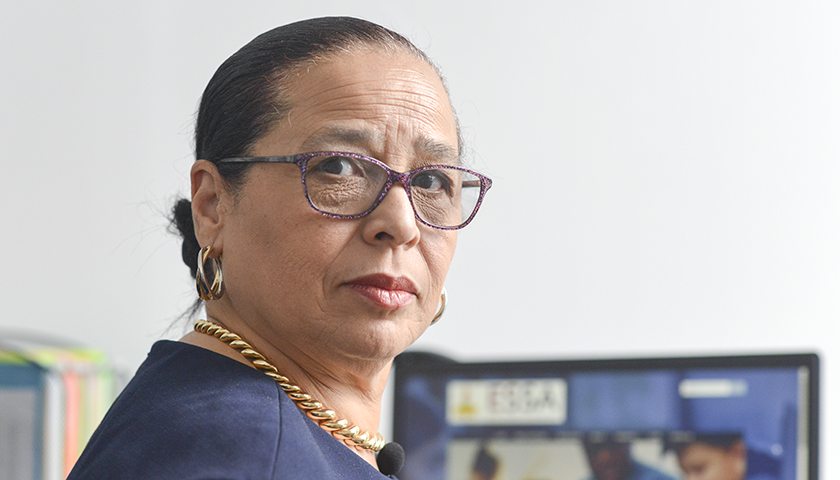
By Dr. Elizabeth Primas (Program Manager, NNPA/ESSA Public Awareness Campaign)
While education officials in Ohio have identified six components for rating schools on their school report cards, they are giving more attention to making sure students don’t fall behind to begin with. Over the last four years, education leaders in Ohio have tripled their investments in the “K-3 Literacy component” and its corresponding preschool program. Ohio has also increased access to high-quality education programs for children living in poverty and low-income families. This investment is aligned with the state’s birth to third grade support system that is designed to ensure that students enter school with the skills necessary to be successful and reach third grade with skills needed to read proficiently.
In December 2011, Ohio began using Early Learning and Development Standards that address five essential domains of school readiness for children from birth to five years-old. Those same standards will continue with the state’s ESSA plan. The five domains include: social and emotional development; physical well-being and motor development; approaches toward learning; language and literacy development; and cognition and general knowledge. These standards have been expanded to provide a continuum of learning for children from birth to five years of age; that implies that there are different expectations for children depending on their age and development. Once parents and caregivers understand that children develop on a continuum, or with skills built upon what was previously learned, educators and parents can begin to work in tandem with each other; ensuring that children are learning and developing appropriately.
Ohio’s Early Learning and Development Standards provide parents with information and expectations for each of the five domains; allowing them to get a jumpstart in preparing their child for school readiness. Standards are organized by topic and age: Infants (birth to around 8 months); young toddlers (6 months to around 18 months); and older toddlers (16 months to around 36 months). The guides are organized to allow parents to easily identify where their children should be, developmentally. For instance, the Social and Emotional Development Domain chart for awareness and expression of emotion, states that infants should express sadness, fear or distress by crying, kicking legs and stiffening the body; by pre-K, children should be able to recognize and identify their own emotions, as well as the emotions of others.
In 2003, Betty Hart and Todd R. Risley, two researchers at the University of Kansas, published a report titled, “The Early Catastrophe: The 30 Million Word Gap by Age 3.” They found that exposure to a rich vocabulary in a child’s early years is critical and the disparities in that exposure result in an achievement gap. It is important for parents to speak to their children, all of the time, using “standard” English. Parents can introduce their children to new words by explaining things in the child’s environment. Reviewing the names of items in the grocery store, the names of animals they see in the neighborhood, and the style and color of their clothes are simple ways to make a big impact. If we are to close the achievement gap, we must start before the child arrives at the schoolhouse doors. From birth, parents should sing songs and repeat nursery rhymes. Reading rhyming books and alphabet stories promote language acquisition and literacy. Parents are a child’s first teachers. It is up to us to give our children the exposure necessary to close the achievement gap.
To find out more about ESSA and its opportunities in literacy visit www.nnpa.org/essa.
Dr. Elizabeth Primas is an educator, who spent more than 40 years working towards improving education for children of diverse ethnicities and backgrounds. Dr. Primas is the program manager for the NNPA’s Every Student Succeeds Act Public Awareness Campaign. Follow Dr. Primas on Twitter @ElizabethPrima3.
Dr. Elizabeth Primas talks about the Every Student Succeeds Act, the “30 Million Word Gap,” and Ohio’s ESSA state plan.
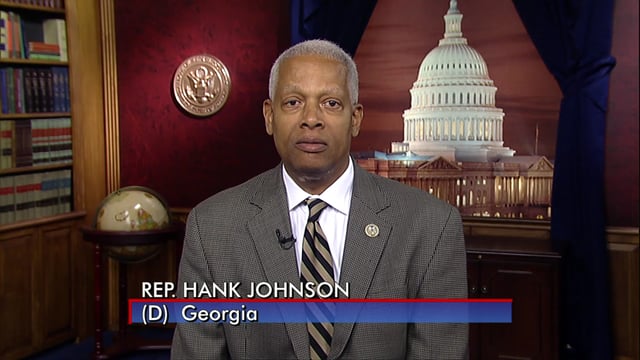
Congressman Hank Johnson of Georgia’s 4th congressional district welcomes attendees to the Region II NNPA/ESSA Black Parent’s Town Hall Meeting on Educational Excellence at the Ebenezer Baptist Church.
The congressman invited parents to join him in his efforts to ensure children receive the education they deserve by getting involved and staying engaged in their child’s school.
According to a recent report by Education Week, states have largely ignored a critical mandate of the Every Student Succeeds Act that calls for schools to measure the social and emotional competencies of their students.
“Not a single state’s plan to comply with the federal education law—and its broader vision for judging school performance—calls for inclusion of such measures in its school accountability system,” according to Education Week.
However, advocates for measuring social-emotional learning have said that the current tools need more refinement, before the U.S. Department of Education weighs in.
“Existing measures of social and emotional development, which largely rely on students’ responses to surveys about their own character traits, are not sophisticated and consistent enough to be used for such purposes, they have long argued,” the Education Week article said.
Even as school districts in Anchorage, Alaska; Austin, Texas; Chicago, Ill.; Nashville, Tenn.; Oakland, Calif.; and Sacramento, Calif., are actively engaged in incorporating social and emotional learning into their curriculums, civil rights leaders continue to encourage Black parents to get involved with the implementation of ESSA.
“We have noticed that, under the Trump administration, there has been a shift in priorities concerning the implementation of some practices of ESSA, since its inception in 2015,” said Elizabeth Olsson, a senior policy associate for the NAACP Legal Defense and Educational Fund. “However, state and district officials still have to comply with the law.”
Olsson continued: “The U.S. Department of Education needs to make sure that it continues to scrutinize state programs to ensure that states are recruiting effective educational strategies, reducing practices that push students of color out of school systems, and identifying support programs, including professional teacher development and funding for alternative classes, like restorative justice.”
Olsson said that restorative justice programs really help get to the root of student behavior.
Liz King, the senior policy analyst and director of Education Policy for the Leadership Conference on Civil and Human Rights, said that there are still a lot of open questions about how Education Secretary Betsy DeVos is going to implement ESSA.
Earlier this year, after a hearing with a House Appropriations subcommittee, DeVos was roundly criticized by the civil rights community, when she seemed to endorse a state’s right to discriminate against children.
During the hearing, when Rep. Katherine Clark (D-Mass.) asked DeVos, if her Education Department would require states, like Indiana, to end the practice of funding schools that openly discriminate against LGBTQ students and families, “DeVos didn’t say ‘yes’ or ‘no,’” Slate.com reported. “She just smiled and stuck to the generations-old cover for violent oppression in America. ‘The states set up the rules,’ she said. ‘I believe states continue to have flexibility in putting together programs.’”
King called those comments “deeply concerning.”
King continued: “What we need to hear from the president and the secretary of education is a commitment to the law, the Constitution, and the rights of all children in the United States, focusing particularly on historically marginalized students.”
King said that the biggest difference between the way that ESSA was handled during President Obama’s administration versus the way the law is being handled now is the commitment to protect the civil rights, dignity, safety and respect for all children in this country. King added that children feel less safe and feel like their rights are being taken away, under the Trump Administration.
In a letter to Senator Patty Murray (D-Was.), DeVos claimed that the way that the Office of Civil Rights (OCR) handled “individual complaints as evidence of systematic institutional violations,” under the Obama Administration, “harmed students.” DeVos also promised to return OCR to a “neutral, impartial investigative agency.”
The Education Department has approved ESSA state plans from Arizona, Connecticut, Delaware, the District of Columbia, Illinois, Louisiana, Maine, Nevada, New Jersey, New Mexico, North Dakota, Oregon, Tennessee and Vermont.
As minorities continue to enroll in schools across the country at higher rates than their White peers, King said that parents and community members need to act now to make sure that the myriad needs of students of color are fully addressed in ESSA state plans, that includes access to advanced English and math courses and addressing the disparities that exist between how Black students are disciplined compared to White students.
“We have to address the issue of ESSA now, because decisions that are being made will have consequences for years to come,” King said. “One thing that is important to remember is that the implementation of ESSA does not happen in a vacuum.”
King continued: “ESSA is the opportunity for parents to work together with various coalitions, the press and grassroots organizations to shape the way the educational system will look for their children and for their futures in their own states.”
After decades of desegregation efforts, federal civil rights laws, and other attempts to close the achievement gap, a high quality education remains an elusive goal for most Black children.
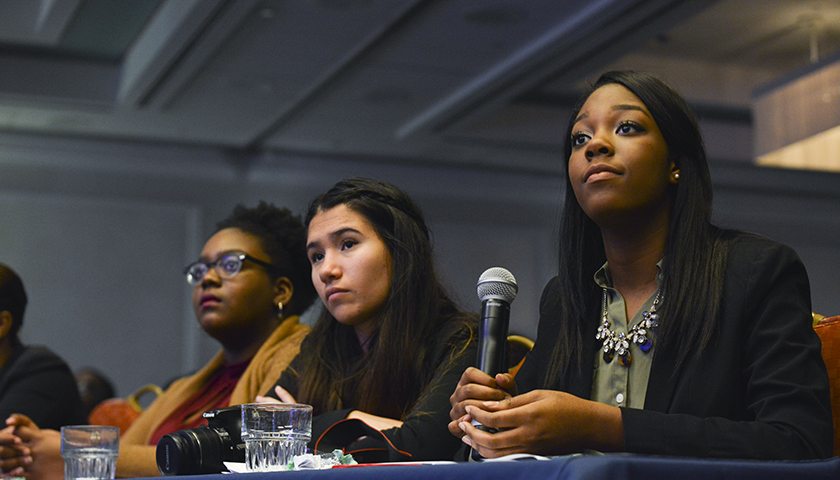
In an effort to engage Black parents around reaching that elusive goal, educators and community stakeholders tackled leadership, educational equity and policy in urban schools, during a recent panel discussion.
Led by moderator Linda Tillman, professor emeritus of education leadership at the University of North Carolina at Chapel Hill, the panel discussed the challenges faced by African American teachers and leaders, as they work to educate Black children and young adults in urban communities.
“We are here to revisit old discussions and bring fresh ideas,” Tillman said. “Jim Crow has affected Blacks in so many ways. Black education is a right [that’s] not solely based on White norms.”
Panelist Terri Watson, a City College of New York (CCNY) educator and co-creator of the CCNY-based “Growing Our Own Doctor’s Project,” said that there’s not only a need for better education, but that there’s also a need for safer communities for Black students.
“We have to focus on creating space where kids are informed and active, that’s important,” Watson said. “We have to let the kids know that the world is waiting for them, they’re up next and we have to change their mindset that the world views them as disposable.”
Rodney Hopson, a professor and associate dean of education psychology at George Mason University, Sonya Douglass Horsford, an associate professor of education leadership at the Teachers College at Columbia University, and M. Christopher Brown II, the president of Kentucky State University also participated in the panel that took place during the Congressional Black Caucus Foundation’s annual legislative conference.
Both Brown and Horsford, longtime friends, said the majority of public schools are now non-White. The proliferation of charter and alternative schools has also chipped away at the effectiveness of public schools.
The federal government has played such a major role in shaping education policy and schools now mostly prepare African Americans for prison, not college, Brown said.
“The school’s structure that’s used is that they teach our kids how to stand in a straight line, to raise their hands when they have to go to the bathroom…you do that in prison, so that’s the training they’re getting,” Brown said.
He then quoted what he said was a prophetic statement made by W.E.B. Du Bois 57 years ago.
“[African American] teachers will become rarer and in many cases will disappear,” Brown said quoting Du Bois, noting that the prediction has come to pass.
Brown continued, quoting Du Bois: “[African American] children will be instructed in public schools and taught under unpleasant if not discouraging circumstances. Even more largely than today, they will fall out of school, cease to enter high school, and fewer and fewer will go to college.”
Horsford, like the other panelists, said no one should be surprised, because, after all, resegregation has occurred and education is the “new civil rights in the new Jim Crow.”
“We shouldn’t operate from the assumption that our schools are broken,” she said. “They are doing exactly what they were designed to do, which is to sift and sort children into different categories for economic reasons.”
Horsford added that African Americans must tap the potential, possibilities and gifts of the young people who truly hold the answers to society’s pressing problems.
Even educators have suffered and are poorly valued in a system guided by high-stakes testing and performance-based accountability, Horsford said.
“We have to engage in parallel efforts…we need to reimagine schools and school systems that support everyone,” said Horsford. “We also have to make sure that, in the meantime, we are preparing students to not only survive, but also thrive in an era of extreme inequality.”
By Rushern Baker (County Executive, Prince Georges County, Md.)
On November 4, 1952, Dr. Helen Kenyon addressed the Women’s Society of Riverside Church in New York City and opined that, “Eleven o’clock Sunday morning is the most segregated hour in America.” Dr. Martin Luther King, Jr. often paraphrased the quote.
Today, sadly, our public schools best reflect Dr. Kenyon’s and Dr. King’s sentiment as the most segregated place in America.
The rampant re-segregation of American public schools poses a greater threat to the trajectory of America’s progress than terrorism, nuclear proliferation, and Russian meddling in our elections. Sixty-two years after Brown v. Board, the GAO (Government Accountability Office) reported that from the years 2000-2014, both the percentage of K-12 public schools in high-poverty and the percentage of African American and Hispanic students enrolled in public schools more than doubled, and the percentage of all schools with so-called racial or socioeconomic isolation grew from 9 percent to 16 percent.
Research shows that racial and socioeconomic diversity in our classrooms leads to higher than average test scores, greater college enrollment rates, and the narrowing of achievement gaps. These gains don’t just apply to poor and minority children either—every student benefits from learning and engaging with peers from different backgrounds. Despite the evidence, today our public schools are more segregated than they were 40 years ago.
As an advocate for children and families, and as a public servant, who has fought for more resources for students, I believe we must act boldly to save free, high-quality public education for all.
Some of the very leaders tasked with solving the negative effects from school re-segregation offer shortsighted policies that exacerbate racial and economic divisions. The ripple-effect, consequences of their misguided thinking remains the greatest policy foible of the modern era. Lazy logic behind bad policy feeds a perception that that the achievement gap exists simply, because poor and minority students learn differently than their wealthier, White peers. Rather, it is directly tied to declining enrollment, lower property values, and the dwindling resources available to tackle mounting challenges in the communities that surround underperforming public schools.
The greatest irony remains that those promoting harmful education policies use the same language of “giving every child a chance at a high-quality education” to pitch their tax-dollar-poaching and resource-pilfering experiments to desperate parents.
Rather than making public education a number one priority, a Hunger-Games-like competition for vouchers and charter schools leaves parents and students fending for themselves. The families that lose the education lottery end up at schools with increased needs and declining resources. In Maryland, our Governor’s BOOST voucher program set aside $5 million dollars of public money to help 2,400 families pay for their child’s education. Yet, 80 percent of the families receiving these grants had children who were already enrolled in private schools.
Vouchers, whose American roots can be traced back to some Southern states’ attempts to avoid integration, perpetuate segregated education and are nothing more than a thinly-veiled attempt to cut off funds to public schools. It gets even worse. Some communities have simply seceded from the larger school district, as we’ve seen in Alabama and Tennessee, to keep from integrating their schools. Since 2000, the U.S. Justice Department has released 250 communities from their desegregation orders and consequently facilitated their financial and administrative secession from their school districts.
After all those factors lead to a dip in school performance, students and their communities are stigmatized as “failing.” Schools close. Quality of life drops; economic prospects dwindle; public safety decreases; and the cycle repeats, so that higher needs populations receive even fewer resources.
I know. I’ve lived through it. It’s time to back up the big talk of “opportunity for all” with policies that don’t ask parents to compete for a few spots, but instead, make public dollars work for every child.
We’ve embraced this mission in my home of Prince George’s County, Maryland where I serve as County Executive. Though we know our best days are to come, we’ve seen incredible progress: increased enrollment; higher graduation rates; an increase in innovative academic programs; and more students receiving college scholarships.
The debate over how we improve public education can’t begin with state-funded segregation, which harms communities and students, especially our most vulnerable. Let’s secure our children’s futures and the future of America by making a meaningful investment in quality public schools for all.
Rushern Baker, a graduate of Howard University, is the county executive in Prince George’s County, Maryland. You can follow him on Twitter at @CountyExecBaker.
By Dr. Elizabeth Primas (Program Manager, NNPA/ESSA Public Awareness Campaign)
Georgia is making every effort to ensure that students have a better chance of performing at proficient or advanced levels on all state exams. The Every Student Succeeds Act (ESSA) prioritizes narrowing the achievement gap. As states move to implement ESSA, according to federal guidelines, this priority serves as a guiding force. Georgia proposes a target of decreasing the achievement gap by three percent, annually, which is a small number, when compared to the aggressive goals of ESSA’s predecessor, No Child Left Behind (NCLB), which required the achievement gap be closed by the 2013-14 school year. Educators believe that Georgia’s adjusted target is more attainable. NCLB primarily focused on accountability; this translated into more and more assessments and little attention was paid to the actual instructions and interventions that would guarantee that students receive the quality education needed to advance academically. Schools quickly realized that the targets and goals of NCLB were unrealistic and unachievable.
Under the recently submitted ESSA proposal, Georgia has indicated that they believe substantial progress can be made in closing the achievement gap in 15 years. Georgia will re-evaluate and adjust strategies for improvement every five years using the state’s proposed three percent annual decrease of the achievement gap as a benchmark. This will ensure steady progress towards the goal of 100 percent of students attaining scores at/or above grade level by 2032.
The Every Student Succeeds Act requires each state to provide a detailed plan as to how aggressive goals to close the achievement gap will be met. Georgia has decided to use assessment scores from the 2017-2018 school year to determine the baseline for each student subgroup. That means that they will identify the starting point for each subgroup based on data they collect this school year. Georgia will then determine how much each subgroup should move in a brief period (1-5 years), and how much they should move over the long period (1-15 years), thus establishing short- and long-term goals. Georgia will then look at each student subgroup (diverse populations) to determine where each group is scoring on the English language arts, mathematics, science and social studies tests. After an analysis of the data, Georgia will set incremental goals for each subgroup that align with state-wide short-term and long-term goals.
Throughout the planning process, Georgia has engaged parents, community members, colleges and universities, teachers and administrators, as well as governmental agencies to help set realistic expectations for Georgia’s students.
Several key components emerged from the stakeholder meetings including:
End-of-course exams should be aligned to the actual instructions the students received.
Once students complete core requirements (English, math and science classes) they are eligible to take advanced courses. The advanced courses are offered through a variety of venues…on-line, before and after school, and during the school day.
Georgia will offer dual-language immersion in eight Local Educational Agencies (LEAs), with Spanish and English as the dual-languages.
Students will have the opportunity to earn advanced credits through accelerated enrollment programs, which may be offered through AP/IB and/or dual-enrollment. Georgia pays the tuition for all dual-enrollment high-school students, making this program accessible for disadvantaged and low-income students.
A common thread across statewide feedback sessions emerged: “parents want to ensure that students are exposed to a well-rounded curriculum.”
It appears Georgia is determined to engage the community in a meaningful way and bring community partners into the school improvement process.
Get involved with education in your community and learn more about the Every Student Succeeds Act at www.nnpa.org/essa.
Dr. Elizabeth Primas is an educator, who spent more than 40 years working towards improving education for children of diverse ethnicities and backgrounds. Dr. Primas is the program manager for the NNPA’s Every Student Succeeds Act Public Awareness Campaign. Follow Dr. Primas on Twitter @ElizabethPrima3.





 Republican lawmakers’ proposed changes to the federal tax code are causing a stir in the education community. Teachers and others are zeroing in on the bill’s repeal of the $250 tax deduction teachers and principals can take for spending their own money on classroom supplies. But, aside from that, how could the bill impact an individual teacher’s tax bill?
 By Stacy M. Brown (NNPA Newswire Contributor)