CHICAGO CRUSADER — The students of TM Landry College Prep schoolin Breaux Bridge, Louisiana have been spreading joy across the Internet with their celebratory college acceptance reaction videos. Each must-see video clip captures the moment one of students learns that they’ve been accepted to the college of their choice, as their friends, family members and teachers gather around to cheer in excitement along with them.
As we bring 2017 to a close, here’s a round up of their most lit reaction videos, which we absolutely can’t stop watching. Congratulations to all of these phenomenal students and to the school staff for continuing to encourage such a positive tradition!
BOWDOIN COLLEGE—RANKED #3 in the US in Liberal Arts—SAYS YES TO SENIOR, TROY GREENE. Here’s his acceptance video!
COLUMBIA UNIVERSITY—RANKED #5 in the US—SAYS YES TO GRADUATING JUNIOR, KAYLA AMOS. Here’s her acceptance video! (TM LANDRY 4 for 4 on the IVY LEAGUE colleges for the day)!THREE-PEAT-three years in a row TM Landry has gotten students into Columbia University!
BROWN UNIVERSITY—RANKED #14 IN THE US— SAYS YES TO TM LANDRY GRADUATING JUNIOR, ALIKO LEBLANC! Here’s her acceptance video! (TM LANDRY IS 3 for 3 on the IVY LEAGUE colleges for the day)!
YALE RANKED #3 in the US— SAYS YES TO James Dennis TM LANDRY’s 16 y/o graduating junior!—(TM LANDRY 2 for 2 on the IVY LEAGUE colleges for the day)! Here’s his acceptance video!
DARTMOUTH COLLEGE ranked #11 in the US SAYS YES TO TM Landry College Senior, KAMAN LEDAY!!! TM LANDRY 1 for 1 on Ivy Leagues for the day, out of a possible 4.
On December 14, 2012, 20-year-old Adam Lanza entered Sandy Hook Elementary School and fatally shot 20 children between six and seven years old, as well as six adult staff members. Prior to driving to the school, he shot and killed his mother at their Newtown home. As first responders arrived at the scene, Lanza committed suicide by shooting himself in the head.
In commemoration of the tragedy, volunteers with the Middle Tennessee chapter of Moms Demand Action for Gun Sense in America, part of Everytown for Gun Safety, gathered to honor the five-year mark of the Sandy Hook School shooting and the 94 Davidson County citizens who died in shootings in 2017.
Also in attendance were State Representatives Bill Beck, State Representative Harold Love, Ashford Hughes, Senior Advisor at the Mayor’s office, and a host of others.
Moms Demand Action volunteers Jennie Hunter and Linda McFadyen-Ketchum light candles as the names of Davidson County Citizens who died in shootings in 2017 are read.
Moms Demand Action was founded by stay-at-home mom Shannon Watts on December 15, 2012, in response to the devastating shooting at Sandy Hook Elementary School. The organization quickly flourished into a leading force for gun violence prevention, with chapters in all 50 states and a powerful grassroots network of moms that has successfully effected change at the local, state and national level. In December 2013, Moms Demand Action partnered with Mayors Against Illegal Guns to unite a nationwide movement of millions of Americans working together to change the game and end the epidemic of gun violence that affects every community.
“There have been over 150,000 shooting deaths in this country in the last 5 yrs. Today on the anniversary of Sandy Hook, we gather together to remember the children and teachers 86 people in Davidson couty have died from homicide by gun this year, that number does not include accidents and suicide,” said Jeannie Hunter, a Moms Demand Action volunteer.
“We gather this weekend with others across the country and every state, and we call upon our local state and national leaders to promote policies and legislation that will reduce the impact of gun violence on all of our community; and urge support of extended background checks, essential legislation endorsed by an overwhelming majority of Americans.”
Those sentiments were echoed by Representative Harold love who said that, “we must do something about gun violence”, affirming his commitment along with that of Representative Bill Beck in doing what they can to help reduce gun violence in Tennessee.
The occasion was somber, with volunteers and those effected by gun violence sharing their stories, thankful for the organizations that is helping to bring positive change to senseless gun violence
“I’m very thankful for the ‘Moms’. I never understood how a mother could survive burying her child, and some days we didn’t think we were going to make it,” said one volunteer. I still don’t understand how a parent can live without their childe, because each day my husband and I struggle.”
Following the service, local artists lead attendees in creating Care Cards that were be mailed to gun violence survivors across the nation.
This event was one of more than 200 across the country commemorating the Sandy Hook five-year mark and asking lawmakers to do more to end gun violence.
Indiana University Northwest’s Office of Diversity, Equity and Multicultural Affairs invites the campus and community to observances of Dr. Martin Luther King, Jr. Day and Black History Month. All events are free and open to the public.
Martin Luther King, Jr. Day Celebration
January 18, 2018
In observance of Dr. Martin Luther King, Jr. Day, IU Northwest welcomes Stephon Ferguson. His presentation takes place at 6 p.m., Thursday, Jan. 18 in the Theater at the Arts & Sciences Building.
For the past 12 years, Ferguson has traveled the globe performing as King and educating people about his philosophy of love, peace, justice, and unity to bring about positive change. Ferguson works with the National Park Service at the Martin Luther King, Jr. National Historic Site in Atlanta, Georgia, where he gives historical presentations and Dr. King re-enactments. He is certified by The King Center, Emory University, and the University of Rhode Island to teach the Kingian Nonviolence Curriculum.
Black History Month Theatrical Production: “The Movement: 50 Years of Love and Struggle in America,”
February 8, 2018
“The Movement: 50 Years of Love and Struggle in America,” a multifaceted journey through the ever-changing face of the African American experience, takes place at 6 p.m., Thursday, Feb. 8 in the Bruce W. Bergland Auditorium, located in the Savannah Center.
A visual chronicle highlighting many of the political, social, cultural markers of the more than 50 years since the passage of the Voting Rights Act of 1965, this theatrical production features Emmy Award winning actor Ron Jones playing multiple characters. An open discussion with the audience follows the performance.
The Wiz
February 22 – 25, 2018
The Wiz, a production written by William Brown and Charlie Smalls; directed by Mark Spencer; and choreographed by Asia Dickens, is set for 7:30 p.m., February 22, 23 and 24 and 2:30 p.m., Sunday, February 25 at the Theater at the Arts & Sciences building.
After celebrating the demise of the Wicked Witch of the East with the Munchkins, Dorothy departs for the Emerald City with a live yellow brick road. The words are jive, the songs upbeat. She encounters a hip Scarecrow who wants to join her because he has a feeling he isn’t going anywhere; an uptight Tin Man who needs Dorothy’s help to hang loose again, and a mama’s-boy Lion who has lost faith in the psychiatric help he’s been getting from an owl. Together they will seek help from the great and powerful Oz.
Triumph: The Untold Story of Perry Wallace
February 27, 2018
A film screening of the documentary Triumph: The Untold Story of Perry Wallace with film director Rich Gentile, takes place at 6 p.m., Tuesday, Feb. 27 in the Bruce W. Bergland Auditorium, located in the Savannah Center.
Imagine the Deep South, Southeastern Conference (SEC) Basketball, the 1960s. Now imagine being the first African American to play in that setting. And now, imagine no university or coaching support between you and the noisy, venomous crowds, waving confederate flags and spewing racial epithets—demonstrating their displeasure that you are even stepping onto the court.
That’s the line Perry Wallace crossed in 1966 and the challenge he faced—alone—with courage, talent, tenacity, and faith. He ultimately prevailed and our country, along with collegiate sports, took another long-overdue step forward, thanks to Perry. Perry’s crusade continued after playing for Vanderbilt University, and today, 50 years later, his remarkable story is finally being told.
This is not just the story of a trailblazing athlete, but of civil rights, race in America, a campus in transition during the tumultuous ’60s, the mental toll of pioneering, decades of ostracism, and eventual reconciliation and healing.
More events are being planned for Black History Month. For updates, please visit iun.edu/diversity.
For more information, contact Tierra Jackson at jacksoti@iun.edu or (219) 980-6596.
About Indiana University Northwest
One of eight campuses of Indiana University, IU Northwest is located in metropolitan Northwest Indiana, approximately 30 miles southeast of Chicago and 10 miles from the Indiana Dunes National Lakeshore. The campus has a diverse student population of approximately 4,000 degree-seeking students and 1,500 dual-degree-seeking students. The campus offers Associate, Baccalaureate and Master’s degrees in a variety of un- dergraduate, graduate and pre-professional degree options available from the College of Arts and Sciences, the College of Health and Human Services, the School of Business and Economics, and the School of Education. The campus is also host to IU School of Medicine-Northwest-Gary, which actively involves students in research and local healthcare needs through its four-year medical doctorate program. IU Northwest emphasizes high-quality teaching, faculty and student research and engagement on campus and in the community. As a student-centered campus, IU Northwest is committed to academic excellence characterized by a love of ideas and achievement in learning, discovery, creativity and engagement. Indiana University Northwest is an equal opportunity/affirmative action employer committed to achieving excellence through diversity. The University actively encourages applications from women, minorities, veterans, persons with disabilities, and members of other underrepresented groups.
NEWBURGH – U.S. Senator Kirsten Gillibrand Friday visited Newburgh Free Academy to announce her bipartisan legislation, 21st Century Strengthening Hands On Programs that Cultivate Learning Approaches for Successful Students Act. This bill would direct federal funding to high-tech training and education programs in high schools and institutions of higher education, which would give more students the opportunity to learn the skills necessary to get good-paying jobs in the high-tech manufacturing sector. U.S. Senator Todd Young (R-IN) is a cosponsor of this bill.
Technologies like 3D printers, laser cutters, and computerized machine tools are transforming American manufacturing and increasing the need for specialized training for manufacturing jobs. To prepare our students with the skills needed for high-tech jobs, this legislation would amend the Perkins Career and Technical Education (CTE) Act to give greater priority to funding for maker education, makerspaces, and training for teachers in the application of maker education.
Newly elected Orange County Legislator Kevindaryán Luján talks with U.S. Senator Kirsten Gillibrand Friday while she visited Newburgh Free Academy to announce her bipartisan legislation. Hudson Valley Press/CHUCK STEWART, JR.
“Many manufacturing companies in our state have job openings with good salaries, but they can’t fill them because too many workers haven’t had the opportunity to learn the skills they need to take on those jobs. We need to fix this,” said Senator Gillibrand. “I’m proud to introduce bipartisan legislation to make sure tech-ed classes are teaching students how to use the latest high-tech tools, like 3D printers, that manufacturing companies expect them to know how to use. Our students should be able to take many different paths in order to get a good job and earn a good salary, and this bill would help equip more students with the skills they need to get on a path toward good-paying high-tech jobs when they graduate high school.”
“We appreciate the support of Senator Gillibrand in promoting legislation that will give students access to new and emerging technologies as they prepare to become the workforce of tomorrow,” said Johnnieanne Hansen, Director of Workforce Development and Apprenticeship Coordinator for the Council of Industry. “Career and Technical Education provides a clear path to rewarding and lucrative careers in the advanced manufacturing sector. More and more students, parents and professional educators are recognizing this fact and this legislation will help make CTE available to more students. It is also a wonderful complement our association’s efforts to encourage people to pursue careers in manufacturing such as GoMakeIt.org and Apprenticeships.”
This investment in vocational education would give more students the technical skills needed for good-paying jobs, providing hands-on learning experiences for students to use high-tech industrial tools to create and innovate. This approach to technical education will offer more opportunities to inspire the next generation of manufacturing workers and entrepreneurs.
This bill, as well as a broader reauthorization of federal CTE programs, will help promote to career and technical education to set more students up for success by preparing them for the jobs of the future.
The Chronicle — (Charleston, SC) Representative-Elect Marvin Pendarvis (D-North Charleston) has pre-filed multiple bills aimed at promoting educational opportunity for South Carolinians.
Pendarvis pre-filed H. 4439, the “South Carolina Promise Scholarship Act,” which would establish a scholarship program for South Carolina students seeking an associate’s degree, certificate, or diploma from state postsecondary institutions. This bill would cover the cost of tuition and mandatory fees, less all other financial aid, and establish a mentorship program for Promise Scholars. Pendarvis’s House bill mirrors legislation filed in the state senate earlier this year.
H. 4449, the “Rural Schools Act,” would establish safeguards against closing rural schools in the Charleston County School District. The legislation requires the school district to show that such a school closing would be in the best interests of students and require public hearings to gather input from the affected community.
Similarly, H. 4510 would reform the Summerville School Board, providing for members to be elected from single-member districts. This would ensure that rural communities are represented in decisions that affect their local schools.
Pendarvis signed on as a co-sponsor to two additional bills. Partnering with Rep. Wendell Gilliard (D-Charleston) on H. 4388, the “Advanced Manufacturing Instruction Act of 2018,” this legislation would provide students with elective courses in advanced manufacturing. STEM education in public schools is an integral way for students to gain skills necessary in the modern workforce.
Working with Rep. John King (D-Rock Hill), H. 4390 calls for additional federal funding for public education in South Carolina.
“I grew up in the Charleston Farms neighborhood, graduated from Garrett High School, and went on to the University of South Carolina. As a product of South Carolina’s public schools, I know the importance of a quality education,” Pendarvis said.
“All students deserve quality education. All students deserve the opportunity to gain the skills needed to compete in the 21st century economy,” Pendarvis continued. “I’m sponsoring these bills so that South Carolinians – regardless of their ZIP code or economic background – have a fair shot at success.”
Council Member Yvette Simpson last week presented the groundbreaking Youth Commission of Cincinnati youth study titled “It’s Time to Wake the Village” to the Cincinnati Public Schools Board of Education.
The YCC Youth Study, also known as the Youth Gap Analysis Study, is a three-year study commissioned by Simpson and YCC to provide a complete report on the state of Cincinnati youth. Community Builders Institute at Xavier University conducted the study focusing on six areas: crime, education, health, poverty and homelessness, workforce development, and developmental opportunities.
A staunch advocate for Cincinnati youth, Simpson has been sharing the report with various organizations since its completion earlier this year, many of which have used the information to create or fine tune activities and programs for city youth. Now, she has decided to take the youth study to the people. She is encouraging the Cincinnati Board of Education to embrace the report and see how it can be incorporated into their curriculum and programming. She has also begun presenting the report directly to nine community leaders whose neighborhoods that are featured in the study.
Cincinnati has over 65,000 youth living in its city, and 50 percent live in nine neighborhoods: Avondale, East Price Hill, West Price Hill, Mt. Airy, Winton Hills, College Hill, Hyde Park, Mt. Washington, and Westwood.
By listening to young people the report discovered youths from all socioeconomic backgrounds believe they will be successful. The report also revealed families and schools are the first support network for young people; that youth experience and worry about violence; that they want to get out and see the world; and they do not feel connected to their neighborhoods.
For copies of the Youth Gap Analysis Study: It’s Time to Wake the Village, visit Simpson’s Council webpage at www.cincinnati-oh.gov/Simpson, click on Youth Commission of Cincinnati, and then click on Youth Study, and download the report
Cincinnati Public Schools projects its enrollment will continue to slightly increase to an estimated 35,544 students in 2018-19, its highest enrollment since 2005-06. Since 2013, the district has gained 2,543 students.
Some key areas of change include:
CPS has 35,355 students enrolled in the 2016-17 school year, an increase of 196 students from the previous year;
CPS has opened three elementary schools in 2016-17 to accommodate a growth surge in enrollment for those age groups;
Charter school enrollment in the district declined by 189 students this school year;
9 percent of CPS students are Black, Non-Hispanic, which represents no significant change from the previous school year;
CPS is giving more preschoolers a strong start, with a projected 440 new students expected to enroll in preschool next year.
Last month, CPS released a report called “Making Progress,” which outlined improvements in the district’s performance, including:
98 percent of CPS third graders met the Third-Grade Reading Guarantee; this represents a 29 percent increase in the number of third graders who achieved the state’s proficiency rate;
96 percent of 2017 graduates have been accepted into a college program, enlisted in the military or entered the workforce, up from 92 percent in 2016;
ACT scores increased 5 percent over the last four years.
Despite constant gains in technology, infrastructure and industry across the United States, Black and brown children are still hampered by some of the largest educational gaps in the nation.
Of the Black and brown children suffering academically throughout the U.S. school system, boys in particular seem to be affected the most, with extremely high educational literacies disparities found in the nation’s capital and neighboring Baltimore.
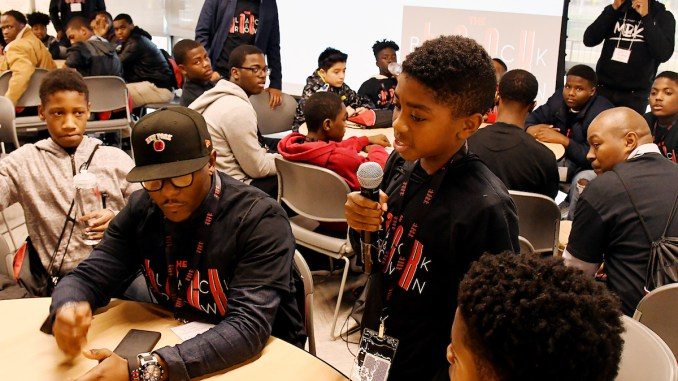
With a mission to address and correct these educational imbalances, Shawn Hardnett, founder and CEO of the North Star College Preparatory Academy for Boys, recently collaborated with four other D.C. and Baltimore all-male schools for the inaugural “Black and Brown Hackathon,” in order to better facilitate and support Black and brown boys.
“While being here in D.C., my focus has always been on supporting Black and brown boys using the arts,” Hardnett said. “Through my many volunteer roles in education, I noticed a tremendous lack of adequately trained teachers and a [low] number of Black and brown boys succeeding academically and I really wanted to do something that would allow me to correct that.
“Through the help of some very special educators, community members and parents, my goal … is to give Black and brown boys a platform to share their own experiences in school and what it would take for them to do even better,” he said.
During the Oct. 2 event at the partnering Ron Brown College Preparatory High School, 100 male students and over 150 male and female volunteers participated in critical thinking exercises, friendship building games and leadership training.
Bishop John T. Walker School for Boys, Washington Latin Public Charter School and Baltimore Collegiate School for Boys also took part in the event.
”I’ve been to D.C. plenty of times, but when I learned that there was a leadership program for young Black boys going on, that made me really want to go,” said participant Denzel Mitchell. “Today was fun because we got a chance to talk about all these problems that happen to young Black males so that we can help them and enjoy fun activities.”
Desmond Johnson, an eighth-grade student at the Baltimore Collegiate School for Boys known for collectively organizing and helping other students, said the program had already begun to help him.
“Being here makes me think about how I can do and be something better than what I’m doing and being now, and really makes me want to show and tell younger kids how to improve and hopefully how to accomplish their dreams — and my own, too,” Desmond said.
And while students like Raymond Weeden III, a sixth-grader who attends Washington Latin Public Charter School, are fortunate enough to have a ever-present male role model in their lives, Kerel Thompson, a STEM instructor at North Star, said there is still more work to be done.
“Whenever we talk to Black and brown male students, they always list the same issues, with concentration stemming from home issues, attention from girls and the need and want to be cool,” Thompson said. “Our goal is to provide them with structure, keep them engaged and send them a message that they can be and do whatever they want in life. … We are concerned about boys, because we know they are in trouble and we as a society need to start finding out why.”
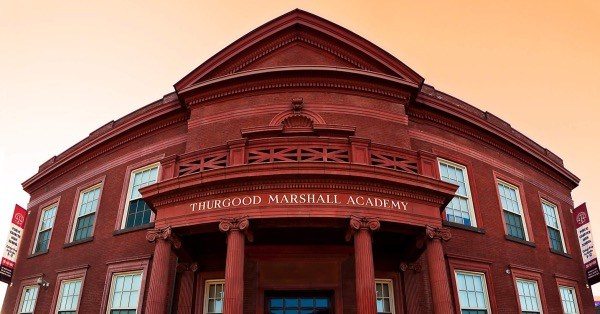
Sixty percent of Thurgood Marshall Academy’s Class of 2018 participated in the “Early Action” program, in which they applied to colleges and universities early in their senior year and, in some instances, even before the end of the first semester.
One of the most important factors in college admissions is SAT scores. To that end, the academy further invested resources to offer SAT prep classes to seniors, and as a result, 97 percent of its students scored better than 800. Additionally, 50 percent of the academy’s students earned a “super score” of 1000 or greater.
Board of Education Honorees
The D.C. State Board of Education recently honored Paul Howard as the District’s 2018 Teacher of the Year.
Howard, who has taught social studies at LaSalle-Backus Education campus in Northeast for the past five years, will represent D.C. in the Council of Chief State School Officers’ National Teacher of the Year competition.
The board also honored Banneker High and Horace Mann Elementary schools for being selected as a U.S. Department of Education 2017 National Blue Ribbon School.
The program recognizes public and private elementary, middle and high schools based on their overall academic excellence or their progress in closing achievement gaps among student subgroups.
Task Force Update
At its most recent meeting in November, the D.C. State Board of Education proposed changes to high school graduation requirements designed to ensure the District diploma fulfills its intended purpose.
They also suggested further edits to the requirements, indicating which of their peers’ changes they liked, disagreed with, or wanted more information about.
In the coming weeks, the board will present a new version of the draft to constituent groups and provide feedback from those conversations at their December meeting.
Team-Building Success
Under supervision of SEED DC Public Charter School teacher Nick Ford, program coordinator Indian Brown, partners at BUILD and six dedicated mentors, 30 ninth-graders spent a year dreaming up business ideas, forming teams and pitching their business plans to peers and local entrepreneurs.
Through a daily class supplemented by weekly evening programming, students built relationships with local mentors who helped them refine their ideas, products, and approach.
BUILD is a real-life testing ground for students to learn skills in critical thinking, collaboration, innovation, and self-management. And it worked: one SEED DC PCS team won BUILD’s year-end citywide competition for their “Chop-a-Cake” cake-cutter business plan and pitch, while another team took home an award for problem-solving.
The public reporting requirements of the Every Student Succeeds Act (ESSA) offer greater transparency about school quality, according to experts and education advocates who also predict that the new law will empower parents and make them more informed partners in the education process of their children.
President Barack Obama signed ESSA into law on Dec. 10, 2015.
“Public reporting is going to be very important, because state systems, like what goes into [calculating] letter grades for schools, are incredibly complex,” said Phillip Lovell, the vice president of policy development and government relations for the Alliance for Excellent Education, a Washington, D.C.-based national advocacy organization that’s dedicated to ensuring all students graduate from high school, ready for success in college and in the workplace. “States are aware of and working on how to communicate information on school performance clearly.”
Brenna McMahon Parton, the director of policy and advocacy for Data Quality Campaign, one of the nation’s leading voices on education data policy and use, said that everyone deserves information, which is why ESSA requires that report cards are easy to understand.
“To date, states haven’t focused on parent needs and, as a result, report cards are difficult to find and use,” said Parton. “As states develop new report cards, they should be sure that parents will have a one-stop-shop that provides information they need about how students and schools in their community are performing.”
ESSA reauthorized the Elementary and Secondary Education Act (ESEA), the historic civil rights law passed in 1965 and effectively replaced the Bush-era No Child Left Behind Act.
Transparency and parental engagement are integral parts of the new law.
Under ESSA, all schools receiving Title I funds must inform parents of their right to request information about the professional qualifications of their children’s teachers; parents are also encouraged to support their children’s educational experiences by communicating regularly with teachers.
In a post on “The 74,” a nonprofit news site dedicated to education, Rashidah Morgan of Education First, said that, “Greater transparency about school quality, will ultimately empower parents to make more knowledgeable choices about schools.”
Also, transparency on spending and academic results help the public understand how schools are performing in their communities, said Chad Aldeman, a principal at Bellwether Education Partners, a Washington, D.C.-based nonprofit focused on changing the outcomes and education life for the underserved.
“Accountability systems only work, if people understand what they’re being held accountable for and have enough information to know how to respond,” Aldeman said, adding that parents need good information to make informed choices about where to send their children. “To make that a reality, parents need information about both their own child’s performance, as well as how similar students are performing in other schools.”
Finally, clear, transparent school and district report cards help families make critical decisions and equip community members and the public to push for needed improvement in schools, said Dr. Lillian Lowery, the vice president of PreK-12 Policy, Research and Practice at The Education Trust, a nonprofit based in Washington, D.C. that promotes high academic achievement for students at all levels, particularly students of color and those of low-income.
“ESSA requires states to report a lot of important information on how schools are doing at preparing all groups of students, including students from low-income families, students of color, English learners and students with disabilities, for post-high school success,” said Lowery. “To maximize the usefulness of this information, state leaders should work with families and education advocates to ensure that report cards are easy to access and understand.”




 On December 14, 2012, 20-year-old Adam Lanza entered Sandy Hook Elementary School and fatally shot 20 children between six and seven years old, as well as six adult staff members. Prior to driving to the school, he shot and killed his mother at their Newtown home. As first responders arrived at the scene, Lanza committed suicide by shooting himself in the head.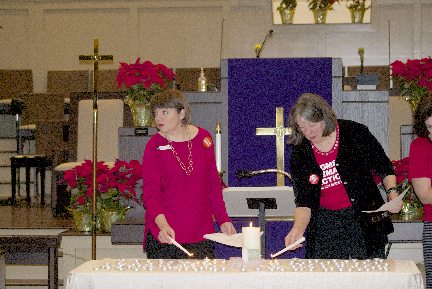









 Council Member Yvette Simpson last week presented the groundbreaking Youth Commission of Cincinnati youth study titled “It’s Time to Wake the Village” to the Cincinnati Public Schools Board of Education.
 By
By