AFRO NEWSPAPER — As public school students begin a new school year, they do so to an array of educational choice that is the strongest in decades—perhaps ever.
Backed by the decision to increase the Uniform Per-Student Funding Formula, which funds public school operating costs this school year and last, District families continue to demonstrate increasing confidence in D.C. public schools and D.C. charter schools.
[/media-credit] Dr. Ramona Edelin is executive director of the D.C. Association of Chartered Public Schools.
The new school year will doubtless see a further increase in public school enrollment after eight consecutive increases, following decades of decline and the flight of those with the means to choose alternatives to the District’s public schools. A trend that began only with charters, enrollment which has grown steadily for over two decades, now extends also to DCPS, where enrollment has increased for six years in a row now.
Charter schools, which educate nearly half of all District public school students, have been a key component in this educational renaissance. Charters are publicly-funded and tuition-free, like traditional public schools, but free to design and develop their school curriculum and culture, while being held accountable for improved student performance.
When charters were first introduced 21 years ago, half of all public school students dropped out before graduating. Yet today, the on-time—within four years—high-school graduation rate is 73 percent for charters, and 69 percent for DCPS.
Standardized test scores have significantly improved at both public charters and DCPS, with the strongest gains among D.C. charter schools serving our most disadvantaged communities, east of the Anacostia River. Just-released scores for last school year show that charter students in economically-disadvantaged Wards Seven and Eight are more than twice as likely to meet state college and career readiness standards as their peers in DCPS.
Importantly, improved test scores in both charters and DCPS have been accompanied by an enriched curricula and a wider range of extra-curricular options.
Bringing choice to our city’s least-advantaged residents has brought huge improvements, in terms of college and career-readiness, for those whose need for a quality education is greatest.
Accordingly, demand for these unique schools is such that nearly 10,000 students are on waiting lists to attend one or more charter campuses in the school year about to begin. Demand for traditional public schools in the out-of-boundary program also has increased. And choice for parents has been simplified by DCPS and D.C. charter participation in the common lottery, which allocates places when schools’ popularity causes them to be over-subscribed.
Charters’ success also has been the catalyst for improvements in the traditional public school system, following the introduction of mayoral-control of DCPS and the appointment of three reforming School Chancellors.
The District has replaced a vicious circle of declining standards and enrollment, and therefore a dwindling tax base, with a virtuous one of rising standards, increasing enrollment, and broader and deeper revenue sources.
Of course, more could be done to support the improvements made possible by the District’s charter school innovation—for newcomers and existing residents.
Not least among these is the fact that District law requires that D.C. charter school students receive the same city funding as their DCPS counterparts, at each grade and level of special education. Yet the city provides DCPS between $72 million to $121 million in extra funding annually—support that charters do not receive.
Additionally, D.C.’s government spends about three times as much on DCPS students for facilities, compared to their siblings and neighbors in D.C. charters. Subject to annual budget wrangling in a super-hot real estate market where charter schools must find their own space to educate their students, charters’ facilities allowance is inadequate to their students’ needs.
The Mayor’s proposed 2.2 % increase in charters’ facilities funding – approved by the Council—locked in for four years is a welcome step toward narrowing funding inequity. A facilities fund floor of $3,500 per-student, indexed to increasing costs, adjusting accordingly each year would make up for some lost ground, and reflect economic realities.
Leveling the playing field could enhance the choices that have created today’s confidence in education in the District. This—and continued adequate investment in operational and facilities funds—is required to build on the District’s education successes, fulfilling the potential of every child.
Dr. Ramona Edelin is executive director of the D.C. Association of Chartered Public Schools.
If Tuesday night was any indication of how the new Jackson Public Schools Board of Trustees will operate, Jacksonians are in good hands. In a three-hour-long meeting, the new board members questioned just about everything on the agenda, as most of the trustees got their first taste of the different powers and responsibilities they hold. The board is one member shy of being full, only missing a Ward 3 member. They elected officers first, unanimously choosing Jeanne Hairston as president, Ed Sivak as vice president and Barbara Hilliard as secretary.
Besides approving or disapproving contracts, the board’s most urgent task will be to approve the district’s new corrective action plan in December. In October, the Commission on School Accreditation voted to keep JPS on probation. JPS is out of compliance with 24 standards, by the Commission on School Accreditation’s count. Interim Superintendent Freddrick Murray told the board that he is confident the district will present a competent CAP in the upcoming months.
The new CAP is due to the Office of Accreditation on Jan. 16, 2018. The Mississippi Board of Education must approve that plan in February, which starts the countdown until July 2018 when JPS must be finished with its CAP.
William Merritt, the JPS executive director of school improvement, told the board that the district has put in processes to address the deficiencies in the investigative audit. It is working with the Bailey Education Group, as well as receiving technical assistance from the Mississippi Department of Education’s Office of Accreditation on a weekly basis.
“Could MDE clear any of the items in advance of that?” Sivak asked district leaders Tuesday.
“Not before the state board approves the corrective action plan. This new CAP—it will serve as the CAP—the old plan will go away,” Murray said. “So on February 15, when the state board approves the plan … at that point we can start requesting that standards be cleared.”
A limited state audit of the district in April 2016 revealed deficiencies, some of which JPS has since overcome. Now, the district is working to meet the standards listed in both that audit and the full investigative audit, which almost prompted a takeover of the school district. Board members had a lot of questions about the Bailey Education Group, which the district has contracted with to help clear the standards. Merritt asked the board to approve another contract with the group for 20 days of work that would ensure the district is prepared for MDE to monitor their progress next spring.
“I am really concerned about spending $1,400 a day for 20 days on a consultant group that I’m not sure if it merits out,” Letitia Johnson said.
Merritt and Murray said they both felt confident in the consultants’ expertise, particularly because both Pat Ross and Ann Moore, who are working with the district, previously worked at MDE.
Board members were concerned about the district’s ability to track the group’s work.
“Understand that since we have used the group, MDE has not come out to monitor a standard since we have contracted with them,” Merritt said. “So until they come out and monitor us for compliance, it’s kind of hard to say whether or not to say their support (has helped).”
Murray said the district needs the support to ensure that standard leaders within the district can understand exactly what they need to do to meet the required standards.
“We were going through this process in the blind,” he said.
After several questions, the board did finally approve the third contract with the Bailey Education Group directly related to the district’s CAP this year. The first contract was for $95,900 back in April. The second contract with Bailey, for $145,000, focused only on Standard 20, which requires districts to have an instructional management system and tiered models. The third contract, worth $29,000, will allow Bailey staff to check the district for compliance after the state board approves JPS’ new CAP in the spring.
Bailey contractors are working with district leaders to review the new CAP plans, and the JPS board will have to approve that plan at its second December meeting.
Email state reporter Arielle Dreher at arielle@jacksonfreepress.com. Read more at jfp.ms/jpstakeover.
By Lynette Monroe (Program Assistant, NNPA ESSA Media Campaign)
Education officials in Texas put a lot of work into the Every Student Succeeds Act state plan that they submitted to the Department of Education. We can all learn from what they included and what they chose not to include.
The Texas plan is supported by the strategic priorities of the Texas Education Agency (TEA). These priorities include: (1) recruiting, supporting, and retaining teachers and principals; (2) building a foundation of reading and math; (3) connecting high school to career and college; and (4) improving low-performing schools. TEA acknowledges these priorities require support and therefore list three prerequisites referred to as “enablers” for effective implementation of these strategies. These enablers include: (1) increased transparency; (2) ensuring compliance; and (3) the strengthening of organizational foundations.
Overall, Texas’s plan is designed to implement ESSA as Congress intended; allocating resources and funds according to need, closing the achievement gap, and increasing community partnerships. TEA states several long-term goals. The first, being that by the year 2030, sixty percent of Texans aged 25-34 will possess some form of post-secondary credentials. Another long-term goal is a 94 percent high school graduation rate. For English Language Learners, TEA proposes that by 2032, forty-six percent of students should be achieving English language proficiency. To support these long-term goals, Texas has established short-term targets in five-year intervals.
A major component of equitable resource allocation is the collection of data. TEA evaluates academic performance by ethnicity, economically disadvantaged, students receiving special education services, students formerly receiving special education services, English learners, continuously enrolled, and mobile. The minimum size for subgroup data reporting is 25. Data for subgroups 10 or smaller will be calculated using a three-year composite score. Considering the population of Texas metropolitan areas, it seems the subgroup size of 25 is appropriate. TEA will also periodically review the resource allocation process for local education agencies; which could include a review of per-pupil spending.
ESSA requires that schools use three academic measures and one non-academic school quality or student success measure to determine school achievement. TEA has chosen to use the “percentage of assessments at or above the Meets Grade Level standard for all students and student groups by subject” as their school quality and student success measure for elementary and secondary schools. For high schools, TEA will use college, career, and military readiness to include: students who earn dual credits; students who successfully complete AP Exams, students who are awarded associate’s degrees while in high school, students who enlist in the military, etc. These “non-academic” indicators are disappointing since the U.S. Department of Education encourages less emphasis on testing. Four of the six indicators of school success identified by TEA include an element of testing. Students deserve holistic education that values social development as well as academic achievement. Primarily focusing on test scores as a means of determining success devalues other important categories of intelligence, such as musical-rhythmic and harmonic abilities.
Texas does deserve praise for their inclusion of a “Closing the Gaps Domain” in their A-F accountability system. The Closing the Gaps Domain focuses on educational equity for all children; irrespective of ethnicity, economic status, or special education status. The Closing the Gaps domain must represent at least 30 percent of the overall school rating. Any school that has one or more significant gaps in achievement between subgroups will be identified for targeted support and improvement. TEA will also use a ranking system; comparing school progress to other schools with similar student demographics.
Texas also seems to have made every effort at establishing community partnerships by proposing numerous consultations under a variety of circumstances. Campuses that need comprehensive support or require even more rigorous interventions must undergo a district-led improvement plan. However, before any plan may be submitted the district must consult with parents and community members. TEA has also included parent and community feedback in their initiatives to reduce the risks of student drop-outs; the Texas Readers Initiative focuses on creating parental and public awareness while the redesign of school report cards assists parents in better understanding their child’s learning needs.
So, although school accountability measures focus primarily on testing, and support for a well-rounded curriculum like the promotion of the benefits of a free enterprise system, as well as, religious literature including “the Hebrew Scripture (Old Testament) and New Testament, and its impact on history and literature,” Texas made a concerted effort to implement the Every Student Succeeds Act according to the original intention of the law to allocate resources and funds according to need, close the achievement gap, and increase community partnerships.
Lynette Monroe is a master’s student at Howard University. Her research area is public policy and national development. Ms. Monroe is the program assistant for the NNPA’s Every Student Succeeds Act Public Awareness Campaign. Follow Lynette Monroe on Twitter @_monroedoctrine.
By Je’Don Holloway Talley, For the Birmingham Times
For educators at the Black Star Academy Home School Co-Op in Forestdale, there is the holistic and then there is the “Whole”-listic. Their goal is to offer both.
“We believe in ‘Whole’-listic education, meaning we focus on the whole child—mind, body, and spirit,” said Tremon Muhammad, creator and founder of the Black Star Academy (BSA), believed to be one of the first culturally centered home schooling collectives in the state. “Our educational program deals with the whole human being. We are big on academics, but we also deal with character and moral development.”
Part of the holistic curriculum means students participate in morning exercises, which can include yoga and meditation.
“On Monday mornings, we start our day with Kemetic Yoga and meditate on African proverbs … because you never know,” said April Muhammad, Tremon’s wife, who is director of the BSA. “Sometimes people have crazy weekends, or the children may come in with attitudes, so you want to make sure you check their spirits so that they can decompress before going into the classroom.”
More African-American families have embraced home schooling and are choosing it as an alternative for their children. An estimated 220,000 African-American children are currently being home schooled, according to the National Home Education Research Institute. Black families have become one of the fastest-growing demographics in home schooling, with their children making up an estimated 10 percent of the home schooling population, according to a 2015 article in The Atlantic magazine.
“A lot of people are having trouble with many of the changes in the public-school system,” Tremon Muhammad said.
Foreign Languages
Tremon and April Muhammad founded Birmingham’s BSA in 2015 to “give parents an alternative outside of the current educational system.”
The academy’s broad curriculum includes “cultural heritage, which incorporates geography, world history, and U.S. history,” said Tremon Muhammad. “… We also have foreign language. Our students have been learning Swahili for two years, and we are definitely looking into other foreign languages, such as Spanish, and French, because as we’ve networked with the African continent, we noticed these languages to be prominent in those countries.”
The goal is for students to master theses languages, so they are able to interact and participate in worldwide trade and commerce, the Muhammads said.
Beekeeping and More
Another part of the curriculum is beekeeping, a key part of the BSA’s Agriculture-Science program. This is the second year the course is being offered.
“Our teen students attend this class once a week,” said April Muhammad. “We have bees that produce honey, which will produce money for the school. We will be selling lip balm made from our bee hive during Kwanzaa, and we plan to have honey for sale in the spring.”
Other courses include Intro to Auto Care and Home Construction.
“We don’t see those as electives,” she said. “We see them as necessities because if you can’t feed or house yourself, what is your purpose on the planet? We want our children to have those things as they’re growing toward becoming productive, global citizens.”
Expanding the Curriculum
The BSA is open Monday through Wednesday, from 8:30 a.m. to 1:30 p.m. It is on a semester system that follows the traditional school calendar. And it averages 35 enrolled students, from kindergarten through 12th grade, per semester.
“We are quickly approaching a school-based level,” the Muhammads said. “Parents are showing demand for a full-time school-based curriculum, but right now we are functioning very well as a home schooling collective.”
April Muhammad, former director of the local and home schooling branch of the Muhammad University of Islam (MUI), said the initial success led the BSA to expand beyond the walls of a “faith-based” institution.
“We were attracting so many non-Muslim children to our program, and [parents] were kind of put off by the religious connotation [behind the institution], so my husband and I started a nonprofit [to expand the mission and curriculum],” she said.
Tremon Muhammad added, “Our initial mission was to be a relief source for people that were supplementing their child’s public-school education with home schooling.”
Shared Vision
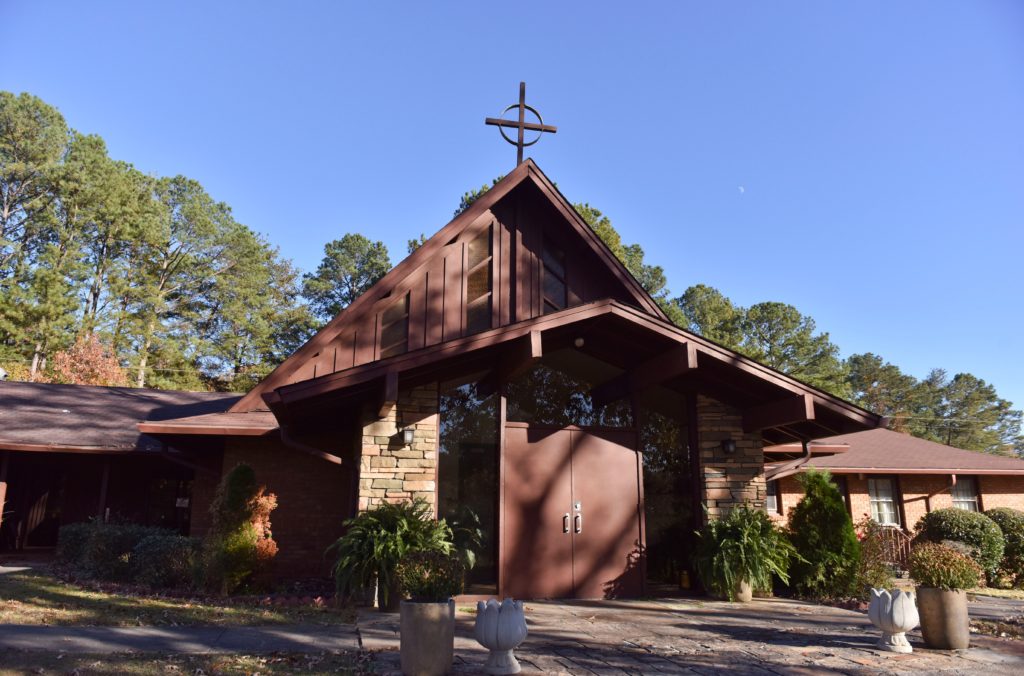
Reverend James Ephraim of First United Presbyterian Church in Forestdale has opened up his church for a home school Co-op. Students enrolled in Black Star Academy use space in the church 3 days a week. (Frank Couch Photography)
Others in the community felt the same way.
In November 2014, the Muhammads were invited to an “interest meeting” at Forestdale’s First United Presbyterian Church, where its pastor, the Rev. James Ephraim, shared a desire to see children in his community educated independently of the public-school system.
“My husband and I went to the interest meeting to see what their home schooling idea was about,” April Muhammad recalled. “When I looked at the curriculum they submitted to us, it was almost the exact curriculum we had already been working with for 10 years.”
The Muhammads learned that Ephraim and community activists Thomas “Divine Mind” Davis and Bennie Holmes were in the early phases of creating a similar alternative-education program, called a Freedom School.
Tremon Muhammad said that once the group saw the similarities in vision and curriculum, they decided to collaborate. April Muhammad remembers that parents and educators at the interest meeting all agreed to support the BSA.
“We started off strong,” April Muhammad said. “Immediately, we had 25 students in our physical home five days a week, with the parents coming in to help and to learn, as well. But I have to say, it’s been the best experience because my husband pushed it. He pushed me and his vision for a community-based institution, and we’re a success.”
‘Laying the Foundation’
Reverend James Ephraim of First United Presbyterian Church in Forestdale has opened up his church for a home school Co-op. Students enrolled in Black Star Academy use space in the church 3 days a week. (Frank Couch Photography)
By the fall of 2016, the BSA was offered use of the First United Presbyterian Church.
“We realized that we needed a place where kids, parents, and the community could come and learn as a collective,” Ephraim said. “We are laying the foundation for building communities and working with the African concept that it takes a village to raise a child, and we realized we don’t have the village. In order to create the village, the parents and the community need to be involved.”
Parental Involvement
Erycka Birchfield with her family (from left) Edyn Moss, 6; Essix Jones, 14; and Essac Jones 12. (Ariel Worthy/The Birmingham Times)
Many parents were willing to assist, April Muhammad said: “We differ because we have the autonomy to bring the parents into the child’s curriculum. [The BSA] has heavy parent involvement and is able to give more individual attention to students and cater to different learning styles.”
Erycka Birchfield, the BSA’s first parent volunteer educator, said home schooling is ideal for the black community because it teaches everyone involved a greater awareness and sense of self.
“Unity is severely lacking among my people,” she said. “I wanted to have a full-time, all-inclusive role in my children’s education. When I first called [April Muhammad] and inquired about her program, our hour-long conversation included discussions about the current curriculum and the school-to-prison pipeline for our [African-American] boys.”
Giving students that sense of self is what makes the BSA distinctive.
“We equip [students] with knowledge of themselves and equip them with the elements they need not just to survive but to thrive in the elements of life, and to be builders of their own communities,” April Muhammad said.
Another quality that sets BSA apart: “Everyone does not learn the same way, so there shouldn’t be a cookie-cutter approach to education,” she said. “Most importantly, we teach [our students] that they are math, they are science, they are history. Subjects are easier to grasp when they are learned from the inside out rather than from the outside in.”
Historically Black Colleges and Universities (HBCUs) generate $14.8 billion in economic impact annually, according to a stunning new report by the United Negro College Fund (UNCF).
The landmark study titled, “HBCUs Make America Strong: The Positive Economic Impact of Historically Black Colleges and Universities,” said that public HBCUs account for $9.6 billion of that total economic impact, while private HBCUs account for $5.2 billion.
“The estimate includes direct spending by HBCUs on faculty, employees, academic programs and operations, and by students attending the institutions, as well as the follow-on effects of that spending,” the report said.
The combined economic impact is equivalent to a top 200 ranking on the Fortune 500 list of America’s largest corporations.
“The presence of an HBCU means a boost to economic activity, on and off—and even well beyond—campus. Stronger growth, stronger communities, more jobs and a more talented workforce,” UNCF authors wrote in the report.
According to the UNCF report, Howard University generates $1.5 billion in total economic impact and 9,591 jobs for its local and regional economies.
“Every dollar spent by Howard University and its students produces positive economic benefits, generating $1.58 in initial and subsequent spending for its local and regional economies.
The study, conducted by the University of Georgia’s Terry College of Business Selig Center for Economic Growth, found that Hampton University generated $270 million in total economic impact and 2,249 jobs for its local and regional economies.
“For each job created on campus, another 1.7 public- and private-sector jobs are created off campus because of Hampton University-related spending,” study said. “Looked at in a different way: Each $1 million initially spent by Hampton University and its students creates 11 jobs.”
While Morehouse College generated a total economic impact of $188 Million and 1,580 jobs. Spelman College accounted for $199 million in total economic impact and 1,625 Jobs.
North Carolina A&T State University generated $488 million in total economic impact and 4,325 jobs for its local and regional economies.
“It’s the first time that we’ve had a study conducted by such a professional institution to recognize the importance of HBCUs and particularly the impact on our community,” Miles College President Dr. George T. French, Jr., told the NNPA Newswire. “We’ve talked in general terms, but to quantify this is important so that our partners can understand the value of our institution. It’s a win-win for our region and for government partners who look to partner with us.”
The report revealed that the 1,634-student Alabama school generated $67 million for its local region. Each $1 million initially spent by Miles College and its students creates 16 jobs, according to the report.
“It’s eye-opening and, in addition to the 730 jobs created, there’s a 1-to-1 match for every full-time job at Miles, we create another job in our region,” French said. “So, we have about 377 employees on campus, but because of that, we’ve created 350 off-campus jobs.”
The benefits flow to Miles College’s graduates, who’ll enter the workforce with sharper skills and vastly enhanced earning prospects, according to the report.
A new report from The Education Trust-New York shows that many Black and Brown students are taught by people who don’t look like them.
The report, titled “See Our Truth,” shows that although Black and Latino residents represent 43 percent of New York State’s K-12 enrollment, only 16 percent of teachers in the state are Latino or Black.
According to The Education Trust-New York, an organization devoted to closing the achievement gap in schools, more than 115,000 Latino and Black students (10 percent) attend schools with no teachers of the same race/ethnicity and another 80,000 Latino and Black students (7 percent) attend schools with only one teacher of the same race/ethnicity.
As for white students, more than 560,000 of them (48 percent) are enrolled in schools without any Black or Latino teachers, and 977,000 white students (84 percent) attend schools without a Black or Latino principal or assistant principal.
“New York’s educator workforce does not come close to representing the rich diversity of the state’s students, leaving many Latino and Black students without access to teachers or school leaders of the same race or ethnicity,” said Ian Rosenblum, executive director of The Education Trust–New York, in a statement. “The critical role that strong teachers and school leaders play in student success is central to closing achievement and opportunity gaps, and New York should improve the educator preparation pipeline, strengthen supports for educators of color and make schools more inclusive environments in order to better serve our students and educators.”
The report, which is based on unpublished school-level data, interviews and focus groups with students and educators of color, detailed the importance of being taught by someone who looks like you.
“I think it was when I heard my first Black teacher in sixth grade that I changed as a student and really opened up and owned my own voice,” said Danitra, a New York City education nonprofit administrator and former teacher, in the report. “My seventh-grade teacher was a Black man who would always say stuff like, ‘Oh, my gosh your braids are so fly.’ That affirmation, that totally changed the game for me in terms of how I interacted in educational spaces.”
“It’s really important for children of color to see people like them in places of power and leadership so that they can aspire to those positions,” added Veronica, a New York City school leader, in the report.
Schools with a Latino or Black principal are more likely to have a greater share of Latino and Black teachers and to have higher enrollment of students of color and low-income students, the report states.
One student interviewed said students might hold back because “they see teachers they can’t relate to.”
The report recommends “strengthening the educator preparation pipeline for future teachers and school leaders of color,” “improving recruitment and hiring at the school district level” and “focusing greater attention on retention, support and career advancement for educators of color.”
Black college database The Hundred-Seven has published a list of public Historically Black Colleges and Universities (HBCUs) that are recognized for their affordability. The 16 colleges have been identified because of their lower overall costs (before and after financial aid packages) compared to other similar colleges- in state and out-of-state.
The entire list of colleges can be found on the Hundred-Seven’s website. Among the schools on the list are Alcorn State University in Mississippi, Fort Valley State University in Georgia and Southern University and A&M College in Louisiana.
Even with the current “HBCU Renaissance” many experts say is going on as a result of the current political climate, some families remain resistant about sending their child to a Black college over concerns of cost. Students living in areas where there are no HBCUs are often faced with paying out-of-state tuition. Many of the schools on The Hundred-Seven list have low out-of-state tuition rates and are recognized nationally for their value.
The Hundred-Seven was founded by educator, historian and HBCU expert, Leslie D.W. Jones to promote higher education through HBCUs. The website highlights the accomplishments of HBCU’s and their alumni along with the only online searchable database that features every academic program offered by every Black college.
CROSSROADS NEWS — Parents, grandparents and anyone raising school-age children, as well as property owners in DeKalb and across Georgia, can find out about the new national education law – Every Student Succeed Act, or ESSA – at a Black Parents’ Town Hall Meeting on Educational Excellence on Oct. 23 at Ebenezer Baptist Church in Atlanta.
The law, which will impact how children are educated, takes effect in 2018, but while Georgia completed its 112-page State Plan on Sept. 18, there has been little conversation in our communities about the plan.
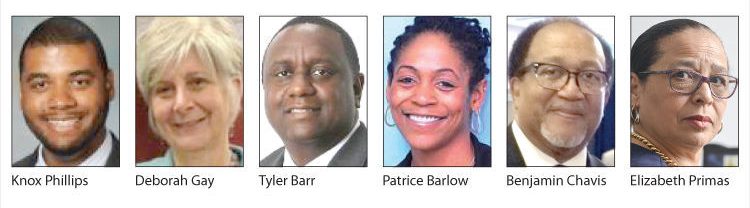
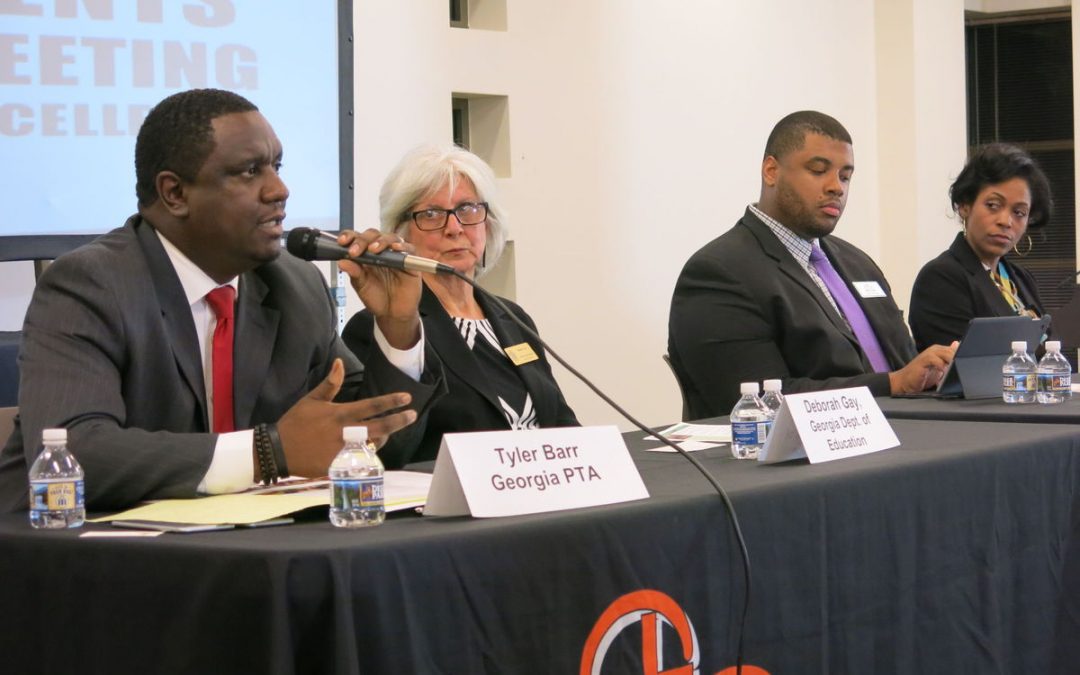
The town hall panel of experts includes Georgia PTA President Tyler L. Barr; Patrice Barlow of the Atlanta NAACP Education Committee and an Urban League of Greater Atlanta education advocate; Deborah Gay, Georgia Department of Education deputy superintendent for Federal Programs and Special Education; and Dr. Knox Phillips, DeKalb School District’s executive director of Research, Assessment, and Grants.
It takes place 6:30 p.m. to 8:30 p.m., and is hosted by the National Newspaper Publishers Association, “The Black Press,” as part of a national public awareness campaign to heighten awareness among African-American stakeholders about opportunities presented by ESSA, which President Barack Obama signed into law to replace the No Child Left Behind law.
Parents and other stakeholders will get to ask questions and get clarification about how they can best advocate for their children under the new law.
Dr. Elizabeth Primas, NNPA’s ESSA program manager, said that education has been a bridge leading to upward mobility for African-Americans in the United States even before emancipation.
“Now, more than ever, it is important that we ensure our voices are heard to ensure the academic success of our children,” she said. “ESSA prioritizes high quality education, equity, and closure of the achievement gap. By raising awareness of ESSA, we are seeking to empower stakeholders to advocate for such policies.”
The meeting is hosted by Atlanta’s black-owned newspaper publishers, including CrossRoadsNews.
Jennifer Parker, CrossRoadsNews editor and publisher, said the town hall meeting is a great opportunity for parents and stakeholders, including homeowners, to find out about the law and what is coming.
She said that even homeowners who don’t have children in the school district should attend, because the quality of our schools directly affects our property values and they too can be advocates for quality education.
“People buy homes in counties with quality schools, so this affects all of us,” Parker said. “And parents with kids in school need to know how to navigate the law to get the best resources for their kids education.”
Dr. Benjamin Chavis, NNPA’s executive director, said NNPA is asking church leaders across Atlanta to announce the meeting at services and send emails to their congregation.
“Moral leadership in education is paramount,” said Chavis, a former NAACP executive director and civil rights leader who at age 24 was sentenced to 34 years on arson charges with the Wilmington Ten.
Chavis and the other nine members walked to their freedom in 1980 after the federal appeals court overturned the convictions. They were pardoned by N.C. Gov. Beverly Perdue on Dec. 31, 2012.
The Black Parent Town Hall Meeting takes place in Ebenezer Baptist Church’s Martin Luther King Sr. Community Resources Complex at 101 Jackson St. N.E.
Free parking is available behind the Community Resources Complex; across the street from Ebenezer’s sanctuary; and in the National Martin Luther King Center’s parking lot off Irwin Street.
For more information, call Jennifer Parker at 404-284-1888.
Parents of K-12 children are encouraged to learn about the new Every Student Succeed Act (ESSA), which is offering $1.6 billion in funding and more flexibility to individual states and school districts in how students learn and are evaluated.
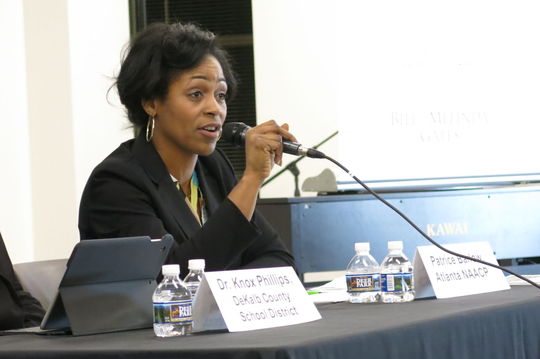
Atlanta NAACP Education Committee member Patrice Barlow speaks as a panel member during a parents’ town hall for the Every Student Succeeds Act, at Ebenezer Baptist Church in Atlanta on Oct. 23.
The federal education act was passed into law with bipartisan support in December 2015 under the administration of President Barack Obama. Its specific aim is to close the achievement gap for minority students.
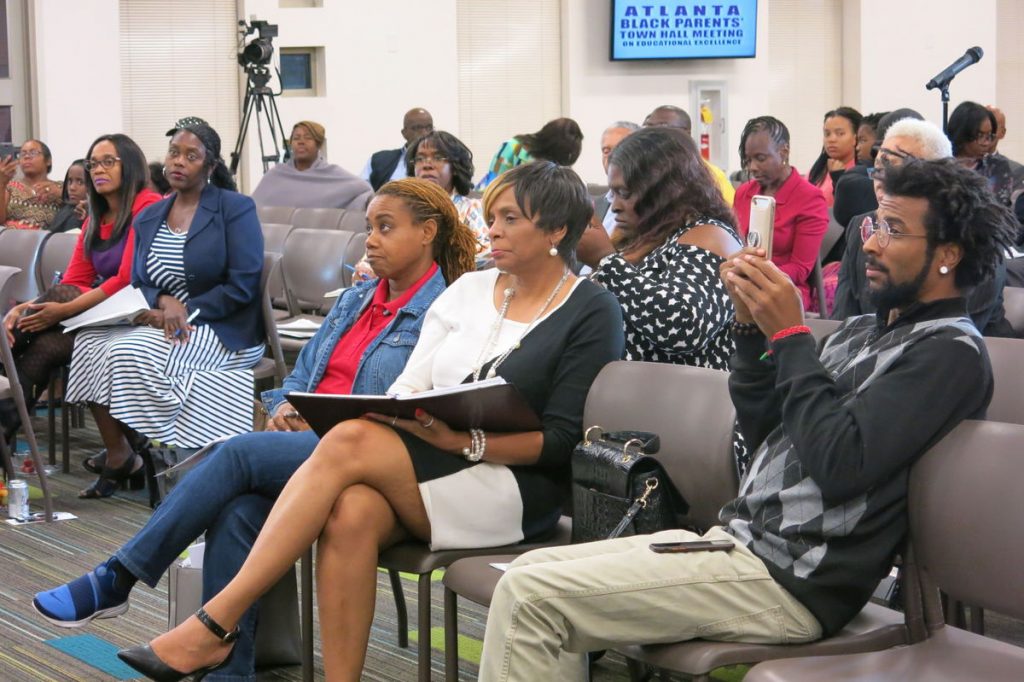
[/media-credit] Parents, teachers, school board members and social workers attended the parents’ town hall on the Every Student Succeeds Act at Ebenezer Baptist Church in Atlanta on Oct. 23.
It replaces the No Child Left Behind Act of 2001 and reauthorizes the Elementary and Secondary Education Act of 1965.
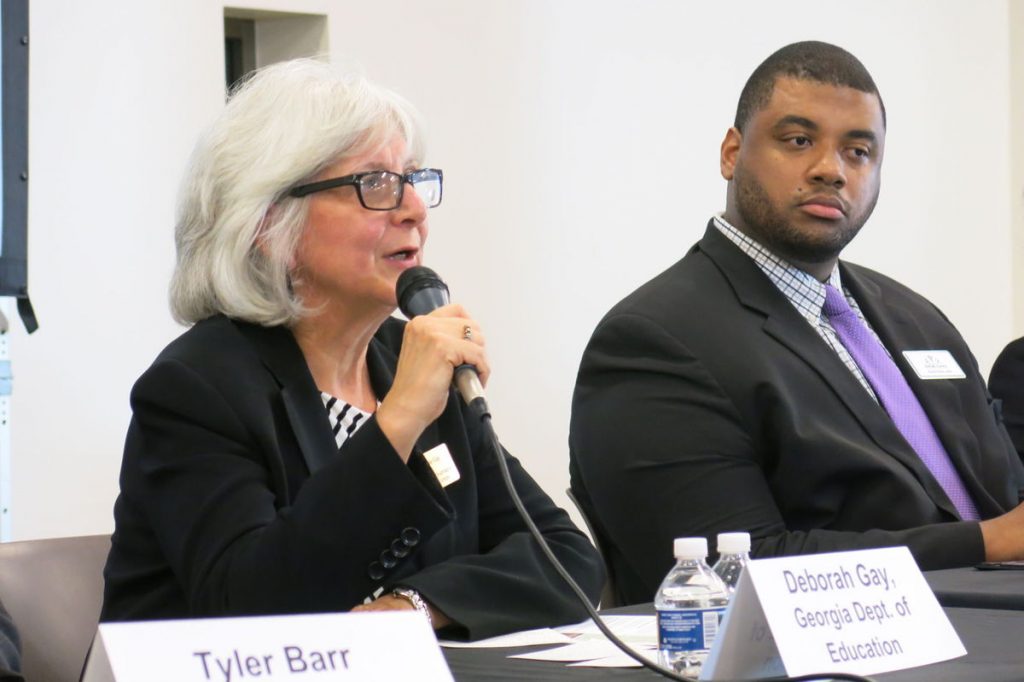
Georgia Department of Education Deputy Superintendent Deborah Gay speaks as a panelist at a parents’ town hall on the Every Student Succeeds Act, alongside DeKalb County School District Director of Research, Assessments and Grants Dr. Knox Phillips, at Ebenezer Baptist Church in Atlanta on Oct. 23.
ESSA reduces federal mandates over education, and gives states and school districts the power to design and implement systems catering to the needs of specific communities, schools, classrooms and students.
ESSA is partway through being implemented and brings with it the power for parents and caregivers to help shape their children’s education, which is what Georgia officials want to see happening throughout metro Atlanta including in DeKalb County.
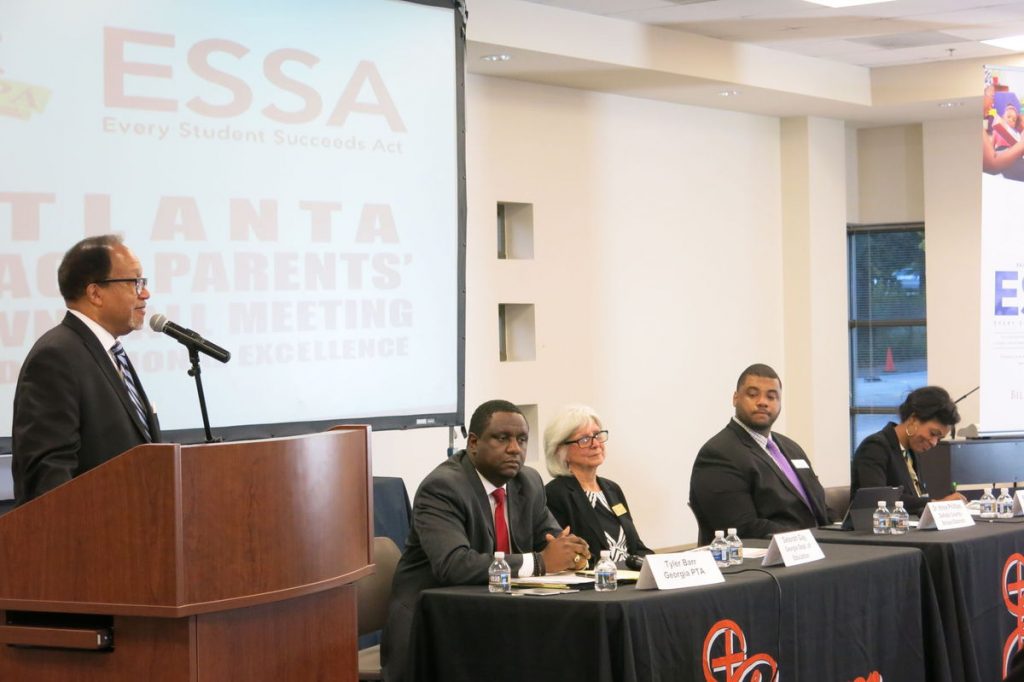
[/media-credit] Dr. Benjamin Chavis, President of the National Newspaper Publishers Association, speaks during a parents’ town hall on the Every Student Succeeds Act, alongside panelists Tyler Barr, Georgia PTA President; Deborah Gay, Georgia Department of Education Deputy Superintendent; Dr. Knox Phillips, DeKalb County School District Director of Research, Assessments and Grants; and Patrice Barlow, Atlanta NAACP Education Committee member, at Ebenezer Baptist Church in Atlanta on Oct. 23
“ESSA is a true opportunity and we cannot miss this critical opportunity to make sure our voices and concerns are heard. If we don’t, the doors will close and the opportunity, the choices and decisions will pass,” said Patrice Barlow, a member of the Atlanta NAACP Education Committee.
Barlow was one of four panelists at an Oct. 23 parents’ town hall on ESSA, convened by the National Newspaper Publishers Association – “The Black Press” – at Ebenezer Baptist Church in Atlanta.
The panelists – Barlow, Georgia PTA President Tyler Barr, Georgia Department of Education Deputy Superintendent Deborah Gay, and Dr. Knox Phillips, DeKalb County School District Director of Research, Assessments and Grants – said it is crucial for parents to be involved in how ESSA is implemented in their children’s schools.
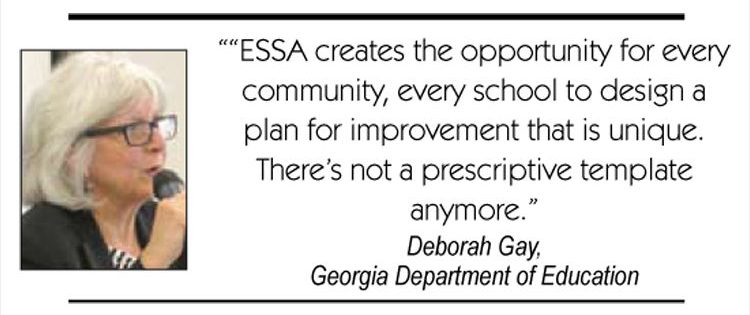
“ESSA creates the opportunity for every community, every school to design a plan for improvement that is unique. There’s not a prescriptive template anymore,” Gay said.
Community input encouraged
The 50-plus people present included parents, teachers, school board members and social workers from throughout metro Atlanta, who asked questions about the new law and Georgia’s plan, and voiced concerns about the current state of local education, saying there needs to be more teachers, smaller class sizes, more help for disabled students and their families, more culturally relevant teaching material, more teacher training and greater accountability for principals under pressure to make schools and students look good on paper.
One former teacher of 22 years, who asked not to be named, said he left the profession last year after a principal made him alter test scores.
Georgia’s Department of Education spent over a year consulting stakeholders, including parents, and drafting its 111-page ESSA plan, which it submitted to the U.S. Department of Education on Sept. 18 for review within 100 days.
“ESSA creates the opportunity for every community, every school to design a plan for improvement that is unique. There’s not a prescriptive template anymore.” Deborah Gay, Georgia Department of Education
Once Georgia’s plan has been finalized and approved, each school district in the state will create its own plan. That’s where parents, caregivers, community leaders, church groups and nonprofits can really make a difference, by reading up on ESSA, attending town halls, joining school boards and committees, lobbying policy makers and holding officials to account.
Panelists said this is the time for parents to voice concerns about their children’s education, make suggestions for improvement, volunteer in school programs, email elected officials and be proactive in general.
“The ESSA plan, if it communicates nothing else, is that this is a collective activity for all of us to engage together, work together and maybe start to realize the dream of that 1965 legislation in a way we couldn’t before,” Gay said.
“School districts have more flexibility now under ESSA than they have in many years, but the success of it will depend on the strong engagement of stakeholders being knowledgeable, understanding the needs of their community and bringing those into the schools,” she said.
Emphasis on improvement
To comply with ESSA and fulfill its ideals, the Georgia Department of Education is grouping achievement indicators in five categories – content mastery, progress, closing gaps, readiness and graduation rate – applied according to grade bands.
Students will still primarily be assessed on statewide test scores for English, math, science and social studies, with other data recorded such as how well a student is progressing compared to academically similar peers, how well schools are progressing towards improvement targets, whether schools offer alternative classes, and what access exists to support services and resources.
Annual targets will be set for every school, so the Georgia Department of Education can reach its long-term goal of closing the achievement gap by 45 percent over 15 years. It will also establish an assessment task force, comprising stakeholders and experts, to explore assessment methods and how they can be scaled statewide.
Dr. Elizabeth Primas, program manager for NNPA’s ESSA initiative, said there will be less high-stakes testing for students.
Students will still have to take standardized reading and math tests in grades three through eight and once in high school, but states can choose their own standards and accountability systems as long as they align with ESSA.
“States can now write their own standards. It’s taking the federal government a little bit out of public education, that’s public and charter, and putting it back into the hands of the community where they serve,” Primas said, adding that Georgia’s ESSA plan is a living document to be revised and amended to suit specific needs within the state.
ESSA comes with $1.6 billion in federal funding that is not only available to schools, but also to nonprofit organizations able to provide support services, resources and programs to help schools and students achieve ESSA goals and standards.
The holistic community approach in educating children is a key theme of Georgia’s new education state plan, which also aims to teach and assess children in a more holistic way than before.
“Georgia is going to get more education money,” said NNPA President Dr. Benjamin Chavis.
“The question is what is Georgia going to do with that money and how is that money going to impact and make quality education more accessible?” he said. “We want to arouse awareness among our parents about what is happening in the education sector, and we have to be focused on where the resources are going and how local school boards and state departments of education are allocating those resources.”
NNPA is holding ESSA town halls throughout the country.
The Georgia PTA sees ESSA as an improvement and a step in the right direction.
“Finding innovative and flexible ways to assess academic achievement is an essential extension of Georgia’s current policies,” Barr said. “One test cannot accurately reflect a student’s knowledge, and by extension, that same single test cannot accurately evaluate a school.”
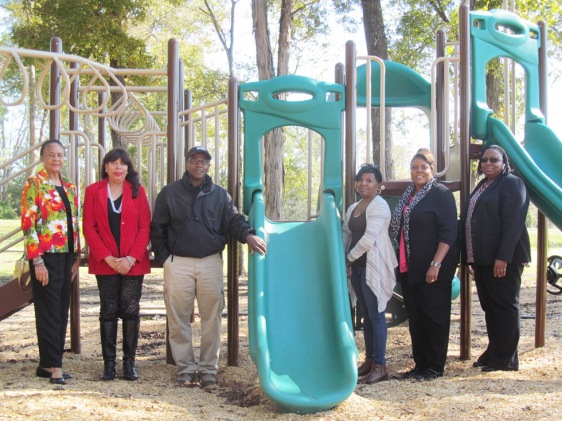
Shown above at the Eutaw City Park L to R: Mt. Hebron Coalition Members Severe Strode, and Johnni Morning, Eutaw Mayor Raymond Steele, Extension Secretary Mary Beck, Extension Coordinator Lovie Parks and Expanded Food and Nutrition Educational Program Director Mary Henley.
GREEN COUNTY DEMOCRAT — The Eutaw City Park on Lock 7 Road now has state-of-the-art playground equipment, secured with an AlProHealth grant through Auburn University Extension Program coordinated by Greene County Extension Coordinator Mrs. Lovie Parks. The grant also provides fencing around the park grounds. “The total investment in the park by Auburn Extension exceeds $40,000,” stated Ms. Parks.
According to Eutaw Mayor Raymond Steele, this project has been in the works for some time.
“We are also committed to adding a concession stand and a large pavilion with restrooms to make the park comparable to other state-of-the art parks in the state,” he said.
The playground unit will be available to children, ages 12 and under, from 7:00 a.m. until sundown. He noted that the park is also available to the community for special events such as reunions, birthday parties and more, by contacting the city for reservations.
Other benefits to Greene County by the Auburn Extension Program include providing the benches on the old courthouse square in Eutaw.
The Mt. Hebron Coalition has also benefited from an ALProHealth grant. The SCORE Center, originally organized by Betsy and Reola Bizzell, received funds for exercise equipment and other related live well programs. The SCORE Center is open to the community, serving seniors as well as youth. Johnni Morning, a Mt. Hebron Coalition Member, stated that along with the exercise equipment, internet service is also available at the Score Center. She noted that the public is invited to join the exercise program on Monday, Wednesday and Friday, at the SCORE Center (old Mt. Hebron Pre-School) from 4:30 – 6:30 p.m. ages 18 and older. Marvin Childs serves a president of the Mt. Hebron Coalition.
Mrs. Parks emphasized that a big component of the Auburn Extension program is building unity, bringing families and the community together. “The goal of ALProHealth includes increasing physical activity, improving nutrition, reducing obesity, and preventing and controlling diabetes, heart disease, and stroke by promoting community wellness,” she stated.
The Extension Program also sponsors after school programs, community gardens and various live well programs, partnering with churches and community groups.


 By Ramona Edelin Special to the AFRO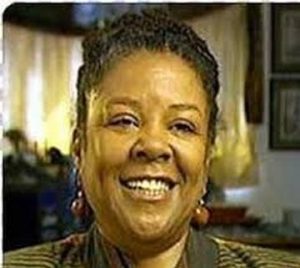

 If Tuesday night was any indication of how the new Jackson Public Schools Board of Trustees will operate, Jacksonians are in good hands. In a three-hour-long meeting, the new board members questioned just about everything on the agenda, as most of the trustees got their first taste of the different powers and responsibilities they hold. The board is one member shy of being full, only missing a Ward 3 member. They elected officers first, unanimously choosing Jeanne Hairston as president, Ed Sivak as vice president and Barbara Hilliard as secretary.

 By Je’Don Holloway Talley, For the Birmingham Times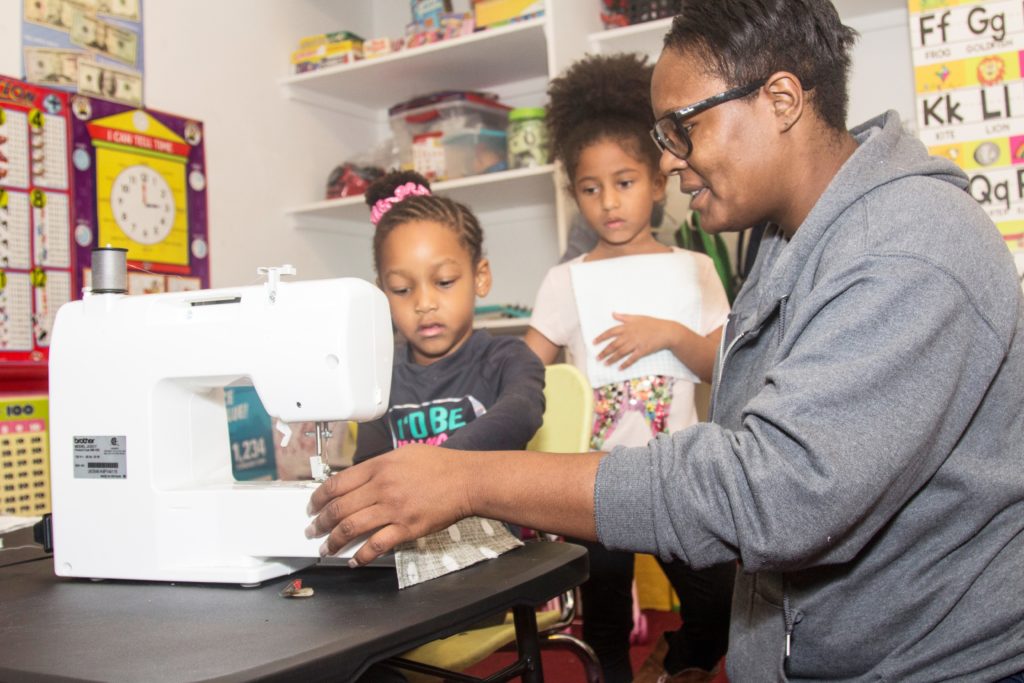





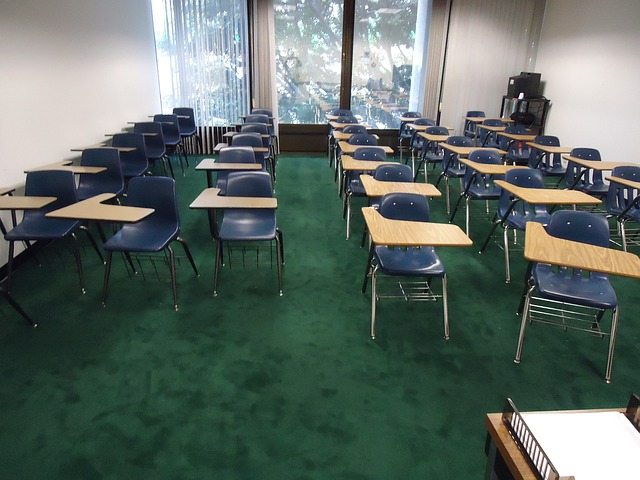
 A new report from The Education Trust-New York shows that many Black and Brown students are taught by people who don’t look like them.