By Charlene Crowell, (Communications Deputy Director, Center for Responsible Lending)
AMSTERDAM NEWS — Mounting student debt is a nagging problem for most families these days. As the cost of higher education rises, borrowing to cover those costs often becomes a family concern across multiple generations including the student, parents, and even grandparents or other relatives.
Today’s 21st Century jobs usually demand higher education and specialized skills to earn one’s way into the middle class. In households where educational loans are inevitable, it becomes an important family decision to determine which institutions are actually worth the debt incurred. Equally important is the institution’s likelihood of its students graduating.
Higher education institutions that do not provide its students and graduates with requisite skills and knowledge become money pits that lead to deeper debt and likely loan defaults.
New research by the Center for Responsible Lending (CRL) analyzed student debt on a state-by-state basis. An interactive map of CRL’s findings reveal on a state basis each of the 50 states’ total undergraduate population, for-profit enrollment, and the top for-profit schools by enrollment for both four-year and two-year institutions.
Entitled “The State of For-Profit Colleges,” the report concludes that investing in a for-profit education is almost always a risky proposition. Undergraduate borrowing by state showed that the percentage of students that borrow from the federal government generally ranged between 40 to 60 percent for public colleges, compared to 50 to 80 percent at for-profit institutions.
Additionally, both public and private, not-for-profit institutions, on average, lead to better results at a lower cost of debt, better earnings following graduation, and the fewest loan defaults.
“In many cases, for-profit students are nontraditional students, making sacrifices and struggling to manage family and work obligations to make better lives for their families,” noted Robin Howarth, a CRL senior researcher. “For-profit colleges target them with aggressive marketing, persuading them to invest heavily in futures that will never come to pass.”
CRL also found that women and Blacks suffer disparate impacts, particularly at for-profit institutions, where they are disproportionately enrolled in most states.
For example, enrollment at Mississippi’s for-profit colleges was 78 percent female and nearly 66 percent Black. Other states with high Black enrollment at for-profits included Georgia (57 percent), Louisiana (55 percent), Maryland (58 percent) and North Carolina (54 percent).
Focus group interviews further substantiated these figures, and recounted poignant, real life experiences.
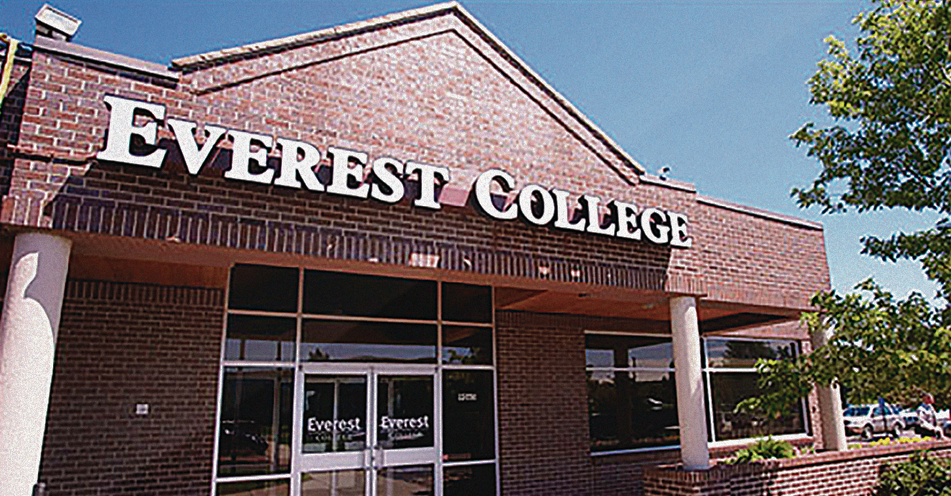
Brianna, a 31-year-old Black female completed a Medical Assistant (MA) certificate at the now-defunct Everest University. Once she completed her MA certificate and passed the certification test, she found she could only find a job in her field of study that paid $12 per hour, much less than the $35,000-$45,000 salary that Everest told her would be her starting salary as a medical assistant.
She was also left with $21,000 in student debt. As a result, she has struggled since matriculation with low credit scores and cramped housing conditions for herself and three children. For her, public schools, according to Brianna, are “better in the long run” due to their lower cost despite having more requirements for attendance.
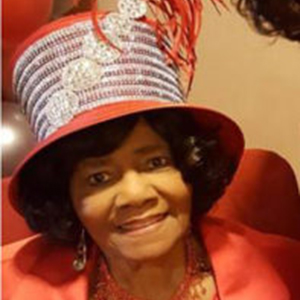
DALLAS POST TRIBUNE — Ada L. Williams, a dedicated public servant to the Dallas Community, passed away on Wednesday, December 27, 2017 at the age of 84. She had been a Professional Registered Parliamentarian in the State of Texas since 1978.
Mrs. Williams was the current sitting Board Chairman of the Credit Union of Texas and had held that position since December of 1996. She was elected and served as Parliamentarian of the Dallas Independent School District Board of Trustees from 1988 through her retirement in 2002 where she served numerous Superintendents.
Because of her significant contributions to the Dallas Public Schools, the auditorium of the DISD Administration Building is named the Ada L. Williams Auditorium in her honor. Ada Williams served DISD as Director of Employee Relations during her career there. Former Texas Governor, Mark White, appointed Ada Williams to the State of Texas Credit Union Commission where she served a six-year term.
Mrs. Williams served as President of the Texas State Association of Parliamentarians. She immensely enjoyed her work helping a diverse array of organizations with matters of parliamentary law. Throughout her life and within the last week, she volunteered her services as a proctor for those taking the registered parliamentary exams.
She became a teacher in the Dallas Independent School District in 1955, where she taught math, science and music. She went on to serve as President of the Classroom Teachers of Dallas for four years. She was President and Parliamentarian of Delta Kappa Gamma Society International; Parliamentarian of the Dallas Retired Teachers Association. Mrs. Williams became the National Parliamentarian of Delta Sigma Theta Sorority, Inc. in 1979. She served 10 National Presidents as National Parliamentarian and in 2015 the organization named her National Parliamentarian Emeritus.
At the time of her death, Mrs. Williams was proudly serving as Trustee at the St. Paul African American Episcopal Church. She was also on the Board of Directors of the Maureen F. Bailey Cultural Foundation. Other organizational affiliations include: Texas Reading Association, National Association of Parliamentarians, Golden Life Member of Delta Sigma Theta Sorority with 65 uninterrupted years of service; YWCA Life Member; Dallas Arthritis Foundation. She received the National Association of Negro Business and Professional Women’s Clubs, highest award – The Sojourner Truth Award.
Mrs. Williams held a Bachelors Degree from Huston-Tillotson College where she was Miss Huston-Tillotson. She also received a Master of Arts Degree in Education from the University of North Texas. She was a proud product of the DISD schools: a graduate of Lincoln High School and N.W. Harlee Elementary School.
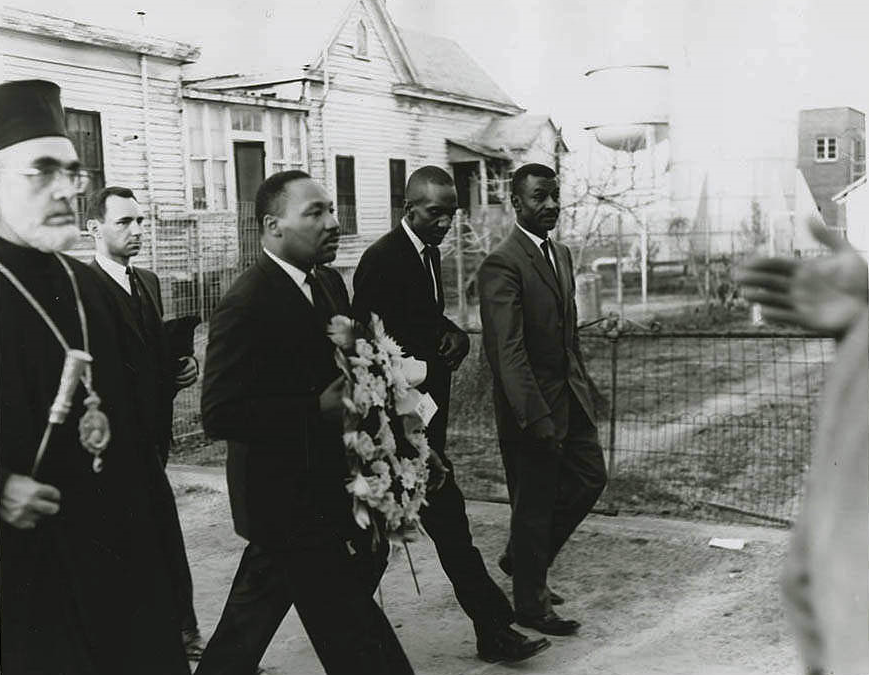
KANSAS CITY CALL — The Southern Christian Leadership Conference of Greater Kansas City will host its annual Martin Luther King, Jr., celebration beginning Saturday, Jan. 6, and ending on Wednesday, Jan. 17.
The celebration begins on Saturday at 7 p.m, with the Gospel Artist Tribute held at Victorious Life Church, 3400 The Paseo. Artists will include Stellar award winner Bishop Jason Nelson, Isaac Cates and Ordained, Eric Ashby and VP3. The doors will open at 6:30 p.m. Tickets are $25 and are available online at the SCLC website @www.sclcgkc.org
On Sunday, Jan. 7 at 3:30 p.m., an Interfaith Service will be held at the Community Christian church, 4601 Main St. The keynote address will be given by Rev. Dr. Otis Moss, Jr., one of America’s most influential religious leaders.
A litany of those involved in the Interfaith service will represent Protestant, Muslim, Catholic, Jewish, Unitarian, Baha’I, and Sikh faiths. Music will feature The Soulful Phase Ensemble, music from the Jewish Tradition, The Kansas City Girls & Boys Choirs, Tim Whitmer and Millie Edwards.
This event will also honor Melissa Robinson, president of the Black Health Care Coalition and Board President of the Kansas City Public Schools, who will receive the 2018 Evelyn Wasserstrom award. This event is open to the public at no charge. For more information, please visit www.sclcgkc.org
On Sunday, Jan. 7 at 3:30 p.m., an Interfaith Service will be held at the Community Christian church, 4601 Main St. The keynote add
or contact Arlana Coleman (913) 522-7526.
The MLK celebration continues Tuesday, Jan. 9, with the Rev. Dr. Nelson “Fuzzy” Thompson Community Luncheon at the Sheraton Crown center, 2345 McGee.
Keynote speaker will be Leonard Pitts Jr. renown newspaper columnist, and author who also will host a book signing.
Also during the luncheon, The President’s award will be presented to Phil Glynn, president of Travois and The Community Service award will be awarded to Councilwoman Katheryn Shields, former Jackson County Executive and current 4th District City Councilwoman. Tickets for the luncheon are $60 and are available online at www.sclcgkc.org
On Sunday, Jan. 7 at 3:30 p.m., an Interfaith Service will be held at the Community Christian church, 4601 Main St. The keynote add
On Friday, Jan. 12, at 8 a.m. at the Kauffman Conference center, 4801 Rockhill Road, high school students from the Greater Kansas City area will gather for a Youth Leadership Development workshop. This “invitation only” event will feature Rahiel Tesfamariam, Founder and Publisher of Urban Cusp and District Attorney Mark Dupree.
On Saturday, Jan. 13, at 9 a.m., the celebration continues with the annual scholarship prayer breakfast, hosted at the College Basketball Experience, 1401 Grand Blvd.
Frigid temperatures in the Baltimore area over the last several days combined with a lack of heat in several Baltimore City Public School buildings has compelled the Baltimore Teachers Union (BTU), to call for the closure of city schools, until the heating issues can be resolved.
On Jan. 3, a hand delivered letter was sent from Marietta English, president of the BTU, to Sonja Santelises, BCPS CEO.
“The past 36 hours have been quite difficult for our membership and the children they teach,” reads the letter sent by English.
“Our educators have been forced to endure teaching in classrooms with dangerously low temperatures, instructing students who have been forced to try to learn bundled up in coats, hats and gloves. Trying to provide a stable learning environment in these extreme conditions is unfair and inhumane, to say the least.”
Four schools were closed Jan. 3 due to lack of heat: Calverton Elementary/Middle School, Elementary/Middle Alternative Program, KIPP Harmony Academy and Lakeland Elementary/Middle School. Two other schools, Frederick Douglass High School and Cecil Elementary School, were forced to close early.
“I do realize that you and your staff are managing the best you can to rectify the issue in this record-breaking cold weather, however, doing so on the backs of our members and the children of Baltimore City is unacceptable,” state English. “Additionally, your expectation that our members and the children that they teach endure endure bursting boilers, drafty windows, frigid temperatures in classrooms, and risk getting sick in these “less than ideal” conditions, is utterly ridiculous,” English added.
Perhaps complicating the issue further, the National Weather Service issued a winter weather advisory, (one to three inches of snow), in effect from 10 p.m. Jan. 3, to 11 a.m., Jan. 4, which could cause the school closures the BTU is calling for.
GREENE COUNTY DEMOCRAT — Prior to the opening of its regular meeting on December 18, 2017, the Greene County Board of Education, along with a community gathering, was entertained with a special Christmas presentation by students enrolled in the after school programs of the 21st Century Community Learning Centers. Students from Eutaw Primary School and Robert Brown Middle School presented dance ensembles, poetry and Christmas Caroling. The event culminated with the lighting of the Christmas tree and the appearance of a jolly “Santa.” The students were presented gifts and refreshments.
In his monthly report, Superintendent James Carter emphasized the system’s continuing goal to improving academic performance for all students. “School principals and teachers must be held accountable for closing the achievement gap. Our focus must shift now on recruiting and retaining talented principals and teacher, a task that is very challenging,” he stated.
Dr. Carter explained that if we are to improve academic performance for all students, there must be a shift in how we teach our students. “School classrooms must be re-designed to meet the needs of students in the 21st Century. We can’t continue to place students in classrooms where all they see is the back of another student’s head. Each school must create a team of leaders to manage instructional programs,” he said.
In his update on the system’s school property, Carter announced that, to date, he has received five offers on the purchase of the former Carver School and two offers on the former Paramount School.
In other business, the board approved the following personnel items recommended by the superintendent.
Resignation of Rebecca Coleman from the 21st Century Community Learning Center.
Employment of Dorothy Powell, Jacqueline and Latasha Harris as Bus Aides.
Employment of Latoya Consentine as substitute bus driver.
Additional service contract at Robert Brown Middle School for 2017-18 academic year (separate contracts): Janice Jeames as Assistant Girls Basketball Coach.
Additional service contract at Greene County High for academic year 2017-18 (separate contract) Jason Booth as Assistance Baseball Coach; Fentress Means as assistance Basketball Coach.
Administrative services approved by the board include the following.
Worthless Check Policy;
Uncollectible Meal Charge Policy.
Field Trip requests: Greene County High to Dollywood, TN, April 20, 2018; Robert Brown Middle to National Civil Rights Museum, Memphis, TN; Robber Brown Middle to Education Day at Six Flags Over Georgia, April 27, 2018.
The following instructional items were approved by the board.
Voluntary Religious Expression Policy
21st Century Community Learning Centers Staff Handbook
21st Century Community Learning Centers Parent Handbook
On the recommendation of the superintendent, the board approved the following waiver:
The Greene County Board of Education hereby waives any potential conflicts that Henry Sanders, Attorney at Law, may have in representing the Greene County Board of Education and the Greene County Commission in matters in general and specifically relating to Resource Officers for schools and/or the sale of Carver School.
CHARLESTON CHRONICLE — Charleston’s ten-day Reverend Dr. Martin Luther King, Jr. Celebration, the largest and longest running event of its kind in South Carolina, will be headlined in January by Joan Robinson-Berry, vice president and general manager of Boeing South Carolina and Boeing Commercial Airplanes, and Michael Boulware Moore, president and CEO of the International African American Museum.
Michael Moore
The annual tribute’s theme will be “One Man, One Dream… Together We Achieve.”
The MLK Ecumenical Service will be held on Sunday, January 14 at 4:00 p.m. at Morris Street Baptist Church, where Moore will deliver the keynote address to more than 1,000 expected attendees. The service is free and open to the public.
Moore was inspired to take the helm of the International African American Museum, slated to open in 2019, by the story of his own great-great-grandfather, who escaped slavery during the Civil War on a stolen Confederate ship, returned to fight for the North, and later rose to serve in the South Carolina legislature during America’s Reconstruction era. “He overcame obstacles to live a life of consequence,” Moore told Garden & Gun magazine in an interview.
The MLK Business and Professional Breakfast will cap the ten-day tribute. Held at 7:30 a.m. on Tuesday, January 16, at the Charleston Gaillard Center, the event will feature Joan Robinson-Berry as keynote speaker and City of Charleston Mayor John Tecklenburg as honorary chairman.
Joan Robinson-Berry
Robinson-Berry has been honored for her work in diversity, science, technology, engineering, and mathematics by a variety of global organizations, including the National Society of Black Engineers and members of the United States Congress. In 2017 Women’s Enterprise magazine ranked her among its Top 100 Leaders in Corporate Supplier Diversity, and the Long Beach chapter of the NAACP named her Woman of the Year. She has also been named one of the Most Powerful Women in Business by Black Enterprise magazine, honored with the Outstanding Achievement Award from the Women in Aerospace organization, received the Woman of Distinction & Accomplishment award at the Washington State African American Achievement Awards, and was featured by Charleston Business magazine as one of the 50 Most Influential People in Charleston.
The MLK Breakfast is again expected to be attended by hundreds of Charleston’s business, civic, and clergy leaders; at the 2017 event, more than 600 attendees packed a large ballroom at the Charleston Gaillard Center, joining hands at the close of the event in a show of unity.
This year’s theme emphasizes the need for everyone to participate in fulfilling Dr. King’s dream. “With this theme we’re celebrating Dr. King’s legacy and dream of equality,” said LaVanda Brown, executive director of YWCA Greater Charleston. “Saying ‘together we achieve’ emphasizes that we all have to invest in seeing his dream become real. We recognize that we’ve made some progress as a country and as a community, but there’s still a lot of work to be done. The positive is that together, we can accomplish that dream. We can bring it to fruition.”
Organizations can sign up to sponsor the MLK Celebration now at ywca-charlestonsc.org or by calling (843) 722-1644. Individual breakfast tickets will be available for $45 per person in early January.
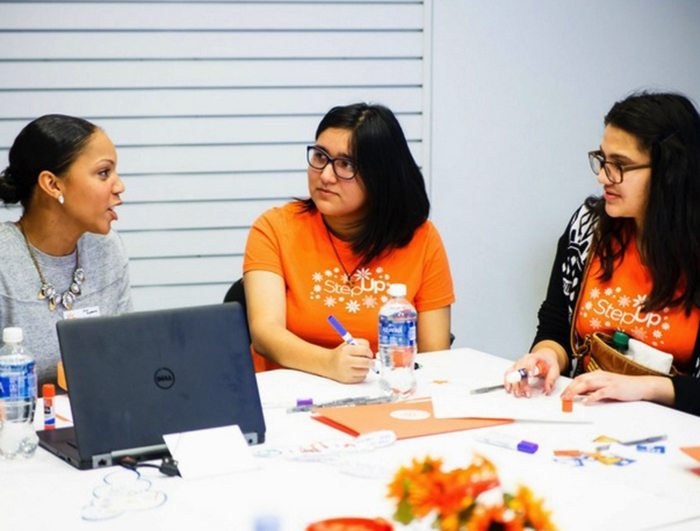
WAVE NEWSPAPERS — It was several years ago that Lubna Hindi realized the impact she and Step Up — a nonprofit that empowers young girls in under-resourced communities –– were having on the kids they served.
Hindi was a ninth grade instructor for the organization at the time, and the first class she ever taught was now wearing their caps and gowns, excitedly awaiting to discover what the future might hold for them.
The salutatorian got up, walked to the stage and in his speech to family, friends, peers and instructors, he talked about the memories he created at his school, and he talked about Step Up. He said that his female peers in the program taught him about feminism and what it means to be a man. When he was done and the valedictorian, who was going to Columbia University, stepped up to the stage, she opened up about what Step Up meant to her.
“It was one of those moments that made me realize that Step Up actually works and that the curriculum is making an impact,” said Hindi, the nonprofit’s manager of external relations and individual giving.
Founded in 1998, Step Up came into fruition after Kaye Kramer found out her mother was suffering from breast cancer. Kramer started looking for a support system and in that search, she invited 30 of her female friends and colleagues to her home. And it was there, in her living room, that Kramer found the sense of community she was seeking that would come to be known as Step Up.
“We create brave and safe spaces for girls to thrive in,” Hindi said of the after-school programs in the nonprofit’s partnering high schools. The curriculum, she said, focuses on not only the social and emotional growth of girls from ninth to 12th grade in underrepresented communities, but also on empowering them to be confident and college-bound.
Since its first office opened in Los Angeles, Step Up has become a nationally recognized organization with offices in New York, Chicago, Dallas and more, and its programs are found in dozens of high schools throughout the country.
Once or twice a week, trained Step Up instructors provide two-hour after-school sessions to high school girls in dozens of schools all over the country.
The sessions follow the organization’s youth development and grade-specific curriculums. The ninth and 10th grade confidence curriculums, for example, focus on identity, relationships, voice, visions, action and expression.
The 11th graders center more on college readiness and career exploration with the Pathways to Professions program. Those in it get the chance to participate in the Bay Area College Tour, which, as Hindi said, is about giving college-bound girls the opportunity to see themselves in university spaces so they understand that they deserve to be there.
As for high school seniors, also known as the Young Luminaries, their curriculum includes monthly Saturday group mentoring where they get help with college applications, career preparation and are set up with summer internships.
Step Up currently has about 700 girls enrolled in its L.A. chapter in schools from Huntington Park to South L.A., and Hindi hopes to see the numbers grow locally and nationally.
“In five years, we hope to see [Step Up] in more cities and in every major market,” she said. “In 10 years, we want to be a nationally recognized organization … where people see Step Up’s value and understand the work we do.”
INFORMATION BOX
CEO/president: Jenni Luke
Years in operation: 20
Number of employees: 14 in L.A.; 50 nationally
Annual budget: $1 million in L.A.; $4 million nationally
The public reporting requirements of the Every Student Succeeds Act (ESSA) offer greater transparency about school quality, according to experts and education advocates who also predict that the new law will empower parents and make them more informed partners in the education process of their children.
President Barack Obama signed ESSA into law on December 10, 2015.
“Public reporting is going to be very important, because state systems, like what goes into [calculating] letter grades for schools, are incredibly complex,” said Phillip Lovell, the vice president of policy development and government relations for the Alliance for Excellent Education, a Washington, D.C.-based national advocacy organization that’s dedicated to ensuring all students graduate from high school, ready for success in college and in the workplace. “States are aware of and working on how to communicate information on school performance clearly.”
Brenna McMahon Parton, the director of policy and advocacy for Data Quality Campaign, one of the nation’s leading voices on education data policy and use, said that everyone deserves information, which is why ESSA requires that report cards are easy to understand.
“To date, states haven’t focused on parent needs and, as a result, report cards are difficult to find and use,” said Parton. “As states develop new report cards, they should be sure that parents will have a one-stop-shop that provides information they need about how students and schools in their community are performing.”
ESSA reauthorized the Elementary and Secondary Education Act (ESEA), the historic civil rights law passed in 1965 and effectively replaced the Bush-era No Child Left Behind Act.
Transparency and parental engagement are integral parts of the new law.
Under ESSA, all schools receiving Title I funds must inform parents of their right to request information about the professional qualifications of their children’s teachers; parents are also encouraged to support their children’s educational experiences by communicating regularly with teachers.
In a post on “The 74,” a nonprofit news site dedicated to education, Rashidah Morgan of the Sweden-based Education First, said that, “Greater transparency about school quality, will ultimately empower parents to make more knowledgeable choices about schools.”
Also, transparency on spending and academic results help the public understand how schools are performing in their communities, said Chad Aldeman, a principal at Bellwether Education Partners, a Washington, D.C.-based nonprofit focused on changing the outcomes and education life for the underserved.
“Accountability systems only work, if people understand what they’re being held accountable for and have enough information to know how to respond,” Aldeman said, adding that parents need good information to make informed choices about where to send their children. “To make that a reality, parents need information about both their own child’s performance, as well as how similar students are performing in other schools.”
Finally, clear, transparent school and district report cards help families make critical decisions and equip community members and the public to push for needed improvement in schools, said Dr. Lillian Lowery, the vice president of PreK-12 Policy, Research and Practice at The Education Trust, a nonprofit based in Washington, D.C. that promotes high academic achievement for students at all levels, particularly students of color and those of low-income.
“ESSA requires states to report a lot of important information on how schools are doing at preparing all groups of students, including students from low-income families, students of color, English learners and students with disabilities, for post-high school success,” said Lowery. “To maximize the usefulness of this information, state leaders should work with families and education advocates to ensure that report cards are easy to access and understand.”
Tour Historic Central Library
Tour the Central Library, 814 W. Wisconsin Ave., with the Friends. Free tours begin at 11 a.m. each Saturday afternoon in the rotunda. Tour goers receive a coupon for a free book at the end of the tour in the Bookseller Store and Café. To arrange for a special tour call (414) 286-TOUR.
EVENTS
BYOD – Bring Your Own Device Learn how to set up your iPad, Kindle, Nook or tablet to download free eBooks, audiobooks and magazines available to you as a Milwaukee Public Library card holder at the Washington Park Branch, 2121 N. Sherman Blvd., Tuesday, January 2, 6-7 p.m. Please bring your Milwaukee Public Library card and all passwords.
Crosswords, Coloring and Coffee
Perk up your afternoon with a cup of coffee while working on a crossword puzzle or a coloring sheet at the East Branch, 2320 N. Cramer St., Wednesday, January 3, 12-1:30 p.m. Hot beverages, crosswords, and coloring supplies provided by the library while supplies last.
Fiber Arts Group
Gather to knit or crochet with help from a volunteer at the M.L. King Branch, 310 W. Locust St., Thursday, January 4, 12-3 p.m. Great for beginners who want to learn a new skill and for those with experience who want to meet other fiber arts enthusiasts. Also Jan. 11, 18, 25.
Color Your Way to Calm
Color your way to calm at a drop-in coloring club for adults at the Zablocki Branch, 3501 W. Oklahoma Ave., Thursday, January 4, 2:30-5:30 p.m. Coloring sheets, art supplies and hot tea will be provided.
FOR FAMILIES
Big Box Build
What’s better than playing with a cardboard box? Building with dozens of them! This creative cardboard challenge will unleash the imagination at the Tippecanoe Branch, 3912 S. Howell Ave., Tuesday, January 2, 1:30-3:30 p.m.
Play and Learn: Pizza Parlor
PRESENTED IN SPANISH. Imaginative play for families with young children at the Mitchell Street Branch, 906 W. Historic Mitchell St., Friday, January 5, 10:30-11:30 a.m. Grab your apron and get ready to work at the pretend pizza parlor.
Playgroup With Stories
A 20-minute story time for children and their parents or guardian is followed by open play time with a variety of age-appropriate, educational toys.
Capitol Branch, 3969 N. 74th St., Thursday, January 4, 10:30-11:30 a.m. For children ages 2 and under with a parent or guardian. Also Jan. 11, 18, 25.
Central Library, 814 W. Wisconsin Ave., Wednesday, January 3, 9:30-11 a.m. For children ages 2 and under with a parent or guardian. Also Jan. 10, 17, 24, 31.
East Branch, 2320 N. Cramer St. Thursday, January 4, 10-11:30 a.m. For children ages 2 and under with a parent or guardian. Also Jan. 11, 18, 25.
Mitchell Street Branch, 906 W. Historic Mitchell St., Thursday, January 4, 10:30-11:30 a.m. For children ages 1-4 with a parent or guardian. Also Jan. 11, 18, 25.
Tippecanoe Branch, 3912 S. Howell Ave., Thursday, January 4, 10:30-11:30 a.m. For children ages 1 to 4 with a parent or guardian. Also Jan. 11, 18, 25.
Villard Square Branch, 51990 N. 35th St., Thursday, January 4, 10:30-11:30 a.m. For children ages 1 to 4 with a parent or guardian. Also Jan. 11, 18, 25.
Zablocki Branch, 3501 W. Oklahoma Ave., Thursday, January 4, 10:30-11:30 a.m. For children ages 1 to 4 with a parent or guardian. Also Jan. 11, 18, 25.
FOR CHILDREN
Dream Keepers Writing Circle
Calling all young writers (ages 9-13)! Use this opportunity to work on your writing project and share it with other young writers at the Capitol Branch, 3969 N. 74th St., Tuesday, January 2, 4-5:30 p.m. Students will spend the first part of the session writing, with writing prompts and encouragement from author and writing coach Rochelle Melander. During the second half of the session, students will share these stories with each other, learning how to listen for key story elements and give helpful feedback.
Also Jan. 16.
After School Tech Time
Make it, break it, tinker with it, and take it! Explore S.T.E.A.M. concepts with fun, hands-on projects at the East Branch, 2320 N. Cramer St., Thursday, January 4, 3:30-4:30 p.m.
Paws and Read
Read out loud to a cuddly canine at the Tippecanoe Branch, 3912 S. Howell Ave., Saturday, January 6, 1-2 p.m. Say hello, give a pet, or read a selection of good books to furry friends provided by The Alliance of Therapy Dogs. Great for reluctant readers.
Saturdays at Central
Wisconsin Conservatory of Music Appreciation at Central Library, 814 W. Wisconsin Ave., Saturday, January 6, 10:30-11:30 a.m. Sing, listen and play rhythm instruments while moving to music.
Saturday Afternoons at Central for ‘Tweens
LEGO Brick Club at Central Library, 814 W. Wisconsin Ave., Saturday, January 6, 2-3 p.m. We’ll provide the LEGO bricks, you provide the creativity! Join other LEGO brick enthusiasts and see what you can create from the bottom up.
Preschool Story Time
Preschoolers are invited for fun stories, songs, and finger plays designed to help them develop important
literacy skills needed prior to learning how to read. Child care centers are welcome.
Atkinson Branch, 1960 W. Atkinson Ave., Thursday, January 4, 10:30-11:15 a.m. Also Jan. 11, 18, 25.
Bay View Branch, 2566 S. Kinnickinnic Ave., Thursday, January 4, 10:30-11:15 a.m. Also Jan. 11, 18, 25.
Capitol Branch, 3969 N. 74th St., Thursday, January 4, 10-10:30 a.m. Also Jan. 11, 18, 25.
Central Library, 814 W. Wisconsin Ave., Tuesday, January 2, 10:30-11:15 a.m. Also Jan. 9, 16, 23, 30.
Martin Luther King Branch, 310 W. Locust St., Thursday, January 4, 10-10:30 a.m. Also Jan. 11, 18, 25.
Washington Park Branch, 2121 N. Sherman Blvd., Thursday, January 4, 10:30-11:15 a.m. Also Jan. 11, 18, 25.
Upon reasonable notice, efforts will be made to accommodate the needs of individuals with disabilities. For additional information or to request services contact the Library Director’s Office at (414) 286-3021, 286-2794 (FAX), or mail to Central Library, 814 W. Wisconsin Ave., Milwaukee, WI 53233 Attn: Accommodation Request.
BOOKSELLER and COFFEE SHOP
Visit the Bookseller, the library’s used book store, located at Central Library, 814 W. Wisconsin Ave., and
R Café, the library’s coffee shop. Call 286.2142 for hours of service.
THE CHARLESTON CHRONICLE — The report on racial disparities in Charleston County compiled by The Avery Research Center for African American History and Culture at the College of Charleston offers more than statistical data about racism that has existed for generations. It also offers solutions.
The report titled “The State of Racial Disparities in Charleston County, South Carolina 2000-2015”, outlines data compiled in several categories that include Income and Poverty Levels, Gentrification and Barriers to Affordable Housing, Educational Attainment and Crime and Policing. Author Dr. Stacey Patton included recommendations for addressing the disparities found.
The report confirms what African Americans have felt and experienced, said Patton, yet the situation remains unchanged. To address them we don’t have to reinvent the wheel, but we must be explicit in our commitment to addressing those disparities. There are people in place and the information is available. So there’s no excuse, she said.
The report includes recommendations specific to Charleston County and utilizes ‘toolboxes’ created by various resources to address racial disparities and structural racism as a public priority. Developing a framework that requires racial equity, inclusion and integration plans along with evaluating policies and programs which perpetuate racial and economic disparities is a place to start, the report suggests.
Addressing chronic poverty is part of the process. A minimum wage of $15 per hour leads the recommendations. Eliminating barriers to work by providing reliable transportation systems throughpublic transportation and parking vouchers combined with conjunctive high quality affordable childcare andre-entry employment programs for those returning from incarceration enhances employability opportunities – in short, dismantle systemic barriers to hiring qualified Black candidates.
The report recommends immediate efforts to preserve existing subsidized and affordable housing and expeditiously expanding the supply. Preventing involuntary displacement of residents from neighborhoods undergoing redevelopment and gentrification is paramount as well.
As youth are our future, the report suggests investing in summer employment and extended-day learning programs. Also it suggests expanding full-day high quality pre-school programs. Students involved in juvenile justice programs should get quality instruction also, the report suggests.
Charleston County only needs the will to implement. The report, like others before it, tells us where to start, Patton said.





 By Sean Yoes Baltimore AFRO Editor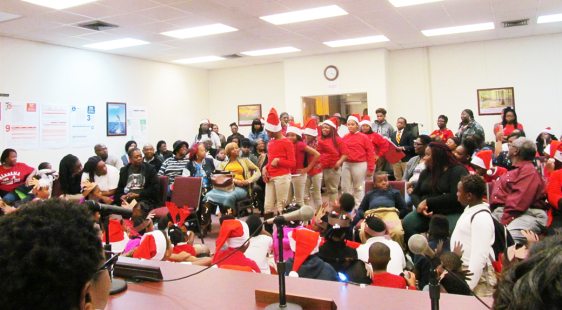




 WAVE NEWSPAPERS — It was several years ago that Lubna Hindi realized the impact she and Step Up — a nonprofit that empowers young girls in under-resourced communities –– were having on the kids they served.



 Tour Historic Central Library
 By Barney Blakeney