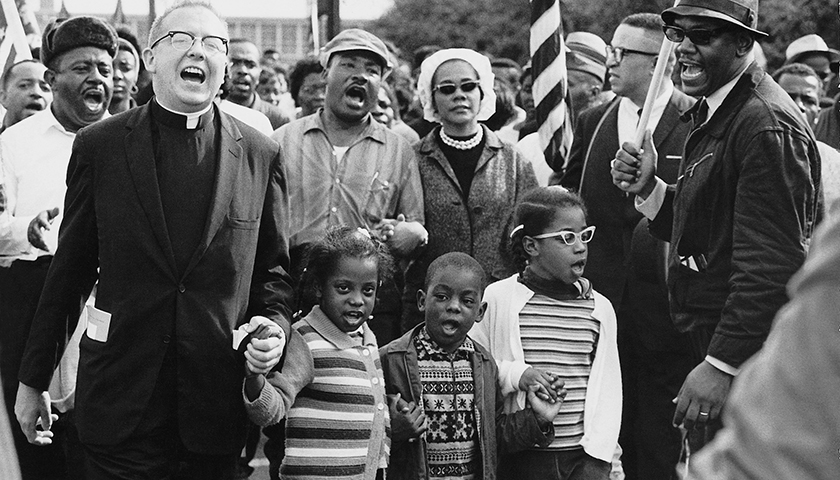
MINNESOTA SPOKESMAN-RECORDER — “We have also come to this hallowed spot to remind America of the fierce urgency of now. This is no time to engage in the luxury of cooling off or to take the tranquilizing drug of gradualism. Now is the time to make real the promises of democracy.” – Dr. Martin Luther King, Jr., quote from his “I Have a Dream” speech, August 28, 1963.
Tina Burnside
Most people only remember the last lines of Dr. Martin Luther King, Jr.’s famous “I Have a Dream” speech. But the quote above, also from that same speech, is what I want to focus on in thinking about the future of the City of Minneapolis and the State of Minnesota.
Our community, city and state face serious problems of poverty, racial inequality and economic disparity. Minnesota ranks as the second-worst state for racial inequality for Black people with glaring disparities in which Blacks are incarcerated at higher numbers, have lower incomes, higher unemployment, and lower home ownership than Whites.
We can no longer take the “luxury of cooling off” to study the problem. We already know there is a problem. What we need are real solutions. Policies must be crafted in partnership with business, government and the community. This partnership must include Black voices and leadership.
We can no longer create solutions without listening to the people who are experiencing the problems, and we can no longer tell Blacks and other people of color that change must come gradually, or to wait.
It is 2018 — 55 years after Dr. King delivered his famous speech. As Dr. King said, we must be reminded of the urgency of now. There is no time to “cool off” or proceed gradually. Now is the time to make the promises of democracy a reality and not just a campaign slogan, soundbite or hashtag.
Tina Burnside is a civil rights attorney and writer.
MINNESOTA SPOKESMAN-RECORDER — “He who passively accepts evil is as much involved in it as he who helps perpetrates it. He who accepts evil without protesting it is really cooperating with it.” —Rev. Dr. Martin Luther King
[/media-credit] Andrea Jenkins
What is evil in this world? Racism, sexism, poverty and war. These are the evils that I am concerned about, protest about, and work each and every day to eliminate.
Last month, I had the amazing opportunity to visit the Smithsonian Museum of African History, in Washington D.C. with my family. When you enter the building you embark onto a large elevator that holds about 75 people, and it’s not until you go down three and half stories that you realize it was designed to replicate the feeling of being crammed into a slave ship. Then you actually enter the bowels of a replicated slave ship; I tried holding back the tears, and did for a while.
The journey goes through slavery, the Civil War, and reconstruction (which is where the tears began to fall). I learned that during this period there were many Black elected officials all over the country, prolific in the South. Blacks (more than 100 Blacks held public office after the Civil War) served on city councils and as state legislators, and there were mayors, congressmen and U.S. Senators.
Having recently been elected to serve on the Minneapolis City Council, it really hit me hard what an enormous responsibility I have taken on. Because about five years after the Civil War, the KKK was born, and gerrymandering and voter suppression through violence created an environment that made it impossible for Blacks to continue to build political power.
Each generation has a responsibility to move human history forward. Witnessing the journey that African Americans have been on since arriving on the shores of the Atlantic Ocean was a deeply moving moment. We have consistently, persistently and diligently tried to bring America closer to realizing the true meaning of its creed.
Those hopes, dreams and prayers were manifested in Dr. King’s life and work. But the work continues, and this is the vision I have for our “Beloved Community.”
“Reconstruction,” in Encyclopedia of African American Culture and History. v.4. New York: Macmillan Library Reference USA, 1996.
MILWAUKEE COURIER — On Tuesday morning, Ha Ha Clinton-Dix arrived at Benjamin Franklin Elementary to launch his foundation’s first ever HERO Headquarters. He was welcomed by students and teachers alike with cheers, excitement and, above all, a sense of appreciation.
“It’s a dream come true,” Clinton-Dix said. “[I get] to be an icon kids look up to in school, not just football.”
Clinton-Dix plays football for the Green Bay Packers. Currently, he’s their safety and sports jersey number 21. In addition to playing in the national league, he’s in his senior year of college and attends the University of Alabama, where he’s studying criminal justice according to ESPN.
Ha Ha Clinton Dix, read students a book while sitting in the HERO Headquarters.
It’s clear that education is a priority of his and he’s working hard to make it others too. He recently started the Ha Ha HERO Foundation which aims to provide students who face economically challenged lives with the proper resources and motivation to continue their education and lead positive lives, according to the foundation’s website.
As part of the initiative, the foundation and its sponsors, Quarles & Brady and Houghton MifflinHarcourt (HMH), reached out to schools to bring a HERO Headquarters to them.
Ha Ha’s HERO Headquarters is the name allotted to the room or space the foundation revitalizes. In the case of Benjamin Franklin Elementary, they found a storage room and turned it into an “oasis” for reading. There are roughly 600 books, bean bag chairs and other resources designed to create a peaceful atmosphere.
“Reading has always been a passion of mine,” he said.
HMH provided the books and gave an additional to each child as a gift, as part of their efforts to promote, “lifelong learners.”
During the launch, Clinton-Dix spoke to the students about the importance of education. As they waved their yellow and green pom-poms he told them how he was once like them.
He explained that as a child he didn’t put a lot of effort towards his education, instead he played the role of class clown, assuming he’d catch up on school “later on.”
When later finally came, Clinton-Dix found himself struggling. He wished someone had pushed him harder like how he’s pushing younger generations.
Clinton-Dix managed to secure a spot at the University of Alabama, and learned how to balanceschool work and football.
“I had to prove myself,” he said, “as a football player and a student.”
Katie Perhach, from Quarles & Brady, stressed how Clinton-Dix is “truly providing the spark” these students need. In addition to providing resources, he’s a good role model.
“You are a leader on the football field and off the football field,” Perhach said.
As promised, Clinton-Dix played several games of tic-tac-toe with the students.
As part of the event, Clinton-Dix also read to a select group of students Curious George Joins The Team, where George plays games with his friends. This resulted in a few matches of tic-tac-toe of Clinton-Dix versus various students.
Principal Sara Hmielewski likewise expressed her gratitude to Clinton-Dix. She’s looking forward to seeing the progress the children make and is happy Clinton-Dix can be their icon.
“Just get reading,” she said, “We need to have our students reading.”
Before the students returned to class, Clinton-Dix sat down on the carpet in the HERO Headquarters, answered their questions and gave them advice.
“I had a dream, I had a goal, I had somewhere I wanted to be,” he said.
He also told them to listen to their teachers, attend class on time, stay focused, stay dedicated, be respectful and “be the best you can be.”
He knows better than most, just how far their education can take them.
“One day I know football will end,” he said, “but my education and degree will never be taken away from me.”
In this upcoming year, Clinton-Dix plans to not only finish his education but open two more HERO Headquarters which will continue encourage kids in years to come.
MILWAUKEE COURIER — When Dr. Martin Luther King Jr. helped organize the Montgomery Bus Boycott, he was not hoping to win a Nobel Peace Prize.
When his family was in danger and their house was bombarded with bottles and flames, having a street named after him wasn’t even a thought.
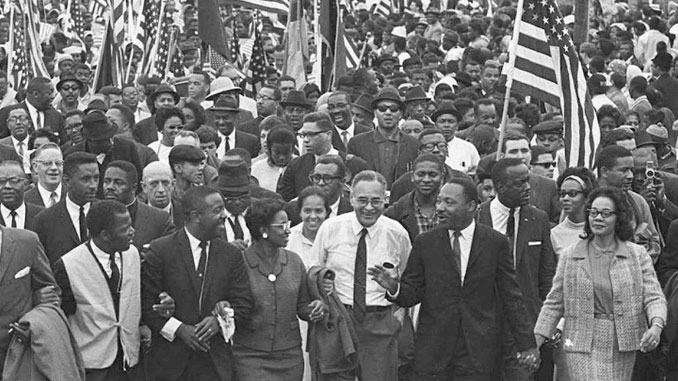
When he marched amongst thousands and gave his monumental “I have a Dream Speech,” he wasn’t speaking to go into the history books.
Dr. Martin Luther King Jr. fought for peace and justice in a country where freedom rang, yet separate but equal was the norm.
There were plenty of people that wanted to kill him and the other “colored folk” reversing the racist tides of Jim Crow, yet he worked until the last seconds his life was taken.
In 1983, Martin Luther King Jr.’s birthday became a national holiday. The day is observed every third Monday in January, and it focuses on keeping King’s legacy alive. The day is meant to teach our youth about the strides we have made and the struggles we still face, and to celebrate Dr. King’s life and legacy.
Just as Milwaukee’s own Dr. Martin Luther King Jr. Drive inches closer and closer to its full potential, it is a beacon of hope for other neighborhoods in the city that also emit positive energy for long-awaited change.
As for MLK Day 2018, there are several meetings and events scheduled across Milwaukee, which happened to be one of the first cities to originally celebrate the National holiday.
Some are using the day to celebrate, others to educate and also to congratulate.
The Marcus Center for the Performing Arts will be hosting the 34th Annual Dr. Martin Luther King Jr. Birthday Celebration on Sunday, Jan. 14. The program will take the stage at Uihlien Hall and highlight the communities’ youth, who every year interpret Dr. King’s words through an art, speech and writing contest.
Other organizations celebrating include: United Indians of Milwaukee, Latino Arts Strings, Milwaukee Flyers Tumbling Team, O.N.F.Y.A.H, MPS’ Milwaukee High School of the Arts Jazz Ensemble and more. The event will conclude with the Paulette Y. Copeland Reception in Bradley Pavilion.
The MLK Library will host a day’s worth of family friendly events including: arts and crafts, voter rights presentations, and live events like spoken word poetry with Kavon Cortez Jones and traditional African dance with Ina Onilu Drum and Dance Ensemble.
The Milwaukee YMCA will host the largest Dr. Martin Luther King, Jr. Day event in Wisconsin. The 21st Annual Celebration Breakfast in honor of Dr. Martin Luther King, Jr. brings together elected officials, advocates and the community to celebrate those pushing the envelope for change and opening doors for everybody in every community.
“Today we celebrate those who have demonstrated a longstanding commitment to making our community a better place for all. Now more than ever the spirit of community service can help heal our differences through a common cause—giving back and strengthening the places where we live, work and play is something we all can agree on,” said Shaneé Jenkins vice president, social responsibility & strategic partnerships for the YMCA of Metropolitan Milwaukee.
Both the Hunger Task Force and Employ Milwaukee will be honored for their longstanding commitment to making the city a better place for all by supporting health, wellness, diversityand inclusion.
The breakfast program will also recognize the winners of this year’s Dr. Martin Luther King, Jr. Spoken Word Contest. The three finalists in each age category (5-9 years, 10-13 years and 14-18 years) were selected after writing an original spoken word piece based on the theme, “We must learn to live together as brothers or perish together as fools.”
DEFENDER NEWS NETWORK — Believing that “black is beautiful,” an important mantra of self-acceptance and self-love, could pay major dividends in school, a new study finds.
An article in the Journal of Blacks in Higher Education focuses on a new study from Sheretta Butler-Barnes, a professor at Washington University in St. Louis, which finds that young black women with “strong racial identity” are more likely to be academically engaged, curious and persistent.
The survey looked at 733 black middle and high school girls in “three socio-economically school districts in the Midwest,” according to the JBHE.
The study, “Promoting Resilience Among African American Girls: Racial Identity as a Protective Factor,” was published on the Child Development journal website and found that feeling positive about being black, along with feeling supported by their schools, correlated with the girls’ greater academic motivation.
Researchers also found that feeling good about your racial identity could act as a buffer for students in “hostile or negative” academic environments.
“Persons of color who have unhealthy racial identity beliefs tend to perform lower in school and have more symptoms of depression,” Butler-Barnes noted.
“We found that feeling positive about being Black, and feeling support and belonging at school, may be especially important for African-American girls’ classroom engagement and curiosity,” Butler-Barnes added. “Feeling connected to the school may also work together with racial identity attitudes to improve academic outcomes.”
That study’s findings appear to support another recent study, from the University of Washington, which found that cultivating pride in black culture and identity led one group of girls at a Seattle-area middle school to express greater confidence. More than that, both the girls and their teachers reported a stronger connection to their school and greater involvement.
As the University of Washington website notes, the participants in the study took a 12-week course that combined mindfulness teachings with a cultural-enrichment curriculum. Not only did the girls identify more strongly with their black heritage, but their positive feelings toward other black people also increased significantly.
This cultural pride translated to stronger “humanist” beliefs among the girls—“a belief that they fit in with people of all races, that their racial heritage has value in society and that their race should not exclude them from being part of the larger community,”according to the UW website.
The study’s author, Janine Jones, who heads UW’s psychology program, notes that “there are a lot of girls who check out in school when they feel like they’re not seen, not understood or invested in by school personnel. There are a lot of negative perceptions of African-Americans, and the perception they receive is that it’s not a good thing to be black.”
Jones continued: “We may think it’s easier to avoid it than to address it. But if we start addressing oppression by countering it with the humanness of who these kids are, we’re more likely to keep them engaged and feeling a sense of belonging.”
LOS ANGELES WAVE — It’s pretty cool to have an international star athlete pay a visit to your school. It’s downright awesome if you can get more than one world-class athlete to show up and hang out with you while you’re getting your exercise in.
The students at Trinity Street Elementary School looked like they were having the times of their young lives when Olympic star Rosalyn Bryant (now Rosalyn Clark) and Paralympic gold medal winner Breanna Clark made their way to the playground on a brisk December morning to help them participate in some physical fitness activity.
The goal, like all the visits that the mother and daughter engage in, is to bring more awareness of the importance of moving, eating right and enduring physical activity. Bryant and Clark are just two of the vessels that bring that message from the Ready, Set, Gold! program, which is in 55 schools around the city of Los Angeles. The mother and daughter tandem worked in sports.
Bryant competed and won a silver medal in the 4 by 400 meter relay at the 1976 Olympics. For four straight years, Bryant (1976, 1977, 1978, 1979) was the top U.S. 400 meter female runner in the country. She was also America’s No.1 in that race in 1983, according to Track & Field News.
Forty years after her mother found Olympic glory in Montreal, Clark stamped her own name on the international scene when she became the 2016 Paralympics 400-meter champion.
Trinity Street Elementary School Principal Jorge Villalobos said Ready, Set, Gold! has been instrumental in helping increase the rates of student participation.
“The Ready, Set, Gold! program … I wasn’t here when it was established; the principal prior was the one that established the program, but we’ve noticed the increase in the participation,” Villalobos said. “We have a runner’s club in the afternoon. We have about 150 kids that stay after school in the runner’s club and do that Monday through Friday.
“A lot of that has to do with the motivation that the Olympians give the kids.”
Villalobos seemed to get motivated himself on this particular day as he jumped rope, ran through cones and did other drills that his students participated in. Bryant and Clark are hoping their stature as world-class track and field athletes will have some kind of positive affect on the students they visit with through Ready, Set, Gold!
For Bryant, this sort of thing is old hat for her. She has been a longtime advocate for youth wellness and has been a part of Ready, Set, Gold! for quite some time.
“I started when it first started,” Bryant said. “I’ve been with the program since it first started 10 years ago.”
Bryant, who now works for the Los Angeles Police Department, said that extra push for students to be more wellness-conscious is essential.
“It’s amazing because these kids need it, especially these days,” Bryant said. “They need people talking to them about health, about good nutrition, about staying in shape, because all of it goes hand-in-hand to become a healthy adult, and to keep it going as life continues.”
Clark, who is autistic, said the mission for what she and her mother are working to achieve is pretty straight forward.
“My experience is brand new and wonderful,” Clark said. “The joy I get is telling them about nutrition, about health, also about staying in shape.”
Bryant, who served as Clark’s coach up to the Paralympics, has a special of her own in that she is certainly proud of what her daughter has been able to achieve, despite the hurdles that laid in front of her.
“It’s very exciting to have my daughter be an Olympian, especially seeing that she has autism,” Bryant said. “This is something I could never have dreamed of, I could never imagine it. So, for it to be taking place, it’s just super.”
Submitted by Jesse Williams, Rep. Marvin Pendarvis & Dr. Carol Tempel
THE CHARLESTON CHRONICLE — When voting to build a new Center for Advanced Studies at North Charleston High School, instead of Garrett Academy of Technology, board members added that they would continue to invest in improving the quality of education at Garrett. In order to hold the school board accountable, the Quality Education Project (QEP) encourages the board and stakeholders to consider solutions that are outlined below since a thorough revision of the academic and vocational curriculum at Garrett is urgent and necessary.
In order to ensure greater and more diverse student attendance, the Garrett campus should be open to a growing middle school population in North Charleston. The prospects of building a middle school building to cater to area students and to build a strong pipeline into the trades programs should be considered, given the fact that two standalone high schools already exist.
Key questions about the vocational curriculum must also be addressed. Garrett is poised to offer a new Curriculum and Instructional Model for Twenty-first Century Career and Technology Training. This program should offer Landscaping and Design, Renewable Energy Technology, Finance and Entrepreneurial Leadership, Hospitality and Tourism, Early Childhood Education, Culinary Arts, Automotive Mechanics and Auto Body, Mechanical Building Trades, and Transportation, Distribution and Logistics. This vocational training offers the necessary skills for full employment in the Lowcountry that not only prepares students for the current job market but the future workplace as well. It is vital that vocational programs are aligned with the strengths of the local economy and Lowcountry employers who are committed to hiring local graduates. These trades and the overall academic program at Garrett are intended to complement the CAS at North Charleston High School to avoid duplication.
At the same time, questions about the academic curriculum are warranted. The new Garrett High School could offer a rigorous college preparatory curriculum to appeal to those students who are on the waiting list at Academic Magnet and others interested in a college track. To meet the unique academic and vocational needs of Garrett, adopting an International Baccalaureate (IB) program, which has solid academics with a career and technology component beginning in Middle School, is one constructive way to meet the unique needs of Garrett. The IB Program should offer college-level training in foreign languages, math, sciences, and the humanities that will translate into college credit at local and state institutions. The IB program also promises to differentiate itself from the programs offered at North Charleston High School.
Given the appeal this curriculum will have, it is worth considering how the new Garrett Middle and High School is governed. A traditional neighborhood public, partial-magnet (non-charter) school offers the best avenue for public participation and transparency. Any new program should not be run by a charter organization or Meeting Street Academy, or any other program that privatizes or takes away public and district oversight of the school. Garrett will therefore serve a broader school population that focuses on the local North Charleston community.
These solutions offer the beginning of a very important discussion in regard to the quality of education that the school district and school board has promised to the Garrett community. As the community and district officials contemplate a model for Garrett, QEP calls on district leadership to make a public commitment to an academically viable Garrett, to share all plans they are contemplating, and to provide a timeframe to enact these reforms. The public and communities impacted are far too often left in the dark, wondering about specifics concerning district plans. This leads to a lack of transparency and mistrust of the school board and district. As an organization committed to quality public education, QEP feels that these points of discussion are consistent with the ideals of quality public education and that Garrett can reflect these standards. With collaborative support, these inquires can inspire a model for the district, if not the entire state of South Carolina to follow.
By Donna Fletcher (Conference Coordinator, National Science Teachers Association)
As a parent, I recognize that I am my children’s biggest advocate and I work hard to make sure that they have the best learning opportunities inside and outside of the classroom.
When I relocated from Washington, D.C. to Florida, I struggled to find schools that were rigorous in their instruction, included strong community and parental involvement, provided a diverse selection of extra-curricular activities, and offered the support services my children needed. Eventually, I found a school that met the majority of my expectations, but that school was located in a different county. As a result, I relocated to an address within that area. With a background in education and familiarity with the District of Columbia Public Schools system (DCPS) through my older children, I constantly found myself comparing the materials being taught at my children’s elementary school to the lessons that were taught in DCPS over 15 years earlier. To my chagrin, my younger children were lagging far behind, academically.
Therefore, my search to find a more rigorous academic program led me to placing my younger children in a private, Christian-based school. However, I have found that while private schools promote a superior academic experience, in actuality, they lack more than they deliver. Academic rigor, community and parental involvement, extracurricular activities, and the passion needed to encourage the love of learning were all missing from the private school my children attended. Thus, my search continues.
The new national education law, the Every Student Succeeds Act (ESSA), gives more power back to states to determine their own academic standards, but provides several grant opportunities to ensure school districts are implementing evidenced-based interventions to improve academic achievement. Student Support and Enrichment Grants combine several programs from No Child Left Behind to improve academic achievement by providing all students with funding for improved school conditions, well-rounded learning, and efficient use of technology. Title IV, Part B of ESSA also provides opportunities for communities to expand or establish community learning centers, which provide a broad array of resources; including meaningful parent engagement.
Florida has updated its academic standards in an attempt to align them with college-and-career-ready expectations twice, since 2011; the most recent update occurred in 2015. However, Florida’s ESSA plan does not explain the process through which updates have occurred. Florida does attempt to emphasize a well-rounded education by including progress in science and social studies as an indicator of school success. However, Florida fails to include progress in English Language Proficiency (ELP) as an indicator of school success and will only provide assessment instructions in English; despite a diverse student population. Furthermore, Florida does not incorporate student subgroup (race/ethnicity) data in its school grading system. Student subgroup data will only be reported on school report cards. This process does not guarantee struggling subgroups will be identified and supported. Florida proposes to use a simple A-F grading system to identify underperforming schools. For schools that do not earn a “C” grade after two years, the plan calls for the schools to close or turn over operations to a charter or an external operator. While schools are held accountable for continued failure, as a parent, I am concerned about the impact on students who are enrolled during the two-year improvement period. Lastly, Florida does not explain how it will use the set-aside Title I dollars for school improvement or how the state will encourage the equitable distribution of funds.
Overall, while the plan clearly articulates its intentions, it provides little explanation for how the stated goals will be achieved. How can I, as a parent, get more involved and engaged to help advocate for my children? For my children, who are in the middle of the pack, how can they receive resources to accelerate their abilities to the next level? How does Florida’s ESSA Plan empower parents to choose higher-performing schools with very few available spots for students zoned to under performing schools?
Florida’s ESSA plan is not an all-encompassing document; specifically as it relates to the lack of information regarding explanations for funding, school accountability, and amended academic standards. The consolidated state plan should be viewed as one additional resource in the search to find answers and be empowered to impact our children’s education. As a parent, my goal is to support instruction received inside the classroom by fostering added learning through enriching opportunities outside the classroom and like all parents I want the best for my children.
Donna Fletcher is a mother to eight children, Conference Coordinator for the National Science Teachers Association, and a fierce parent advocate. Fletcher has a Bachelor of Arts in Psychology from the University of the District of Columbia and a Masters in Human Development from George Washington University.
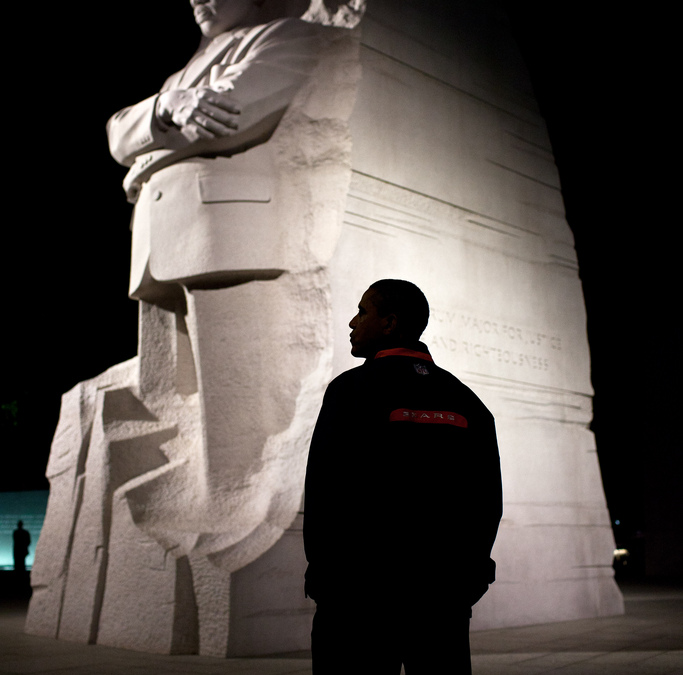
Keeping the Dream Alive
As we celebrate MLK Day this year we are also on the verge of the 50th Anniversary of his assassination, and while the dreamer died, this drum major for justice mission lives on as today we see progress in so many areas of Black life in America.
Things we would have never dreamed possible have come to pass where African-Americans occupy positions thought unobtainable 50 years ago. A culmination of this moment happened in 2008, when a nation with a history of racial exclusion elected the nation’s first African-American President Barack Obama. At this time there was talk in the U.S. as the world celebrated that King’s Dream of a Colorblind America had become a reality. There was even talk that the nation was moving in a direction of being post-racial.
King’s Dream in Trump’s America
Fast forward eight years and while there continues to be significant progress on the racial front; there’s been a backlash among a segment of the White population who feels that inclusion, equality and justice for those who were once considered vulnerable is a problem. So as some felt anxiety about social change in response as 2016 Donald Trump won the Electoral College and became the President of the United States.
Donald Trump, whose political ascendance began with him fanning the flames of racial resentment by attaching himself to the racist myth that Barack Obama was not born in the U.S. as part of the birther movement, that attempted to delegitimize the country’s first African-American President. And in his first year as president he and his coterie of Whites in his top cabinet positions are seeking to dismantle Barack Obama’s legacy and his “Make America Great Again” slogan may as well be “Take us back to a White America again.”
This is evidenced in how in this administration they are reshaping the courts by appointing conservative justices to lifetime appointments in the federal judiciary; something that can overturn decisions and have an adverse impact on Civil Rights gains. These include issues around environmental and criminal justice, housing, employment, affirmative action, voter rights and other things centering on the pursuit of justice and equality.
Re-Investing in the Dream
Today it is important that citizens become reinvested in fighting to keep the spirit of the dream alive. Today is a time to re-engage as not only Trump on a national level but on a state level some are trying to turn back the hands of time on the gains that’s given citizens access to equal rights. It is time for those today to fight in the spirit of those who came before them who have persevered the slights, the dogs attacking innocent children, the unfulfilled dreams and in spite of that they found a way to keep their eyes on the prize. Today this spirit must be renewed in this fight to continue to move America in the right direction.
King’s words of a colorblind society still ring true today as it did in 1963 at the March on Washington, even if today it is a far cry from a reality. But the struggle must continue as this nation’s problems with race continues, in addition to turning itself inward threatens America’s position not only nationally but its place as a beacon of hope and freedom across the globe.
And while many know King’s words as idyllic as they are, within his words he speaks of an imperfect nation trying to correct itself. This is what the dream is about people working together correcting our society so that all citizens can share in the dream. That all people regardless of their background can have a seat at the table of power and this is a day many Americans felt had arrived when it elected Barack Obama President in 2008.
But today on MLK Day in 2018, we are seeing a president who is trying to erase Obama’s legacy and a history of progress of all the great freedom fighters. This backlash of Trump and the Republicans who were obstructionist for 8 years must be met with force. Today this does not mean simply marching and protesting, it means being informed, it means voting in high numbers, it means getting an education, it means being better parents to our children, it means holding elected official accountable for how they vote on legislation. It is this that will continue to move the dream forward and make it a reality in the age of Trump.
Dr. Martin Luther King, Jr.’s influence on the Civil Rights Movement is indisputable, but his fight for equity in education remains a mystery to some.
That fight began with his own education.
“He clearly had an advanced, refined educational foundation from Booker T. Washington High School, Morehouse College, Crozer Theological Seminary, and Boston University,” said Reverend Jesse Jackson, Sr., the founder of the Rainbow PUSH Coalition. “His education in his speeches and sermons and writings were apparent and he wanted us all to have that type of education.”
King completed high school at 15, college at 19, seminary school at 22 and earned a doctorate at 26.
“Dr. King laid down the case for affordable education for all Americans, including Polish children—from the ghetto and the barrios, to the Appalachian mountains and the reservations—he was a proponent for education for all and he believed that strong minds break strong chains and once you learn your lesson well, the oppressor could not unlearn you.”
Rev. Al Sharpton, the founder and president of the National Action Network (NAN), said that NAN works with Education for a Better America to partner with school districts, universities, community colleges, churches, and community organizations around the country to conduct educational programming for students and parents.
“The mission of the organization has been to build bridges between policymakers and the classrooms by supporting innovations in education and creating a dialogue between policymakers, community leaders, educators, parents, and students,” Sharpton said. “We’re promoting student health, financial literacy, and college readiness in our communities, just like Dr. King did.”
King was a figure to look up to in both civil rights and academia, Sharpton told the NNPA Newswire.
“Then, when you look at his values, he always saw education, especially in the Black community, as a tool to uplift and inspire to action,” Sharpton said. “It’s definitely no coincidence that a number of prominent civil rights groups that emerged during Dr. King’s time, were based on college campuses.”
Sharpton added that King routinely pushed for equality to access to education.
“Just as importantly, he always made a point to refer education back to character—that we shouldn’t sacrifice efficiency and speed for morals,” Sharpton said. “A great student not only has the reason and education, but a moral compass to do what’s right with his or her gifts. It’s not just important to be smart, you have to know what’s right and what’s wrong.”
Dr. Wornie Reed, the director of Race and Social Policy Research Center at Virginia Tech who marched with King, said when he thinks of King and education, he immediately considers the late civil rights leader’s advocating that “we should be the best that we could be.”
“King certainly prepared himself educationally…early on he saw that education played a crucial role in society, but perceived it as often being misused,” Reed said. “In a famous essay that he wrote for the student newspaper at Morehouse in 1947, he argued against a strictly utilitarian approach to education, one that advanced the individual and not society.”
Maryland Democratic Congressman Elijah Cummings, who remembers running home from church on Sundays to listen to King’s speeches on radio, said King had a tremendous impact on education in the Black community.
“Dr. King worked tirelessly to ensure that African Americans would gain the rights they had long been denied, including the right to a quality education,” said Cummings. “His fight for equality in educational opportunities helped to tear down walls of segregation in our nation’s schools.”
Cummings continued: “He instilled hope in us that we can achieve our dreams no matter the color of our skin. He instilled in us the notion that everyone can be great, because everyone can serve and there are so many great advocates, who embody this lesson.”
In support of education equality, civil rights leaders across the country are still working to ensure all students, regardless of color, receive access to experienced teachers, equitable classroom resources and quality education, Cummings noted further.
For example, the NAACP has done a tremendous amount, across the country, to increase retention rates, ensure students have the resources they need, and prepare students for success after graduation—whether it be for college or a specific career path, Cummings said.
During his Nobel Peace Prize acceptance speech in Oslo, Norway, King said: “I have the audacity to believe that peoples everywhere can have three meals a day for their bodies, education and culture for their minds, and dignity, equality, and freedom for their spirits.”
The need for high quality education in the Black community is universal and the route to get there may be different, but education does matter, Jackson said.
“Dr. King told me he read a fiction and a non-fiction book once a week. He was an avid reader and, in the spirit of Dr. King, today we fight for equal, high-quality education,” said Jackson. “We fight for skilled trade training, affordable college education and beyond.”

 by
by 









 LOS ANGELES WAVE — It’s pretty cool to have an international star athlete pay a visit to your school. It’s downright awesome if you can get more than one world-class athlete to show up and hang out with you while you’re getting your exercise in.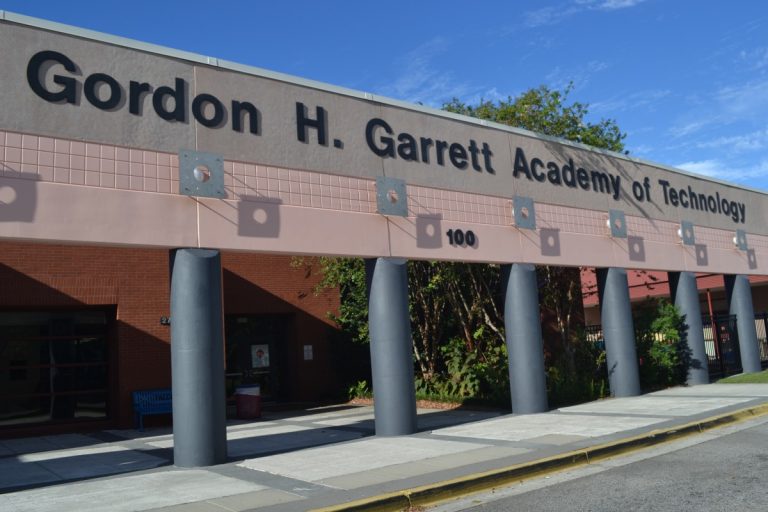
 Submitted by Jesse Williams, Rep. Marvin Pendarvis & Dr. Carol Tempel
 By Edwin Buggage