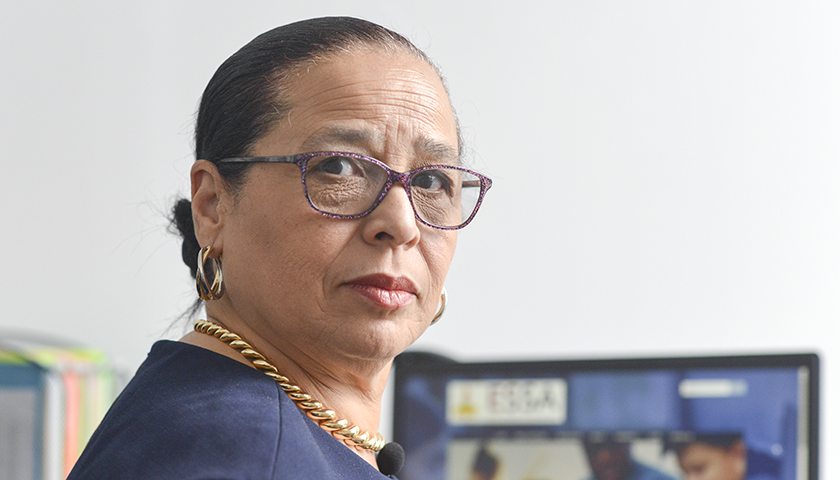
By: Dr. Elizabeth Primas,
Program Manager, NNPA ESSA Public Awareness Campaign
The Merriam-Webster Dictionary defines standards as, “something established by authority, custom, or general consent as a model or example. For example,” the Egyptians established the 365-day calendar, recording 4236 BC as the first year in recorded history. Around 1100 AD in England, it was determined that the length of King Henry Beauclerc’s foot would be used for the standard measurement of a linear foot.
These standards of time and linear measurement are still widely used and accepted today. During the Civil War, America recognized a need for standardized gauges for the railroads so that parts were easily inter-changeable. Standards continue to remain essential aspects of organization as societies increase in size and complexity. The same concept applies to academic standards in education.
In the mid-twentieth century, educators adopted academic standards. Those standards were designed to ensure that all students progressed at relatively the same pace while acquiring the skills necessary to become contributing members of society.
One example of this is the adoption of a Competency-Based Curriculum (CBC) by the District of Columbia in the 1980s. CBC consisted of a series of skill sets within a hierarchy. Students were required to demonstrate mastery of the skills at one level before progressing to the next. Teachers were required to teach/test/reteach (if necessary) and then retest. Once students demonstrated mastery, they received a score that reflected such. The score did not entail how many times the teacher had to reteach and retest before the students acquired the intended skillset.
A more recent example of academic standards is the 2009 states-focused effort to create clear, consistent, and competitive learning goals, resulting in the Common Core State Standards. Common Core State Standards were adopted by 48 states, two territories and the District of Columbia. The federal government supported the validity of Common Core Standards by providing financial incentives for state adoption.
Proponents of Common Core Standards argue that the standards provide students with the necessary knowledge to succeed in college and career regardless of geographical location. However, many critics have argued against this, emphasizing resulting ambiguity, lack of training, and lowered student expectations as the key points the identify a policy in need of revision. In 2015, the Every Student Succeeds Act, a re-authorization of the 1965 Elementary and Secondary Education Act (ESSA), offered a resolution.
Under ESSA, states have the option of keeping Common Core State Standards or creating their own state standards. The financial incentive to adopt Common Core by the federal government no longer exists and the option to work with a consortium of states to develop standards is also available to state educational leadership.
Guidelines set by ESSA for state-developed academic standards is a step in the right direction. ESSA allows for states to decide how to best set goals and meet the needs of students. It is obvious from the widespread criticisms of Common Core that uniform education standards have not worked. As states continue to develop academic standards they must keep this in mind, understanding that every child does not learn and/or demonstrate knowledge in the same way.
Unlike widgets, children will never fit perfectly into standardized molds. They learn to walk at different ages. They learn to talk at different ages. And each child has a different set of interests and learning style. Students’ ability to demonstrate mastery in one area over another has a lot to do with their previous knowledge and exposure to out-of-the-classroom experiences.
As a mother to many children, I have observed that some of my children are good in math, while others are musically inclined. A select few demonstrate the ability to make fantastic meals out of simple ingredients, while others have a hard time boiling water. We must understand that every child is capable of achievement at high levels as long as we encourage their strengths. Whatever their gifts and talents, we need them all.
Dr. Elizabeth Primas is an educator, who spent more than 40 years working towards improving education for children of diverse ethnicities and backgrounds. Dr. Primas is the program manager for the NNPA’s Every Student Succeeds Act Public Awareness Campaign. Follow Dr. Primas on Twitter @elizabethprimas.
Parents play critical roles in their child’s achievement from kindergarten through high school graduation. Parent advocacy has proven to have positive implications on student educational success. But who advocates for and supports parents and caregivers? In African American households, oftentimes, clergy or other prominent community leaders are the galvanizing force behind motivating community involvement.
In the ‘50s and ’60s, during the Civil Rights Movement, critical voices for change came through influential leaders. Dorothy Height, for example, was instrumental in bringing together women of different races to create a dialogue of understanding. Dr. Martin Luther King Jr. motivated the Birmingham, Alabama community to nonviolently protest segregation. And in more recent history, organizers Patrisse Cullors, Alicia Garza, and Opal Tometi inspired millions to support #BlackLivesMatter; bringing light to systematic racism. But what about education reform? Who is standing with parents as they call for access to better educational opportunities in their communities?
In a report produced by the United Negro College Fund (UNCF), Done to Us, Not With Us, African American parents said that they felt a number of obstacles prevent them from advocating more for education reform. Too many African American communities experience low-quality, under resourced K-12 schools and are staffed by educators who are less experienced than those in high-income neighborhoods. This disparity hinders economic growth. It also causes a gap in student college preparation.
Research findings help us better understand how to best reach parents; despite these challenges.
Not only do we have to support parents as they navigate the college-going process, but we also have to highlight the larger educational crisis that exists within the African American community. We need to let parents know that they can make a difference and that their children can achieve higher outcomes than what some might expect for them.
The UNCF report also acknowledges that the messenger matters. In Malcom Gladwell’s The Tipping Point: How Little Things Can Make a Big Difference, he states “In epidemics, the messenger matters: messengers are what makes something spread. But the content of the message matters. And the specific quality that a message needs to be successful is the quality of ‘stickiness’”.
In other words, people relate to relatable people! It’s extremely important that messengers who understand the current educational climate and who understand the African American community – are carrying these messages of how to advocate for their child in school and what actions they can take to bring about change in their local jurisdictions. This is one reason why the UNCF boots-on-the-ground, K-12 Advocacy group exists. In an effort to focus on increasing college-readiness in the black community, UNCF has partnered with local leaders and changemakers to address the importance of educational success in fresh, contemporary ways and to hold schools and educators accountable for providing high-quality education in under-performing districts.
Parents – take a look at the UNCF parent checklist to understand what you can ask and do to help your children thrive in school.
In the blog post titled Rethinking America’s K-12 Debate, Darrell Bradford, executive vice president of 50CAN sums it up perfectly, “When it comes to how to best educate children, we don’t know all of the answers, but we should commit to empowering new voices, fostering innovative ideas, and asking lots of questions.”
Khalilah Long, Communications Manager for UNCF writes on topics including critical topics surrounding K-12 Advocacy including education reform, academic standards, teacher diversity, high-quality charters, school choice. Prior to joining, Khalilah has published topics on nursing, healthcare reform, higher education accreditation, and mental health.
Marking 26 years of scholarship support for high school students, the Marie Jenkins Jones Incentive Award (MJJIA) announces five award recipients for 2018. Receiving scholarships of $500 each are Kayla Bennett, Ajani Brooks, Quinara Lawson, Zataya Rivenbark and Jamesia St. Louis, all recent graduates of Baptist Hill Middle High School. These outstanding young ladies have excelled in their high school studies and will be pursuing higher education this fall semester.
“My siblings and I are thrilled about this year’s scholarship recipients,” says Andrea C.J. Casey, MJJIA Board Chairperson and daughter of the late Mrs. Marie Jenkins Jones. “Because of matching gift donations and increased support from local businesses, former students, and the community, we were able to help even more students this year,” explains Casey.
MJJIA is a federally recognized 501(c)3 organization that helps deserving graduating seniors at Baptist Hill Middle High School advance their education at a vocational school, trade school, college or university of their choice.
Over the years, this scholarship has awarded tens of thousands of dollars to students assisting with books, school supplies or any other needs they may have toward their educational goals.
Mrs. Marie Jenkins Jones educated students of Charleston County for over forty years. She had a passion for teaching, love for her students and a devotion to the community. In 1992, she retired from Baptist Hill High School after decades of teaching in District 23. Her children established the scholarship to honor their mother’s legacy and to support students in furthering their education. “MJJIA wants to grant more scholarships in 2019, so we ask churches, organizations and the community to spread the word and encourage students to apply,” said Casey.
For more information about the MJJIA, to make a tax deductible donation, or to apply for the 2019 scholarship, please visit www.MJJIncentiveAward.org or contact the organization at mjjia@itsjustperfect.com
According to Larry Pogemiller, the Commissioner of the Office of Higher Education, “The five chosen programs all demonstrate innovative and promising teacher preparation methods that can help Minnesota schools meet the challenge of finding the teachers they need.”
The grant program was created during the 2017 legislative session and allocated $750,000 for new alternative preparation programs that intended to do one or more of the following:
Fill Minnesota’s teacher shortage in licensure areas that the commissioner has identified.
Recruit, select, and train teachers who reflect the racial or ethnic diversity of the students in Minnesota.
Establish professional development programs for teachers who have obtained teaching licenses through alternative teacher preparation programs.
Importantly, only a “school district, charter school, or nonprofit” were eligible for the grant monies, meaning that institutions of higher education were not. Additionally, in order to be eligible, programs must also have been in operation for three continuous years in Minnesota or any other state, and are working to fill the state’s teacher shortage areas. Finally, the commissioner of Higher Education must give preference to programs that are based in Minnesota.
This post will provide a description of an alternative teacher preparation program, as well as a description of the programs for each of the grant recipients.
What is an Alternative Teacher Preparation Program?
In 2011, the Minnesota legislature passed a law that created the opportunity for alternative teacher preparation programs to be created. According to a 2016 Office of the Legislative Auditor report, school district, charter schools, and nonprofit organizations are eligible to establish an alternative program by partnering with a college or university that had an alternative teacher preparation program. Additionally, school districts and charter schools are also able to establish an alternative program by forming a partnership with certain nonprofit organizations, but only after they had consulted with a college or university with a teacher preparation program.
“There are so many active-duty military families today who are making decisions about how they advance within the military, or where they are going to live… based on educational opportunities for their children,” Secretary DeVos recently said in a conversation with Kay Coles James, president of the Heritage Foundation. “I think we have the opportunity to change the dynamic for them.”
Maddie Shick is from one such family – and, despite being a bright student, she faces challenges that accompany a military-connected lifestyle. A self-proclaimed “professional new girl,” Maddie is now a sophomore at Robinson High School in Tampa, Florida.
Her formal education began in Georgia, but she’s learned across the country and around the world – even moving to Germany, where her father was deployed, for a year.
She’s attended a dozen different schools since preschool – and some of them have provided her with strong opportunities to learn and grow. As a middle school student in Columbus, Georgia, Maddie joined the drama club and performed in West Side Story. The school taught an International Baccalaureate curriculum.
Maddie Shick
The following year, the family moved to Fairbanks, Alaska, where Maddie had the opportunity to cross-country ski at school. She also joined the wrestling team – and she fell in love with the sport. “Girls can wrestle, too,” Maddie said.
But in Fairbanks, Maddie had to put her love of acting on hold: the school didn’t offer drama, and her family couldn’t find an active children’s theater group in the area.
And when the family next moved to Tampa, Florida, Maddie had to abandon her love of wrestling, too: when she switched schools within the district, she was disqualified from wrestling with her new team.
Maddie took advantage of the opportunity to explore new activities as she moved from school to school – but that also meant giving up ones that she’d once loved.
“There’s good and bad to all these schools,” Maddie said, “But the really bad part is that I don’t ever get to stay long enough to benefit from any one type of school.”
Military-connected students are often required to compromise – on top of the traditional pressures of maintaining good grades, preparing for tests, working, volunteering, and planning for life beyond high school.
Maddie with her family.
“Moving and starting over every two years makes all these pressures worse,” Maddie said. “Now, imagine you have to focus on all these things at three different schools, in three different states, in a four year period. It’s tough.”
Military-connected families deserve the opportunity to attend schools that work for them. They deserve – as the Secretary said – the flexibility to “customize their child’s education.”
That’s why the Secretary has called on all of America to fundamentally rethink school, including asking questions that were once considered “non-negotiable” or too difficult to answer. For example, students like Maddie are often required to fall in line with the pace of a new school – even if she’s ahead of her classmates.
“I was in gifted education for most of elementary school, but when we moved to Alaska I did not qualify for their program,” said Maddie. “Now, I don’t want to even try for gifted programs because I am tired of repeating all the testing every two years and most of the gifted programs are limited anyway.”
Military-connected students and all students should have options – perhaps attending a traditional public school for some classes, and attending an online or charter school for others. Rethinking school means that students, like Maddie, to whom “learning comes easy,” can advance quickly in subject areas that interest them.
“We do live an adventure,” Maddie said. “But some parts are really hard. School is one of them.”
Maddie deserves high-quality opportunities. She deserves the freedom to pursue subjects that interest and challenge her, in an environment that meets her needs.
All students, including those in military-connected families, should be free to learn, grow and thrive.
Note: This is a post in our #RethinkSchool series. The series features innovative schools and stories from students, parents and educators highlighting efforts across the United States to rethink school. Check back on Thursdays for new posts in the series. The #RethinkSchool series presents examples of approaches schools, educators, families and others are using to rethink school in their individual and unique circumstances.Blog articles provide insights on the activities of schools, programs, grantees and other education stakeholders to promote continuing discussion of educational innovation and reform. The Department of Education does not endorse any educational product, service, curriculum or pedagogy.
The much anticipated opening of Charleston Accelerated Academy became a reality September 4 as approximately 120 students embarked on a course toward a diploma and high school graduation. Charleston Accelerated Academy is a unique S.C. Public Charter School helping young adults overcome real-life challenges to earn their district or state-issued high school diploma. The school opened at the Septima Clark Academy site, 1929 Grimball Rd, on James Island in Charleston. Ribbon-cutting and open house ceremonies were held September 5.
The school serves students ages 16-21 through non-traditional approaches that incorporate web-based curriculum and technology, individualized learning plans, hands-on life and career coaching and flexible hours and scheduling. Charleston Accelerated Academy (CAA) is unique in many ways, but most importantly, it offers educational opportunities which previously have not been provided through ‘outside the box’ approaches to instruction for young adults. Its mission is to provide a comprehensive education to at-risk students which leads to students’ attainment of a diploma, acceptance to college or pursuit of a career, and culminates in each student having a positive impact in their community.
To accomplish that mission CAA provides what research shows students need to be successful: engaging courses, technologically advanced educational tools, personalized curriculum, and regular interaction with caring adults. CAA offers the tools needed to help students overcome personal barriers to attendance and engagement that include services which allow graduate candidates the flexibility to work from anywhere with a Wi-Fi connection, individualized learning plans which are tailored for each graduate candidate’s individual schedule and focus on the next step with hands-on life & career coaching.
Realizing that no one-size-fits-all, CAA offers a variety of supports to help graduate candidates find the path that’s best for them whether that is college, the military or a career. Highly qualified paraprofessionals and certified teachers work with candidates in small groups or in one-on-one settings creating opportunities to develop substantial relationships. The facility is staffed with two vans that will allow candidates to schedule transportation to and from its James Island site. And public bus passes are offered that can help candidates not only get to school, but also to work or other areas around the community.
Food services are available. CAA is partnered with the school district to provide food services daily. CAA understands that many of our candidates are caretakers to families of their own and allows candidates to bring their children to the site. CAA does not take custodianship of the children, and at all times, the parent is the guardian of their child, however this allows candidates flexibility in their scheduling.
As importantly, CAA has connections with local businesses and services to help candidates including churches and faith-based organizations, Trident Technical College and area Chamber of Commerces – networks that support candidates beyond the facility. CAA is Acceleration Academies’ first location in South Carolina, and the seventh location nationwide. Over 4,500 high school-aged students in Charleston County are currently not enrolled in traditional high schools due to a variety of factors such as needing to work to support themselves or their families, a lack of transportation or resources, or family caretaker obligations.
“The Academy’s goal is to make Charleston County a no-dropout community,” said Tom Ducker, Charleston Acceleration Academy Board Member. “CAA’s uniquely personalized and engaging education model is designed to provide the social, emotional and academic supports needed to re-engage high-risk and at-risk youth with their education and set them on the path towards graduation, careers and college,” said Charleston County School Supt. Dr. Gerrita Postlewait.
CAA board Chair Nadine Deif added, “We encourage businesses, community/church leaders, law enforcement and parents to encourage students to seek our help. Our job is to help the youth become high school graduates and find a career path that’s right for them. The individuality of each student is respected and encouraged.”
The Connecticut Education Association today released its first-ever Legislator Report Card that evaluates legislative candidates’ overall support for issues important to students, teachers, and public education. CEA’s new report card recognizes legislators who are committed to giving students more opportunities for success and are working hard to improve public education and the teaching profession in Connecticut.
The report card evaluates legislators’ voting records, as well as their advocacy and efforts to advance CEA priorities over the past two-year legislative cycle. These priorities include funding public education, preserving collective bargaining, enhancing the teaching profession, protecting the pension system, keeping schools safe, upholding teacher certification standards, and supporting sound education policy.
“Unfortunately, when it comes to public education and teachers’ rights, many legislators took actions in the wrong direction and earned less-than-stellar grades,” said CEA President Jeff Leake. “This new report card system is transparent and holds candidates accountable. It informs our members of the candidates’ positions on key issues and highlights those who want to help our students and teachers, and those who are doing harm to them.”
“In the aftermath of teacher demonstrations across the country, there has been a renewed interest in the political process and its direct effect on public education, students, and teachers,” said CEA Executive Director Donald Williams. “Our members are becoming more active—they are using their voice and their vote to make sure the concerns of teachers and students are heard.”
The candidates for all 187 Connecticut General Assembly seats as well as legislators running for another office, receive a grade based on a number of factors. For incumbents seeking reelection, the report card is based on the following:
Voting record on bills that advance or hurt CEA education priorities, and support for students, local schools, and teacher rights
Co-sponsorship of bills critical to advancing CEA’s identified legislative priorities
Advocacy on behalf of or against CEA positions in public hearings, on the chamber floor, in the press, and among peers in the legislative environment
Responsiveness to requests to meet with CEA members and staff
For all candidates, including those without a state legislative history, answers to candidate questionnaires and interview results were included in the report card.
Additionally, significant emphasis is placed on a candidate’s actions involving the rights of teachers to have a voice in the education of their students, the working and learning conditions of their school, and the ability to bargain for fair wages and benefits.
Congresswoman Frederica S. Wilson (D-FL 24th District) has a mission – pull young Black boys out of the school-to-prison pipeline. She hopes her 5,000 Role Models of Excellence Project is the ticket to providing diplomas and degrees instead of prison sentences.
Wilson had big help pushing her project during the Congressional Black Caucus Foundation’s Annual Legislative Conference held at the Walter E. Washington Convention Center in Northwest, D.C.
The Rev. Al Sharpton was on the panel, as well as actor and activist Erika Alexander, “America To Me” director Steve James, Dr. Cedric Alexander, national president of the National Organization of Black Law Enforcement Executives and George Ray III, current contestant on the “Grand Hustle” series on BET Networks.
The Excellence project started in Miami-Dade County when Wilson saw the young men her community rushed into the prison system, working in the drug trade or dropping out of school.
On a national level there were 1,506,800 people in prison at the end of 2016, according to the Department of Justice. There were 487,300 Black prisoners, or 41.3 percent. This is in comparison to 39 percent White prisoners.
When it comes to school drop outs, the number of Black boys who drop out between the ages of 16-24 has dropped nationally to 6.2 percent. But that number is still higher that the national average and White students’ 6.1 percent and 5.2 percent respectively, according to the National Center for Education Statistics.
In 1993, when Wilson started her program, it almost immediately caught national attention. Several sitting presidents and vice-presidents, including Barack Obama have supported the project. The initiative provides leadership and mentoring to young Black boys during a critical time in their lives.
The panel dissected many of the issues that impact a child’s trajectory to the school to prison system. Dr. Alexander spoke about police officers using more discretion and thinking of the larger community when arresting people.
“The law is what the law is,” Dr. Alexander said, who heads up the National Organization of Black law Enforcement Executives. “But what we can ask them [police officers] to do is use some judgement. Do you really want to hurt someone over an infraction? We as police officers have to have discretion.”
“I think what we are beginning to see as we’re training officers to have better relationships, we find some, not all, but some are mindful of the fact that there is a larger community watching you.”
Mayor Oliver G. Gilbert III, who is mayor of Miami Gardens, Florida, said citizens need to be mindful of how much they want police involved with their students at schools.
“We can’t over police our schools,” Gilbert said. “We can’t use police at schools as conduct supervisors. Understand if you ask a police officer to come to our schools and they witness a crime that kid is going to jail.”
Gilbert further cautioned, “We have to be careful of the part we are playing in this narrative.”
For George Ray, III who currently stars on “The Grand Hustle” series, Congresswoman Wilson intervened at the right time in his life. “She’s my fairy godmother,” Ray said to the packed crowd. The business professor spoke of facing 15 years in prison at 15 years old. The congresswoman happened upon his life and “instead of peddling drugs I had someone peddling hope.”
“She took me everywhere with her, she kept me so busy I couldn’t get in trouble if I tried,” Ray said of his relationship with Wilson.
Currently, the 5000 Role Models of Excellence Project services 105 schools within Miami-Dade County Public Schools (37 Elementary, 35 Middle/K-8, and 33 Senior High), according to the organization.
Emmett Louis “Bobo” Till (July 25, 1941 – August 28, 1955). He was a fourteen year old African-American from Chicago, Illinois who went to stay for the summer with his uncle, Moses Wright in Money, Mississippi.
By: Lynette Monroe (NNPA Newswire Guest Columnist)
August 28th, marked the day, 63 years ago, when Emmett Till was savagely beaten and lynched in Mississippi. It is the same day, 8 years later, that Dr. Martin Luther King Jr. delivered his immortal “I Have a Dream” speech. Ten years ago, on that day, then candidate Barack Obama accepted the Democratic presidential nomination. On August 28th of this year, Florida elected its first Black gubernatorial candidate, Democrat Andrew Gillum.
Despite the horror of Emmett Till’s murder in 1955, August 28thhas marked a date of victory and progress for Blacks in America. Many of these victories were obtained by Blacks showing up to the polls.
However, these change-making triumphs were — and often still are — met with retaliation from those that benefit most from the status quo. Therefore, we must remain vigilant in securing unprecedented Black voter participation in the 2018 elections by exercising our constitutional right to vote — a right the current administration has failed to protect.
During the White House’s first press briefing following President Trump’s visit to Helsinki, April Ryan questioned Press Secretary Sarah Huckabee Sanders about voter suppression and election meddling. The White House failed to state a clear position.
It is up to each of us as Americans to decide whether or not the United States will protect from foreign and domestic adversaries. Ensuring that our right, as citizens, to vote in free and fair elections is secure. However, history reminds us that the U.S. has a poor record of protecting those rights for all of its citizens — especially when those citizens are African Americans.
Fortunately, forewarned is forearmed. Our opponents have not changed their tactics. The enemies of justice have always known this fact that education is inextricably tied to freedom: Our right to read is as fundamental as our right to vote.
Brown vs. the Board of Education, the famous Supreme Court decision which declared school segregation unconstitutional, was rendered in 1954. In 1956, just two years after Brown, Look magazine published the confessions of J.W. Milam and Roy Bryant, the men acquitted for the brutal murder of Emmett Till. In the article, Milam indicated that school integration and voting rights were motives for his violent behavior.
“As long as I live and can do anything about it,” Milam said, “Niggers are gonna stay in their place. Niggers ain’t gonna vote where I live. If they did, they’d control the government. They ain’t gonna go to school with my kids.”
While the tactics and techniques employed are no longer as violent and blatant as Milam and Bryant’s, the intent to suppress Black votes and simultaneously limit access to an equitable education continues into the 21stcentury.
In 2012, measured against the population, the percentage of Black voter participation surpassed that of Whites. In 2013, just one year later, the Supreme Court voted to void section 5 of the Voting Rights Act of 1965, allowing nine, mostly southern and historically discriminatory states, to change their election laws without advance federal approval. Immediately, Texas re-enacted a previously blocked voter identification law and began making plans for redistricting.
In 2015, President Barack Obama signed the Every Student Succeeds Act (ESSA) into law. ESSA is the reauthorization of the Elementary and Secondary Education Act (ESEA) of 1965 and is designed to ensure access to high-quality education for all children regardless of the color of their skin, geographic location, or socioeconomic status. A major distinction between this law and earlier reauthorizations is that it grants each state the power to develop the academic standards and evidenced-based interventions that best fit the needs of their population.
In June of this year, the Supreme Court upheld Ohio’s right to purge voting rollsif voters have failed to participate in recent elections and fail to respond to a notice from election officials. Nationwide initiatives to clear inactive voters from the rolls are thinly veiled attempts to reduce “widespread voter fraud,” enacted by several Republican-controlled legislatures, despite overwhelming datathat establishes that voter fraud I essentially non-existent.
Opponents of justice realize that access to education enhances the prospect that citizens will exercise our voting rights. The ethical lapses and physical violence that often arise as a result of progress in these areas is no coincidence. To combat voter suppression, the National Newspaper Publishers Association (NNPA), in partnership with other civil rights groups, has launched a campaign to drive 5 million additional Black voters to the polls.
In his remarks to the attendees of the NAACP’s convention in San Antonio, Texas, Dr. Benjamin F. Chavis Jr., NNPA President and CEO, remarked that much of what is happening in Washington, D.C. today, “is in reaction to our going to the polls and voting. Voter suppression is taking place because weare voting.”
Lynette Monroe is the program assistant for the NNPA’s Every Student Succeeds Act Public Awareness Campaign and a master’s student at Howard University. Her research areas are public policy and national development. Follow Lynette on Twitter @_monroedoctrine.
By: Curtis Valentine,
Deputy Director of the Reinventing America’s Schools Project with the Progressive Policy Institute (PPI) and At-Large Member of the Prince George’s County Public School System
When asked about his childhood, Troy recalls “School was difficult. My classmates teased me due to my inability to comprehend written words. My teacher would call on me and I would have to endure an awkward silence until she moved on and called on another student.” By every measure we use to determine success and life outcomes in America, Troy Simon should be dead, unemployed, or in jail.
Troy believes a lack of parental engagement played a significant role in his low school performance and diminutive interest in education. Troy says, “My friends were always ahead of me academically because their parents were involved. My Mom and Dad both struggled with reading, but I had friends whose parents had them at a young age too, but they didn’t struggle like me with reading. Overall though, hardly anyone in my community had school spirit or happy feelings about school.”
Troy recalls, “There was a gap where I could go to school and then go home and not hear anything about school. Maybe I was supposed to be the middle man to bridge the gap between my teachers, my parents, and my community but I didn’t—or I didn’t understand how to.”
As a result, Troy found acceptance outside of school; snatching purses in the French Quarter and as a street tap dancer after teaching himself to dance. But following Hurricane Katrina, a short stint in Houston and what Troy describes as a “spiritual experience,” he began to take school seriously. Troy returned to New Orleans and enrolled in the new Recovery School District(RSD).
The RSD, administered by the Louisiana Department of Education, was created to take over and improve schools failing to meet minimum academic standards for at least four consecutive years. But after Troy discovered that the large class sizes and lax curriculum offered were not conducive to his learning needs, he enrolled in Abramson Sci Academy, a public charter high school that emphasized college readiness. Founded in 2008 with only 80 students, by 2009 Abramson Sci Academy students ranked second in Math and first in English in the RSD
Troy excelled. He graduated from Abramson Sci Academy and earned a prestigious POSSE Scholarship.As a Posse Scholar, Troy could choose from 54 different colleges and universities. Troy selected Bard College in Annandale-on-Hudson, New York. Despite the early challenges of transitioning to college course work, Troy graduated with honors from Bard College and is currently a joint Nursing/Divinity graduate student at Yale University.
Evidence is clear about the impact of parental engagement on student discipline and student achievement. The United Negro College Fund found a link between parental involvement and positive educational outcomes including higher grade-point averages; increased achievement in reading, writing and math; lower dropout rates; and academic self-efficacy[1]. Although all students benefit from parental involvement, research by ProfessionalSchool Counseling shows that parental involvement for students of color and those from low-income backgrounds significantly impacts their children’s school performance.
But Troy, does not let policymakers and school leaders off the hook. He believes that the future of New Orleans and the Orleans Parrish School System depends on school accountability. “Failing schools would not be tolerated in privileged communities; and therefore, it should not be tolerated in minority communities as well because minority students deserve the same privileges, opportunities, and access to a quality education like any other privilege community and school.
The national education law, ESSA, now requires that school reporting must show improvement for all groups of students and faster improvement for groups that are behind. School rating systems must also reflect the progress of underperforming student subgroups and schools can no longer depend on overall “good averages;” while neglecting or failing to facilitate academic achievement for their most vulnerable students.
Fortunately, Troy plans to use his Yale Degree to support other young Africans-Americans. Troy’s goal is to work in schools to support youth traumatized by violence, but he believes it will take schools and school systems giving him and other educators autonomy to be able to develop relationships with students. Troy believes, “If I am able to connect with the students and their parents, I am able to fully assess what the student needs (partly) and what they are going through and how I can be of any assistance to ensure their success.”
This article is a part of The ‘Reinventing America’s Schools’ series. This series highlights Change Makers from our community who are walking reflections of what’s possible when we place Accountability and Autonomy at the forefront.







 Her formal education began in Georgia, but she’s learned across the country and around the world – even moving to Germany, where her father was deployed, for a year.