Did you know that before entering kindergarten, low-income students are an average of about one year behind other students in math and reading? Did you know that African-American and Hispanic children begin kindergarten up to 13 months behind? These are gaps in both opportunity and achievement.
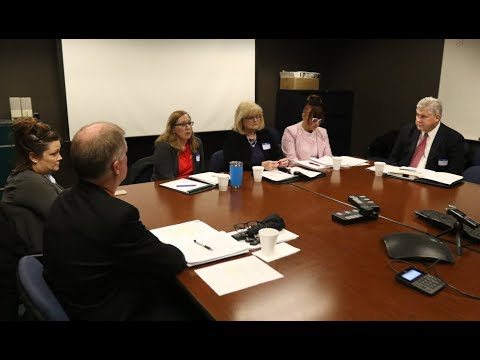
With support from the W.K. Kellogg Foundation, NCSL convened 23 legislators and two legislative staff at a two-day seminar in Seattle in November to focus on early learning policy strategies to address these gaps.
Under the Every Student Succeeds Act (ESSA), the federal education law passed in 2015, there are new opportunities for states to renew their efforts to give each student a similar start to their education and to ensure that they do not fall behind once they enter kindergarten.
These policymakers dialogued with 12 national policy experts on the economics, data, research and policies related to opportunity gaps, comparing their own state data to national trends and workshopping ideas. Participants left the meeting with ideas, questions and next steps for when they return home, including the following policy options:
Improved data collection to support more robust accountability and reporting.
Adequate funding and tracking resources.
Importance of high-quality teaching.
Extra supports or wraparound services.
Strategies to support English Language Learners.
Copies of all PowerPoint presentations discussing these policy options can be found here.
Perhaps hearing some of the meeting takeaways has sparked some ideas for you as well. To learn more about NCSL’s work on closing opportunity gaps through early learning opportunities in ESSA, please visit NCSL’s webpages on closing opportunity gaps and supporting early learning, or contact Madeleine Webster and Matt Weyer.
Madeleine Webster is a policy specialist in NCSL’s Education program.
Under ESSA, the California Dept. of Education debuted a “school accountability dashboard” website. The page is designed to be a “one-stop comparison tool” for its “ability to highlight high-performing schools for best practices and low-performing schools that need the most help.”
California Model Five-by-Five Placement Reports & Data
The Five-by-Five Placement Reports provide an “at a glance” display on how a district or school is performing on the state indicators. They graphically display which schools or student groups are: a) performing well, or b) in need of additional support.
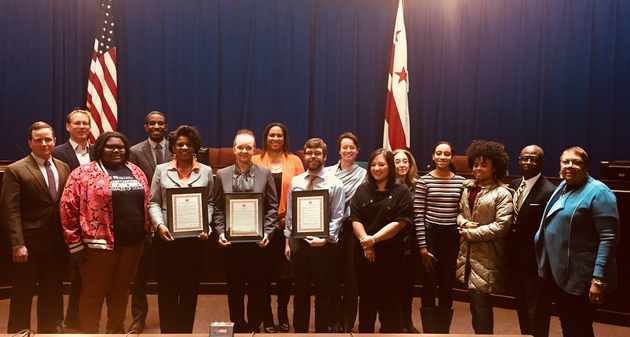
SBOE Honors 2018 Teacher of the Year and Blue Ribbon Schools
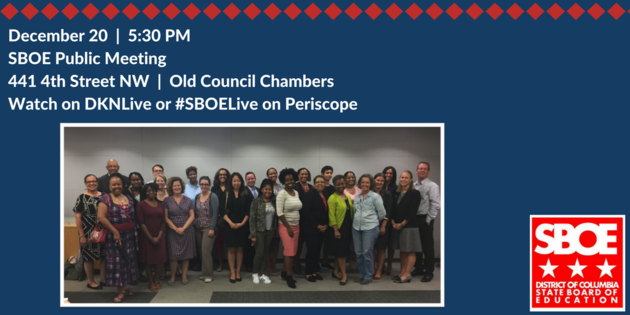
At this month’s public meeting, the State Board honored the exceptional efforts of Mr. Paul Howard who was recently named the District’s 2018 Teacher of the Year. Mr. Howard has taught social studies at LaSalle-Backus Education campus for the last five years.
SBOE members applauded the outstanding leadership and commitment to student achievement exhibited by Mr. Howard. He will now go on to proudly represent the District of Columbia in the Council of Chief State School Officers’ National Teacher of the Year competition.
The State Board also honored DCPS’s Banneker High School and Horace Mann Elementary School for being selected as a U.S. Department of Education 2017 National Blue Ribbon School. The National Blue Ribbon Schools Program recognizes public and private elementary, middle, and high schools based on their overall academic excellence or their progress in closing achievement gaps among student subgroups.
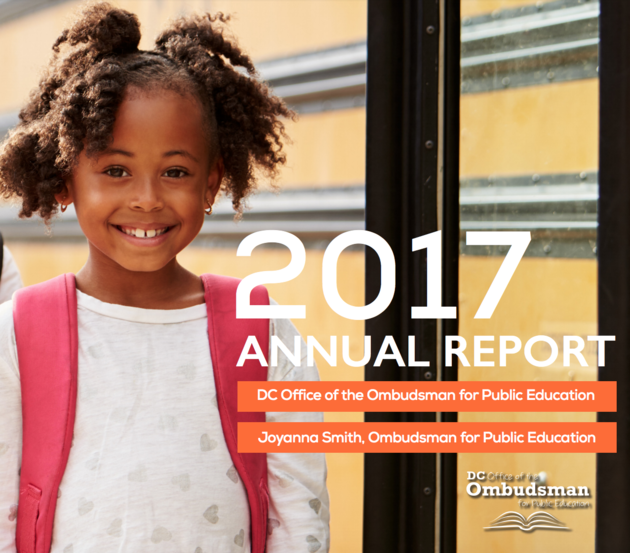
The Office of the Ombudsman for Public Education provides conflict resolution services for parents and students across the city. Serving approximately 500 families per year, the dedicated staff of the office, under the leadership of Ombudsman Joyanna Smith, works on issues including: student discipline, special education, truancy, student enrollment, transportation, academic progress and bullying. The 2017 Ombudsman’s report builds upon the equity analysis provided in last year’s report by introducing a proposed equity framework for the city. This framework builds upon more than three years of collaboration with school-based, local, and national education leaders, and intervention with over 1,500 families in all eight wards.
The Office of the Student Advocate, led by Chief Student Advocate Faith Gibson Hubbard, assists District families in navigating the complex public education system. By supporting and empowering District residents, the Office of the Student Advocate strives to bring equal access to public education. The Student Advocate’s office focused this year on expanding the services our office offers in support of students and families throughout all eight wards of the city. By leveraging connections and partnerships with government agencies, schools, and community-based organizations and increasing strategic outreach efforts, the office has nurtured vital working relationships that are student and family-centric. In doing so, the office tripled the amount of families it was able to serve through its Request for Assistance line (350 families) and direct outreach engagement (2000 individuals).
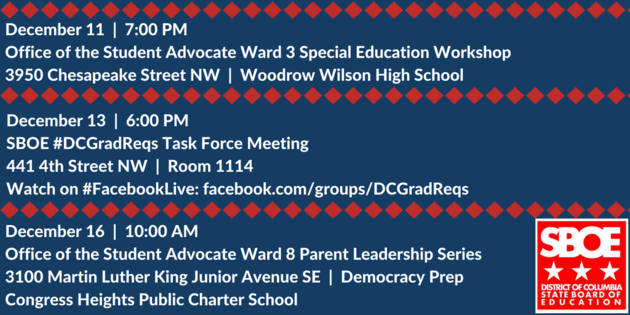
Our SBOE #DCGradReqs Task Force held its seventh meeting on November 8, 2017. In case you missed our #FacebookLive broadcast, watch the replay here and read the minutes here.
Key Takeaways
Task force members split into four groups to react to a “straw man” set of requirements – proposed changes to high school graduation requirements designed to ensure the District diploma fulfills its intended purpose.
Members then suggested further edits to the requirements, indicating which of their peers’ changes they liked, disagreed with, or wanted more information about.
In the coming weeks, members will take a new version of the draft straw man out to their constituent groups and provide feedback from those conversations at our December meeting.
Tell us what you think of our progress so far! Please take a look at the updated draft straw man and tell us what you like about it, what you dislike about it, and what you would change. Please submit all comments by emailing sboe@dc.gov or by filling out an online form here. We also encourage you to join our Facebook discussion group here to make your voice heard.
The next #DCGradReqs task force meeting will be held on December 13, 2017.
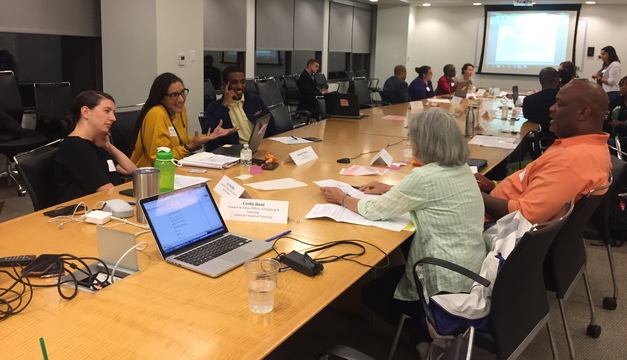
The SBOE ESSA Task Force, led by Ward 4 representative Dr. Lannette Woodruff, held its fourth meeting on November 7, 2017. Representatives from the Office of the State Superintendent of Education (OSSE) provided an update on feedback received from recently held community focus groups on a new school report card. Dr. Lillian Lowery of The Education Trust delivered a presentation to task force members on equity.
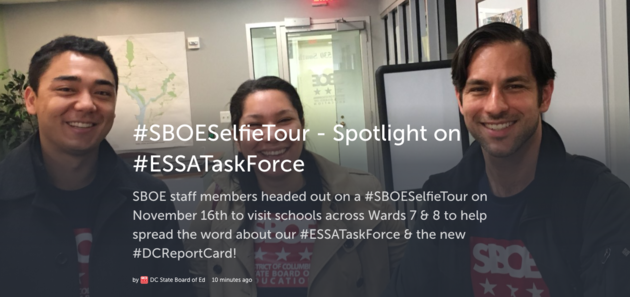
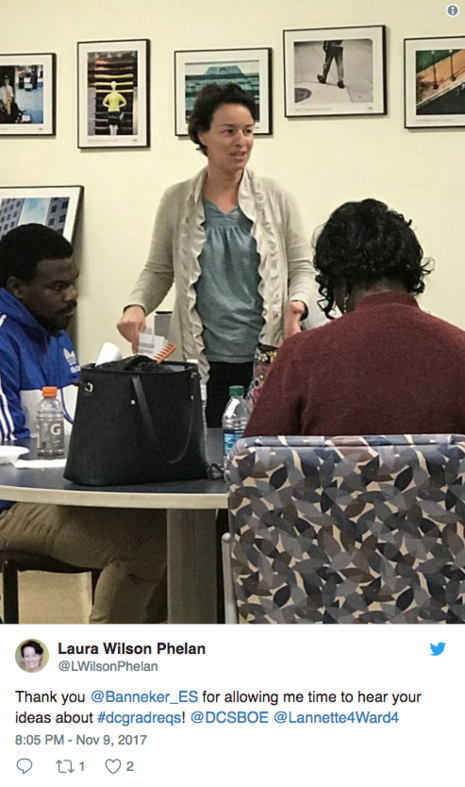
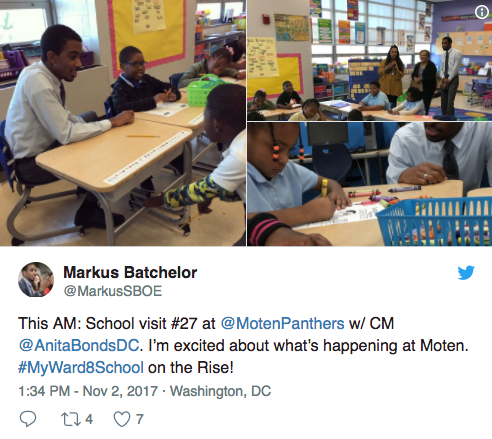
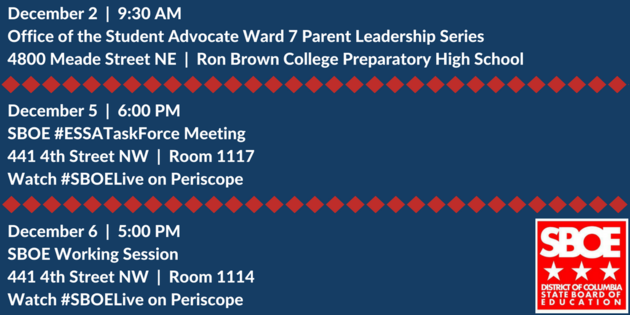
On November 16th, SBOE staff members headed out on a #SBOESelfieTour to visit schools across Wards 7 and 8 to help spread the word about our #ESSATaskForce and the new DC report card. Check out which schools they visited here. The next ESSATaskForce meeting will be held on December 5th.
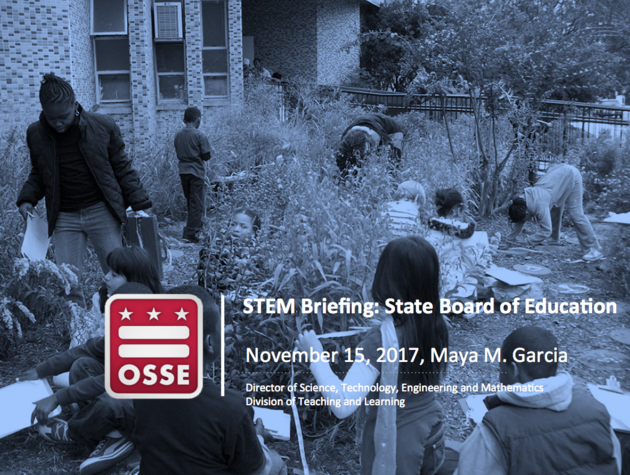
At this month’s public meeting, the State Board heard from two members of the DC Science, Technology, Engineering and Mathematics Network’s Backbone: Marlena Jones and Maya Garcia. The State Board supports Science, Technology, Engineering and Mathematics or STEM and recognizes that these subjects are vital components of a 21st century education. The Network updated the Board on their work and provided some opportunities where the Board and public can become more involved.
Back during the Obama administration, many states were working to tie teacher evaluation to student test scores, in part to get a piece of the $4 billion Race to the Top fund, or to get flexibility from the No Child Left Behind Act.
Then Congress passed the Every Student Succeeds Act, and the feds were totally barred from monkeying around with teacher evaluation. So have a ton of states dropped these performance reviews? And what has happened in the ones that didn’t?
So far, six states, Alaska, Arkansas, Kansas, Kentucky, North Carolina, and Oklahoma, have dropped teacher evaluations through student outcomes, according to the National Council of Teacher Quality. And other states have kept performance reviews, but made some modifications. Florida, for instance, has kept the student-growth measures, but allows districts to decide how they are calculated. More in this story from Liana Loewus…
Read the full article here: May require an Education Week subscription.
By Royston Maxwell Lyttle (Principal, Eagle Academy Public Charter School/Grades 1-3)
As educators, we have an obligation to give our students every opportunity to succeed. Parents rely on us to ensure their children are armed with the skills and knowledge they need to thrive, once they leave our classrooms. Over my more than 15 years in education, I have learned that to fulfill this responsibility, schools must give children the opportunity to learn from men of color. The profound impact Black male educators can have on the trajectory of a child’s life cannot be overstated and it’s time that we acknowledge it.
Promoting Diversity
According to the U.S. Department of Education, less than two percent of our nation’s teachers are Black males. At a time when non-White students outnumber White students in U.S. public schools, the need for a diverse teaching force has never been greater. At Eagle Academy Public Charter School, diversity is something we not only celebrate, but aggressively pursue. We constantly look for ways to expose our students to different experiences, perspectives and methods for coping with challenges. And this starts with diverse educators.
It should come as no surprise that men and women bring different perspectives to the classroom, and the same is true for individuals of varying backgrounds and ethnicities. It is crucial that schools cultivate a diverse and stable environment to facilitate this development, especially in early education, where children develop the foundation for the rest of their lives. I have seen firsthand that when children learn and grow in a diverse community, they begin to challenge stereotypes that have, for far too long, prevented children from reaching their full potential.
Shattering Stereotypes
Today, early childhood education is still widely viewed as a woman’s profession. With men representing only 2.5 percent of preschool and kindergarten teachers and 21.5 percent of elementary and middle school teachers, the chances of having a male educator (let alone a Black male educator) before reaching high school are slim.
The environment children are exposed to in their first years of education has a profound impact on how they view the world. Therefore, there should be a sense of urgency among early educators to combat stereotypes. When children see a diverse teaching staff working together in the same profession, they not only learn the importance of equality, but are also encouraged to ignore gender and racial stereotypes associated with certain careers. As a Black man working in early education, I have seen how these societal constructs negatively affect children and I have dedicated my life to breaking them down.
Offering a Role Model
Role models play a critical role in a child’s development. Young boys who come from disadvantaged backgrounds may not have a strong father figure at home, and often come to school hoping to fill that void. As a leader of a 98 percent African American student body, I feel it is important for students to find someone they can see themselves in, look up to, and aspire to be.
Boys who grow up with only female teachers and role models don’t have this opportunity. Children tend to mimic influential individuals in their lives. They benefit from strong, Black male teachers who lead by example. This is something I learned from a student while working in Washington, D.C.
He was a young boy whose behavioral issues were hindering his ability to learn. Without a father figure in his life, his mother was struggling to get through to him. Upon sitting down with the boy in hopes of identifying the root of these problems, I was surprised to find he had just one request: to spend time together. After our first outing to the movies, his attitude and schoolwork improved dramatically. I didn’t have to employ any complicated learning tactic or psychological theory to help this child—I just had to be there and listen. Over the remainder of the year, I watched him grow into a successful and happy student. That experience left me determined to be someone my students can always rely on and look up to inside and outside of the classroom.
Investing in the future
As we look to the future of early childhood education, I urge parents, teachers, lawmakers and communities to invest in ways to bring diversity to the classroom. I also challenge my fellow Black men who are passionate about education to buck the norm, ignore the stigma, and put the children first.
As a Black male principal, I feel it is my duty to spread this message and be a catalyst for change in order to create a more diversified environment for our children to learn in. I have found there is nothing more rewarding than seeing a student succeed against all odds, due to the lessons you have taught them. I encourage more Black men to join me in this journey.
Royston Maxwell Lyttle is the principal for grades 1-3 of the Eagle Academy Public Charter School in Washington, D.C. He strongly believes that all students should be provided a high-quality education and that all students can reach their full academic potential regardless of their social or economic background. Learn more about Eagle Academy Public Charter School at https://www.eagleacademypcs.org/.
(This op-ed was originally posted at Education Post. Republished with permission by the NNPA Newswire.)
By Lynette Monroe (Program Assistant, NNPA ESSA Media Campaign)
Education officials in Texas put a lot of work into the Every Student Succeeds Act state plan that they submitted to the Department of Education. We can all learn from what they included and what they chose not to include.
The Texas plan is supported by the strategic priorities of the Texas Education Agency (TEA). These priorities include: (1) recruiting, supporting, and retaining teachers and principals; (2) building a foundation of reading and math; (3) connecting high school to career and college; and (4) improving low-performing schools. TEA acknowledges these priorities require support and therefore list three prerequisites referred to as “enablers” for effective implementation of these strategies. These enablers include: (1) increased transparency; (2) ensuring compliance; and (3) the strengthening of organizational foundations.
Overall, Texas’s plan is designed to implement ESSA as Congress intended; allocating resources and funds according to need, closing the achievement gap, and increasing community partnerships. TEA states several long-term goals. The first, being that by the year 2030, sixty percent of Texans aged 25-34 will possess some form of post-secondary credentials. Another long-term goal is a 94 percent high school graduation rate. For English Language Learners, TEA proposes that by 2032, forty-six percent of students should be achieving English language proficiency. To support these long-term goals, Texas has established short-term targets in five-year intervals.
A major component of equitable resource allocation is the collection of data. TEA evaluates academic performance by ethnicity, economically disadvantaged, students receiving special education services, students formerly receiving special education services, English learners, continuously enrolled, and mobile. The minimum size for subgroup data reporting is 25. Data for subgroups 10 or smaller will be calculated using a three-year composite score. Considering the population of Texas metropolitan areas, it seems the subgroup size of 25 is appropriate. TEA will also periodically review the resource allocation process for local education agencies; which could include a review of per-pupil spending.
ESSA requires that schools use three academic measures and one non-academic school quality or student success measure to determine school achievement. TEA has chosen to use the “percentage of assessments at or above the Meets Grade Level standard for all students and student groups by subject” as their school quality and student success measure for elementary and secondary schools. For high schools, TEA will use college, career, and military readiness to include: students who earn dual credits; students who successfully complete AP Exams, students who are awarded associate’s degrees while in high school, students who enlist in the military, etc. These “non-academic” indicators are disappointing since the U.S. Department of Education encourages less emphasis on testing. Four of the six indicators of school success identified by TEA include an element of testing. Students deserve holistic education that values social development as well as academic achievement. Primarily focusing on test scores as a means of determining success devalues other important categories of intelligence, such as musical-rhythmic and harmonic abilities.
Texas does deserve praise for their inclusion of a “Closing the Gaps Domain” in their A-F accountability system. The Closing the Gaps Domain focuses on educational equity for all children; irrespective of ethnicity, economic status, or special education status. The Closing the Gaps domain must represent at least 30 percent of the overall school rating. Any school that has one or more significant gaps in achievement between subgroups will be identified for targeted support and improvement. TEA will also use a ranking system; comparing school progress to other schools with similar student demographics.
Texas also seems to have made every effort at establishing community partnerships by proposing numerous consultations under a variety of circumstances. Campuses that need comprehensive support or require even more rigorous interventions must undergo a district-led improvement plan. However, before any plan may be submitted the district must consult with parents and community members. TEA has also included parent and community feedback in their initiatives to reduce the risks of student drop-outs; the Texas Readers Initiative focuses on creating parental and public awareness while the redesign of school report cards assists parents in better understanding their child’s learning needs.
So, although school accountability measures focus primarily on testing, and support for a well-rounded curriculum like the promotion of the benefits of a free enterprise system, as well as, religious literature including “the Hebrew Scripture (Old Testament) and New Testament, and its impact on history and literature,” Texas made a concerted effort to implement the Every Student Succeeds Act according to the original intention of the law to allocate resources and funds according to need, close the achievement gap, and increase community partnerships.
Lynette Monroe is a master’s student at Howard University. Her research area is public policy and national development. Ms. Monroe is the program assistant for the NNPA’s Every Student Succeeds Act Public Awareness Campaign. Follow Lynette Monroe on Twitter @_monroedoctrine.
U.S. Secretary of Education Betsy DeVos today announced the approval of Michigan’s consolidated state plan under the Every Student Succeeds Act (ESSA).
“Michigan’s plan meets the statutory requirements. As such, I have approved it,” said Secretary DeVos. “I thank the U.S. Department and Michigan Department of Education for their hard work in ensuring the plan complied with the law.”
“While the plan meets the statutory requirements, Michigan must not view this as a ceiling, but rather as a baseline upon which to build, strengthen and expand. All Michigan students deserve an education that prepares them for success in the 21st century. I urge Michigan’s leaders to continue to find new and innovative ways to help students succeed.”
Martin Ackley, Director of Public and Governmental Affairs 517-241-4395
LANSING – Michigan’s plan to implement the federal Every Student Succeeds Act (ESSA) was approved Tuesday evening by U.S. Secretary of Education Betsy DeVos.DeVos said it was a pleasure working with the staff at the Michigan Department of Education on the review of the state’s plan.
“Please accept my congratulations for Michigan’s approved consolidated state plan,” DeVos wrote in her approval letter to State Superintendent Brian Whiston. “Thank you for the important work that you and your staff are doing to support the transition to the ESSA and most importantly to lead Michigan’s students to achieve at high levels.”
The plan was designed to do what is best for Michigan and Michigan’s children, Whiston said, based on input from thousands of stakeholders. It was built to tightly align with Michigan’s goals and strategies to become a Top 10 education state in 10 years.
“We will continue to move forward now in making Michigan a Top 10 education state in 10 years,” Whiston said. “Thousands of stakeholders in Michigan helped build the components of our ESSA plan. It is designed by Michigan, for Michigan’s students and educators. We appreciate working with the U.S. Department of Education to get this dynamic plan approved. The pieces are in place now, and prepared to be implemented and succeed.”
Whiston said Michigan’s ESSA plan has a “whole child” focus; will have less student testing; focuses on student academic growth; institutes a Partnership Model for improving low-performing schools; has a school accountability system tied to the Top 10 in 10 Strategic Plan; gives schools more flexibility on how they choose to improve; and gives schools greater ownership in how they follow their own plans.
What will be new with Michigan’s ESSA plan:
A Parent Transparency Dashboard is being developed to give parents a clearer understanding of where their child’s school is performing on things like student achievement, academic growth, attendance, and graduation.
It has a well-rounded and whole child focus. Academics in the core subjects, as well as access to the arts, libraries, and physical education are key. Physical, social, and emotional health and support, with assistance from counselors, social workers, and health professionals also are included in the state’s commitment.
It is supportive, and not punitive. Michigan’s accountability system no longer will be a top-down hammer for low-achieving schools. It will identify “Comprehensive Support Schools” and “Targeted Support Schools” and provide varying levels of support and assistance.
It continues the Partnership Model that the state has instituted to help schools and districts most in need – developing locally-driven solutions and measures of success, with the help of other state, local, and regional partners.
Every school will be conducting a Comprehensive Needs Assessment to study their resources and data, to find their school’s needs and gaps, and develop a School Improvement Plan, based on the results of that process.
There will be greater focus on developing the best educators, providing targeted professional development for teachers; honoring and lifting up Michigan educators; creating a stronger teacher preparation and development system with Michigan colleges and universities and other partners.
Following months of public input, the Michigan Department of Education submitted this past spring its plan for meeting the requirements of ESSA, which replaced the previous No Child Left Behind Act. Amendments were made as a result of federal peer review and input from the U.S. Department of Education.
“This ESSA plan is a key component of making Michigan a Top 10 education state in 10 years,” Whiston said. “Educators, parents, legislators and community members across the state devoted significant time and effort to this plan.
“We appreciate those individuals and groups who were genuine and supportive of everyone’s efforts to come together for Michigan students and educators to achieve and succeed,” he added. “There were outliers who had different opinions, and they were heard. In the end, the plan that Secretary DeVos has approved reflects a positive partnership of the education stakeholders.”
The Every Student Succeeds Act was signed into federal law on Dec. 10, 2015, replacing the No Child Left Behind Act. This law represents a shift from broad federal oversight of primary and secondary education to greater flexibility and decision-making at the state and local levels. ESSA requires states to develop plans that address standards, assessments, school and district accountability, and special help for struggling schools.


 By Madeleine Webster



 Back during the Obama administration, many states were working to tie teacher evaluation to student test scores, in part to get a piece of the $4 billion Race to the Top fund, or to get flexibility from the No Child Left Behind Act.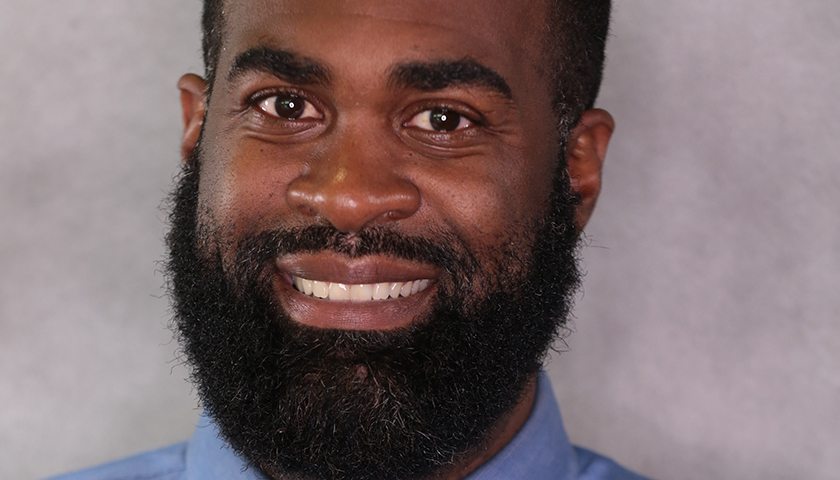


 U.S. Secretary of Education Betsy DeVos today announced the approval of Michigan’s consolidated state plan under the Every Student Succeeds Act (ESSA).
 Martin Ackley, Director of Public and Governmental Affairs 517-241-4395