The Pennsylvania Department of Education will unveil a new school quality metric in 2018 — dubbed the Future Ready PA Index — that it believes will foster a more holistic student experience, one less narrowly focused on state standardized tests.
The change was announced Wednesday as part of PDE’s plan to comply with the Every Student Succeeds Act (ESSA). That is the flagship federal education law, updated under President Obama in 2015.
Under that law, states were given more leeway in how to set education policy and spend federal public school dollars.
“It’s provided Pennsylvania with a once in a decade opportunity to revisit our assessment, accountability, and student support systems, and make changes with greater autonomy than we’ve been able to do in the past,” said department deputy secretary Matthew Stem. “It’s really given us an opportunity to focus on more holistic supports and holistic instructional strategies.”
Pennsylvania will still have a strong, federally required commitment to standardized testing with scores broken down by subgroup, but Stem says the new plan will push schools to foster better critical thinking and collaboration skills.
In the next few weeks, I will be closing my time as a summer intern at the National Alliance for Public Charter Schools and beginning my final undergraduate year at Howard University in Washington, D.C. I’ve learned more about public education at the National Alliance in two months than I have in the past year.
However, even though I work for a charter school advocacy organization, I do not consider myself pro-charter. I am also not pro-district.
I’ve heard many arguments that support charter public schools and many that support district schools – all with valid points and facts to back them up.
So, when I began to find myself truly confused, I did what I always do. I looked up what Black people are saying about this. Black opinion + my own thoughts = a solid case to base my life decisions on. While it may not be the most mathematical equation for success, it works for me. I googled “Black leaders charter schools” and felt a small sense of relief come over me because I was going to get an answer.
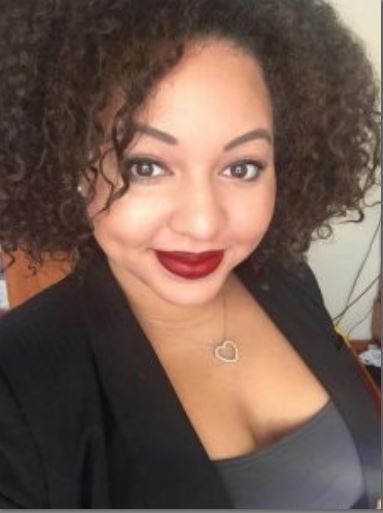
[/media-credit] Nicole Sahbaee is a rising senior at Howard University and a participant in the Walton-UNCF K-12 Education Fellow program.
I wasn’t going to have to wonder anymore because the Black leaders in education would tell me what their point of view is, why they have it, where the research came from and what they are going to do about it.
Looking back on this now, I’m aware that it sounds like I don’t use my brain to critically think, but we all do this in some form. In politics, people look up what the standard Democratic or Republican viewpoint is; in media people go to their favorite artist’s page to read their view; and in school, students go to their favorite teacher for their opinion.
As I began to read through the articles, I found topics about the NAACP and Black Lives Matter being pitted against Black leaders in education. I was pissed. So, two huge organizations that have Black prosperity at their core are at odds with Black education leaders and parents? I was so irritated that I closed the screen and went to deal with this confusion another day.
Weeks passed and I continued to gain information. I read the letter that had been written and signed by 160 Black leaders in support of charters, I watched clips of the NAACP’s special hearings on charter schools, and I researched teachers unions and their disdain for the charter movement. I turned over every rock I could find for some sort of answer.
Despite all the research and opinions, I still could not figure out who was on the right side of history. I could not look to Black leaders in this situation because they are consumed with the politics of the district vs. charter debate, just like many others in education.
This isn’t the first time I found disappointment with Black role models – Raven-Symoné was a huge heart breaker – but this is too important to ignore. Every second that is spent focusing on which school is better or what should be the dominant structure is doing a disservice to our children. Our children are the ones suffering without a quality education and are then chastised by society for not meeting “the bar.”
I get that money, politics, and power are important, but we can’t afford to fight this fight with each other. We have no choice but to be unified. According to the Civil Rights Data Collection, Black students are suspended and expelled at a rate three times greater than White students. This is something we should be focusing on. If our children don’t make it, that not only affects us but it is on us. The White school leaders that are trying to make change will be heartbroken if the years of work they put into improving public schools don’t pay off, but we will be crippled.
This is not an attack on Black leaders today, this is a cry for help. I’m a 21-year-old intern, trying to graduate from college. I’m doing everything in my power to change the narrative for our children, but I don’t have the power, yet. Black leaders, I’m begging you to use your power to create. Create the schools for our children that also provide jobs for our people. Position it so that Black school leaders have the resources to train up our kids. If you are an organization with the words Black, African American, Negro, or Colored People in your title then this is your duty, this is your fight.
You don’t have to reinvent the wheel, just take a page from “Pimp My Ride” and make it better. At the very least, create a space for conversations to flow freely regarding the schools our children go to. We may never reach a consensus and that is okay. There are multiple different ways to learn, to teach, and to lead. If you can’t do it, use your resources to find someone who can. This isn’t a conversation I wish to pick up in twenty years when I am in your shoes and we don’t have twenty more years to wait. I don’t care what structure is used to educate our kids, we just need something that works.



 By Nicole Sahbaee Special to the AFRO