“I think it’s a little bit of both. Kids who come from broken homes go to school to try and express themselves for the most part but once they get to school and have a teacher, a strong teacher, that will work with them, kind of straightens them out. I think that works, but we don’t have a lot of strong teachers. That’s why I say it’s the parent and the teacher, it depends who the teachers are and what they’re doing at home as well.”
Clarissa Knight…
“I would say its primarily up to the parents as far as children and their education. It’s up to the parents to raise their children to want to be educated and successful outside whatever learning environment that they choose to place their children.”
Jazz…
“I think that it has to be a partnership. I think the teachers should be working with parents and visa versa. I don’t think that one should wait on the other to reach out. But I think it’s pretty narrowly the parents responsibility and if there is something that the parents feel is lacking then they should be reaching out to the teachers as well. But I think that it ultimately falls on the parent.”
Ayana Henley…
“Ultimately, I think the parent has the responsibility, although the parent and teacher need to work hand in hand. I feel the parent has the ultimate responsibility because education starts at home. We are the ultimate teachers of our children and therefore that should spread out throughout the community. Whatever we’re instilling in our children at home, maybe we can influence our teachers and in that way keep the educational process going.”
Sista Yolanda Theodore…
“It can’t be either/or, it has to be a combination of both due to the fact our children spend up to six to eight hours in school and they are in the households before they even attend school. So, parents are the first primary teachers of children, but once they go to school it will take a combination of the parent and teacher correlating and talking together. If they can do that then that child can stay on track towards graduation or college or whatever their plans may be.”
Brook Riggio…
“I think it is shared between parents and teachers. Both have a key role to play. Teachers spend so much time out of the day with students that they will influence students immensely no matter what. So there comes a huge responsibility with that as well as trusting your children to teachers for that time period. At the same time, parents have to provide supplementary role models to give them all the other factors that they need to succeed. They need a loving and supporting environment at home to give them the encouragement they’ll need and the values instilled, especially at the early stages.”
It’s official! U.S. Secretary of Education Betsy DeVos’ team has offered feedback on all seventeen Every Student Succeeds Act plans that have been released so far. The last one on the list was Colorado, whose letter was posted publicly Monday.
If you’ve been reading other states’ ESSA feedback, the list of things that Colorado needs to address shouldn’t come as a shocker. The Centennial State must:
Rework its student achievement goals and academic achievement indicator so that they are based on straight up proficiency rates, not scale scores. Other states, including Massachusetts and Vermont have gotten similar feedback. There’s a great explanation of this overall issue from the Thomas B. Fordham Institute here…
The Obama administration’s political appointees may have cleaned out their desks at the U.S. Department of Education and the White House six months ago or more. But that doesn’t mean that they have stopped working on K-12 policy.
Many of the folks who ran Race to the Top, oversaw waivers from the No Child Left Behind Act, or helped implement the School Improvement Grant program, are still at jobs inside the Beltway, working in state education agencies, or school districts. Many have ended up at the same think tanks, non-profits, and philanthropic organizations. (The Center for American Progress was a popular landing site.) They’ve even got an informal alumni network, and a website, Education 44.
And in general, they seem to be continuing to champion the same kinds of policies they worked on during the Obama years. Think college access, equity, and innovation, often with a technological twist…
When the Every Student Succeeds Act passed, one of the things that educators were most excited about was the chance to cut down on the number of tests kids have to take, Specifically, the law allows some districts to offer a nationally recognized college-entrance exam instead of the state test for accountability.
But that flexibility could be more complicated than it appears on paper.
Here’s a case in point: Oklahoma, which hasn’t finalized its ESSA application yet, has already gotten pushback from the feds for the way that it had planned to implement the locally selected high school test option in a draft ESSA plan posted on the state department’s website. In that plan, Oklahoma sought to offer its districts a choice of two nationally recognized tests, the ACT or the SAT. Importantly, the state’s draft plan didn’t endorse one test over the otherâboth were considered equally okay…
By Dr. Elizabeth Primas (Program Manager, NNPA/ESSA Public Awareness Campaign)
Standards have always been a part of society. From standards of measurement and time to driver’s licenses, food preparation in restaurants and language, standards keep us healthy and safe and help us communicate with each other.
In the 1980s, the United States began to expand and formalize public education standards. This process was the driving force behind the education reform movement. Standards in education were supposed to set clear guidelines for what all students were expected to learn and be able to do. The curriculum and assessments were supposed to be aligned with established standards.
In 2001, with the signing of the No Child Left Behind Act (NCLB) by President W. Bush, a significant emphasis on standards took on a life of its own. Under NCLB, all states were required to develop standards and assessments to measure student achievement. Problems occurred when states developed individual standards that measured knowledge and skill levels. There was no way to determine if a student passing one state’s standards was equivalent to a student’s level of accomplishment in another state. Test that were national, like the PSAT, SAT, ACT, and the National Educational Assessment of Progress (NAEP), all indicated that students with passing grades in high school, that met state standards, were not necessarily prepared to be successful in college and career.
In 2009, there was a state-led effort to develop the Common Core State Standards (CCSS); the effort was launched by state leaders, including governors and state commissioners of education from 48 states, two territories and the District of Columbia; CCSS was supposed to remedy the differentiation in state standards under NCLB. The National Governors Association Center for Best Practices (NGA Center) and the Council of Chief State School Officers (CCSSO) worked with educational agencies to create one set of standards that would be uniform for the country. That same year, the Obama Administration developed the Race to the Top Fund, a $4.35 billion dollar competitive grant program designed to ensure that all students graduated high school prepared for college, career, and life. Race to the Top used financial incentives to encourage states to adopt CCSS.
Along with common standards, came high-stakes testing. Most states adopted one of two assessments: the Smarter Balance Assessment or the Partnership for Assessment of Readiness for College and Careers (PARCC). Many stakeholders saw high-stakes assessments as unrealistic, because all children were required to perform at world-class levels, merely by raising expectations and imposing punishments and sanctions on schools and children who fell short of the standards. The standard implementation did not consider students with persistent challenges that could have impeded them from reaching high-levels of achievement. There was no flexibility in meeting these standards, regardless of socioeconomic status, age, race, gender, cultural or ethnic background, disabilities or family circumstances.
The discussions around the implementation of standards did acknowledge that student learning abilities were not homogeneous. Yet, schools seldom provided the range of training, personnel, and strategy needed to meet all students. Subsequently, when students didn’t meet the goals, they were retained and schools faced sanctions.
Research has indicated that minority students, including English Language Learners (ELL), students living in poverty, and students with disabilities are disproportionately represented in the group of students that do not make sufficient and significant growth to meet the standards and objectives promoted.
Under the “Every Student Succeeds Act” (ESSA), states have been given the leeway to: continue using the Common Core State Standards and/or create and adopt their own rigorous standards. Along with the freedom to select standards best suited for specific state demographics, states can also select what assessments they administer. As states submit their ESSA plans, many states have steered away from the CCSS. Several states have indicated that they will not continue using Smarter Balance or PARCC to measure standard mastery.
The only way to be sure what standards your child must meet is for you, the parent, to get involved, and stay engaged at every level. Your child is our future, and we ask all parents to remain focused in the pursuit of their education.
Every meeting that involves your child’s education is important. Be there, be vigilante, stay persistent, have your voice heard.
Dr. Elizabeth Primas is an educator, who spent more than 40 years working towards improving education for children of diverse ethnicities and backgrounds. Dr. Primas is the program manager for the NNPA’s Every Student Succeeds Act Public Awareness Campaign. Follow Dr. Primas on Twitter @elizabethprimas.
Nikolai Vitti’s voice trembles a bit when he talks about his maternal grandfather, Richard J. Past.
The man toiled tirelessly at Ford Motor Company’s Rouge Plant and passed away three years ago at age 84.
“After he retired,” Vitti recalls. “He had a lot of time with me. He was instrumental in taking me to my sports practices. I wouldn’t be the person that I am without him.”
Vitti, superintendent of the Duval County Public Schools in Jacksonville, Florida, was appointed to lead Michigan’s largest school district in April. He began work as a consultant earlier this month and takes the reigns officially on July 1. His starting salary is $295,000; his contract is five years.
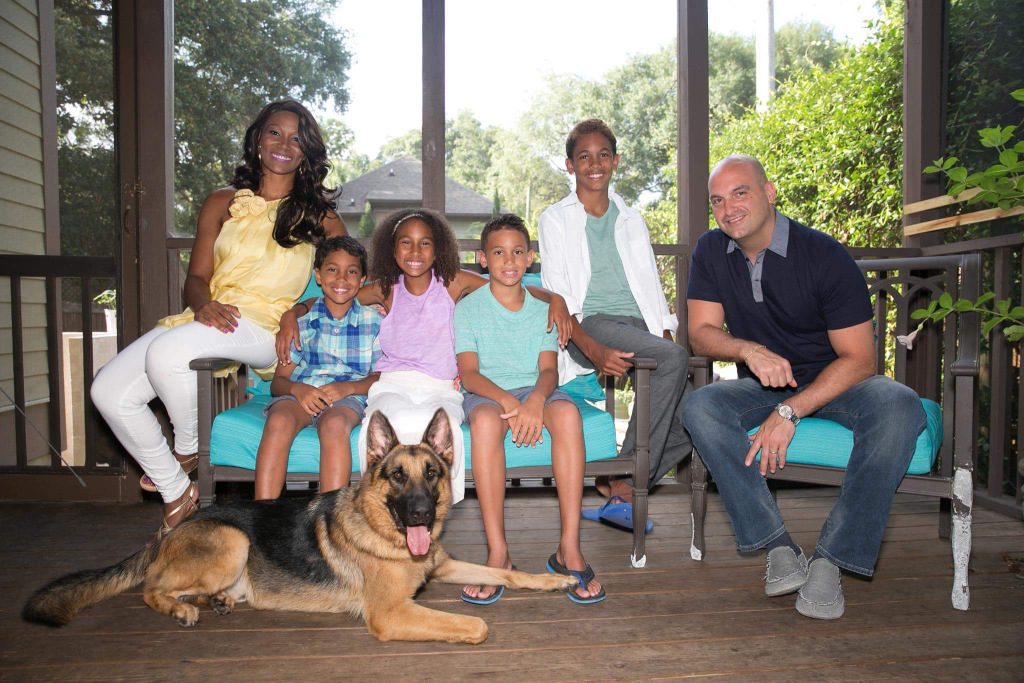
Dr. Nikolai Vitti and family
The Dearborn Heights native comes to a school district that had 300,000 enrolled students in 1967 but now has fewer than 50,000 children. What’s more, Detroit Public Schools Community District has struggled with financial challenges and has been under state control for 15 of the 18 years.
But Vitti maintains that he’s up the job. At 40, he is among the youngest Detroit district superintendents ever. Only Arthur Jefferson, the district’s first black schools chief, was younger. Jefferson was 37 when he was appointed to the post in 1975.
GROWING UP IN DEARBORN HEIGHTS
Vitti grew up during the 1980’s and early ‘90s. His father left the home when he was young so high school athletics, basketball and football at Dearborn Divine Child, provided roles models as coaches. Sports gave him the opportunity to fire up jump shots in Calihan Hall and go after the pigskin in the 80,000-seat Pontiac Silverdome. Equally important, he learned discipline as a team captain and it helped to prepare him for college and a public schools administration career.
“I think that I’m a strong leader because of those experiences,” he declares.
Although he struggled with dyslexia, Vitti studied at Wake Forest University in North Carolina and later earned the prestigious Presidential Scholarship graduate degrees in education at Harvard University.
Metro Detroit is one of the nation’s most racially segregated areas in the nation and Dearborn Heights, a white and tony working-class and middle class town, is 90 percent white. Racial segregation and hostile policies toward black and browns come to mind when one thinks about western Wayne County communities like his hometown. However, Vitti, a son of immigrants who grew up a stone’s throw from ethnically diverse Inkster, points out that his experiences in his uncle’s pizzeria and in sports was enlightening.
“My view of the world was very different than the average Anglo-Saxon American growing in metro Detroit,” he points out. “I was exposed to (ethic and racial) diversity at a young age.”
Moreover, Vitti is candid and philosophical when discussing race. He doesn’t mind questions about his marriage to Rachel, who happens to be black and hails from the Philadelphia, Pennsylvania area.
“We should be proud of our identity,” Vitti states. “Far too often, whites try to erase race, which is linked to an identity. Idealistically, I look forward to a world where we recognize each other based on race because that’s linked to a history and a culture, experiences and values.”
The Vittis have been married for 16 years and have four children.
“I’M ABOUT THE WORK”
After college, Vitti worked in New York City, North Carolina, Miami and Jacksonville but not in metro Detroit. So what’s on his list of immediate to dos?
“When you talk about entry,” he says. “It’s about engaging internal and external stakeholders.”
Further, Vitti wants to “have an authentic dialogue” with area elected officials, which includes school board members, city, county and Detroit legislative leaders; as well as the foundation and clergy communities and school union leadership.
“At the heart and core of this is engaging teachers,” he states. “If you ask me, ‘Who do you really want to get to?’ it is teachers, principals, district staff, parents and students.”
What’s intriguing about Vitti’s approach to K-12 education?
“I’m adamant about focusing on what I call The Whole Child,” he states. “At the core, schools should be about reading, math, science, writing and social studies but we just can’t do academic work in our schools. It has to be broader than that.”
Vitti suggests a greater need for arts, music, foreign language and athletics. Several years ago, for example, he freed up about $20 million so that all Duval County elementary schools had music and art teachers.
In his public interview with the Detroit Board of Education several weeks ago, Vitti declared that wanted to put charters schools out of business. He believes that when traditional schools are doing their job well, there are better equipped than charter schools, which are also public schools.
“I believe that when traditional public schools and traditional education gets it right, they get it right better than any other form of education,” he says.
“I believe that when you look at traditional public schools, we have a better pool of teachers and principals,” he states further. “And we have a better bench than charters do. I also believe that, at its truest form, traditional public schools are closer to the community because there is a higher level of accountability. You have an elected local board.”
Vitti started work as a consultant this month and is prepared to enter contract talks with DPSCD unions, if necessary. “It’s part of the job,” he points out. The Detroit Federation of Teachers executive board earlier this month rejected a tentative agreement with school district administrators.
He believes that through partnerships, internships and playing an active role in helping to move favorable public policy in Lansing and Washington, D.C. small business play a greater role in urban public school education in general and DPSCD in particular.
“Without a strong traditional public school education system and I mean traditional public education system,” Vitti states. “we’re not going to develop students who are employable with the right skills for the future and the now.”
So what’s the best thing about coming home to metro Detroit?
Vitti states:
“The peace and opportunity that comes with serving the city I love and people who share many of my life experiences at one of the most important and defining moments in the city’s history.”
If you live anywhere near the Durfee Elementary School building and Central High School on the city’s west side, then you already see it happening. Because you really can’t miss it. It’s kinda big.
Beginning on July 31, 12,000 volunteers descended upon Durfee and the surrounding neighborhood for a six-day whirlwind transformation/overhaul/cleanup designed to remove blight on 300 city blocks, board up 300 vacant houses, and perform essential home repairs for 50 homeowners in the area.
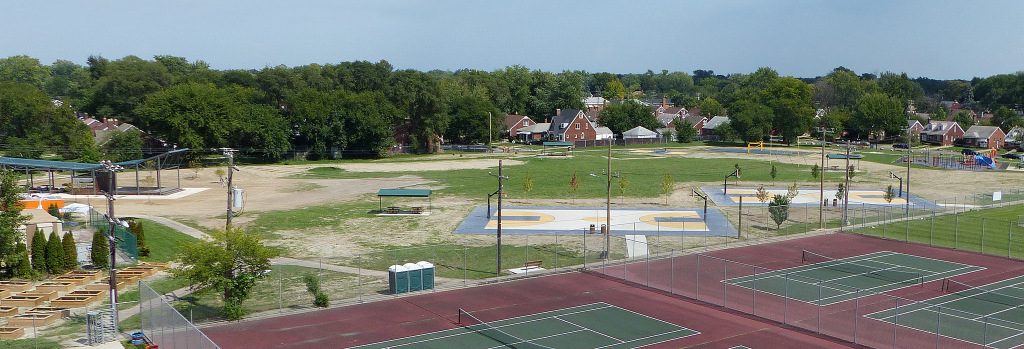
Just one example of what Life Remodeled has done for Detroit neighborhoods
“We invite students from school, we invite community residents, churches, mosques, synagogues, businesses, people from every walk of life that you can imagine,” said Chris Lambert, CEO of Life Remodeled which is spearheading the project.
Lambert said he and his team typically spend at least a year working with the community figuring out what the community wants. Then they work together with that community to plan the blight removal project.
And that’s just for starters.
The initial whirlwind is really the kickoff of what will be at least a two-year effort spearheaded by Life Remodeled to transform the Durfee building into what will be known as a Community Innovation Center, and thereby transform an entire neighborhood in the process. And in case you’re wondering, this isn’t the first time Lambert has managed to pull this off. Life Remodeled, founded in 2011, is already developing a respectable track record of transforming neighborhood schools in troubled areas as a means of upgrading the entire neighborhood.
The organization’s first school-based project, costing roughly $5.5 million, was in 2014 at Cody High School. In 2015, Life Remodeled stepped it up a bit and took on Osborne High School. That project cost approximately $5.7 million. Both of these projects were a long way from the initial project in 2011, which involved pulling together 500 volunteers to build a home for a single mother and her four children in Westland. In six days.
“The process evolved from a vision that was big at the time but miniscule compared to what we’re doing right now. …It’s evolved from focusing on building a house that benefited one family at a time, to now benefiting a community asset that benefits the entire community,” said Lambert.
“This one is very different from what we’ve done in the past. In the past we’ve worked in existing schools that are still operating today. …This one’s very different because we’re working in a vacant school now. The former Durfee Elementary Middle School.”
In addition to other benefits, Lambert said that there has been a noticeable positive impact on crime in the neighborhoods surrounding their earlier school-based projects.
According to Lambert, the Detroit Police Department measured crime stats on the blocks where they worked, both before and after the project, “And it actually dropped in 10 out of 11 categories, “including 47 percent reduction in homicides.”
From the website:
“The Community Innovation Center will operate in collaboration with Central High School and the Detroit Public Schools Community District to provide hands-on education to students. Entrepreneurs will guest lecture in classrooms and students will have the opportunity to learn subjects, like math and finance, with real examples from case studies of business ventures taking place within the center. Community members of all ages will have access to resources and space in order to learn about entrepreneurship and how to start or grow their own businesses. The center will also serve as valuable community and recreational space for families and their kids.”
“As 2017 marks the 50th year anniversary of the 1967 Detroit uprising, Life Remodeled and our partners will invest in the neighborhood surrounding Central High School, the city’s first public high school, in the community where Detroit’s civil unrest began. This year’s project will serve not only as a powerful commemoration of the progress that has been made, but also the progress we continue to strive toward.
We are proud to announce Life Remodeled’s first two-year commitment to Central High School and the surrounding neighborhood as we take on our largest project to date.”
So why did Lambert and crew decide on Durfee for this year’s project?
“We really chose Durfee the same way we chose every other neighborhood. There’s really two things that we look for; significant need, and radical hope. And when we say ‘significant need, what we’re looking for is neighborhoods that have high levels of crime and high levels of blight. And we’re looking for schools that have academic challenges that can be addressed with a construction/renovation project. When it comes to radical hope, we’re looking for a neighborhood that already has a foundation of sustainability in place or in process,” said Lambert.
What the community surrounding Central High does have “is a very rich history of resilience. And it is geographically located in close proximity to downtown and Midtown. And a tremendous amount of development is coming this way. And so what we want to do is help create more equity and inclusivity in the community so the community will have more power to shape the development that’s coming.”
Hopefully, if all goes according to plan, this is the kind of impact that will result in all future developments as well. Using schools as anchors to rescue communities.
“We haven’t decided what neighborhood we’re going to next, but what we’d like to do is to prove that this model of repurposing vacant schools can be of great benefit to the city and continue to do it in other Detroit neighborhoods.”
It’s an idea that definitely beats shutting them all down.



 Alonzo Mitz…
 Clarissa Knight…
 Jazz…
Jazz… Ayana Henley…
 Sista Yolanda Theodore…
 Brook Riggio…





 By Ken Coleman, Special to the Michigan Chronicle