Two Democrats who played a key role in crafting the Every Student Succeeds Act, Sen. Patty Murray D-Wash., and Rep. Bobby Scott, D-Va sent a letter to U.S. Secretary of Education Betsy DeVos Friday asking what her plans are for giving states guidance on implementing the law, now that Congress has scrapped a key set of regulations written by the Obama administration.
Among a lot of other things, those regulations, which dealt with the accountability portion of the law, included a “template” or application form for states to use in developing their plans. A number of states have already gotten started using the old template, posting the form on their websites for feedback. But now that Congress has scrapped the regs, that form doesn’t apply.
Considering education regulations from the previous administration have been under review, the department sought to revise the original state plan template to reflect only what is “absolutely necessary,” according to the statute.
The Congressional Review Act allows Congress and the new president to abolish any federal regulation finalized on or after June 13, 2016, by a simple majority vote in both chambers. H.J.Res 57, which awaits the president’s signature, would block accountability regulations under ESSA.
While the new template is meant to be more concise, it unfortunately no longer contains the requirement that state education agencies (SEA) provide evidence of consultation with a wide range of stakeholders, incluciuding state legislators, before submitting a plan to the Department of Education.
Now, “each SEA may, but is not required to, include supplemental information such as … its efforts to consult with and engage stakeholders when developing its consolidated state plan.”
The underlying ESSA law still requires SEA’s to seek input from state legislatures when creating the state plans. However, because evidence of that consultation is not required, it might be advisable for state legislators to take initiative when it comes to their statutory right to be consulted.
For any questions or concerns on the ESSA state plan template, please contact NCSL staff Michelle Exstrom (303-856-1564) or Lucia Bragg (202-624-3576).
View original article. Lucia Bragg is a policy associate in NCSL’s State-Federal Relations Division.
As the first deadline to submit state plans under the Every Student Succeeds Act rapidly approaches, community stakeholders in Washington, D.C., voice their support and concerns for how city administrators will implement the new law.
Last November, the Department of Education (DOE) issued two firm deadlines for the submission of ESSA state plans—April 3, 2017 and September 18, 2017. The Education Department will conduct a peer review process of the submitted state plans after each of the deadlines.
Following years of the increasingly cumbersome requirements of No Child Left Behind (NCLB), the bipartisan-approved ESSA allows state-level programs to continue, and even expand, on the progress that educators, parents, and students have made across the nation in recent years.
Today, high school graduation rates are at all-time highs, dropout rates are at historic lows, and more students are going to college than ever before.
Dr. Elizabeth Primas, the project manager for the National Newspaper Publishers Association’s (NNPA) new ESSA grant, is among those touting the strengths of ESSA.
The NNPA/ESSA Media Grant, funded by the Bill and Melinda Gates Foundation, is focused on raising awareness about the education law in the Black community.
“I am excited about the promise of ESSA to effect positive change in our lowest-performing schools, where children have been underserved, undereducated, and for all intent and purposes, forgotten about,” said Primas. “I don’t want to see ESSA derailed by politics before it even gets underway.”
ESSA not only removes many of the federal restrictions regarding K-12 education, returning the authority to states and local school districts, it also requires states to include strategies and innovations in their plans for the nation’s most vulnerable students in the nation’s lowest performing schools.
According Hanseul Kang, the superintendent of the district’s Office of the State Superintendent of Education (OSSE), “only about a quarter of D.C. students are prepared for college and career readiness, and there are serious and persistent gaps among our lowest income students.”
The district’s draft plan states that only “17 percent of its economically disadvantaged students are on track for college and career readiness in mathematics, compared with 54 percent of their peers who are not economically disadvantaged,” said Kang.
Washington, D.C. is one of the 20-plus jurisdictions planning to submit plans by the April 3 deadline. The majority of states are opting for the later submission date.
Although OSSE has complied with the federal requirement for a minimum 30-day comment period, many stakeholders feel that the current plan has issues that should be addressed before the comment period ends at midnight on March 3 and before OSSE’s scheduled submission date of April 3.
At a February 23 community engagement meeting in Washington’s Ward 5, many stakeholders supported waiting until September to allow more input into the plan from the community.
Jeff Schmidt, a D.C. resident and alumna of the University of California at Irvine, is convinced that the district’s plan will harm minority children with its “lower math and proficiency goals for Black and Latino children than for White children for the next 22 years—until 2039. D.C. could easily come up with an education plan that is free of racial pre-judgment,” he said.
David Tansey, a math teacher at McKinley Technology High School in Washington, D.C., is not happy with OSSE’s decision not to include a “well-designed school survey” of high school students as part of its plan.
“McKinley Tech’s typical student grows more than 70 percent [compared to their] peers citywide, the highest level of any DCPS high school,” said Tansey. “OSSE’s plan should not be approved until there is a plan to design and roll out a statistically valid school survey.”
Gary Ratner agreed.
Ratner, the founder and executive director of Citizens for Effective Schools, suggested that, “DCPS should administer the School Climate Assessment Instrument (SCAI) to all DCPS students, teachers and parents. SCAI would be an invaluable tool for identifying each school’s strengths and weaknesses.”
The SCAI can vary in scope from district to district; according to the National Center for Community Schools, the SCAI measures physical, social, affective/emotional, learning and moral indicators when assessing the quality of a school’s climate.
OSSE reported that they met with more than 100 organizations at 50 hosted meetings, before they released their draft on January 30. The ward-based community meetings in Washington, D.C., began February 7 and will end with the last meeting scheduled for February 28. For details, visit the OSSE website at www.osse.dc.gov/essa.
Primas also urged stakeholders to join the NNPA for an ESSA community awareness breakfast on March 24 in Washington, D.C. For details about the breakfast, contact Elizabeth Primas by email at eprimas@nnpa.org.
We are a group of fifty education and civil rights leaders across the District of Columbia who write to share our views on the Office of the State Superintendent of Education’s draft plan for school accountability, in compliance with the Every Student Succeeds Act (ESSA). In addition to fighting for our own children’s educational futures in DC’s public schools, all of us have worked tirelessly for many years for equity-based education and civil rights policies that benefit our most vulnerable kids both at the national and local level. Now, we believe it is critically important that we achieve effective, equity-based implementation of the ESSA law in our home state of D.C.
We believe the District’s plan, on the whole, will create a more transparent, equitable, and effective accountability system for the District’s children. The plan will create an apples-to-apples comparison of all public schools in the district, primarily based on how much students are learning and growing on research-based measures of college readiness. As education and civil rights leaders, we have seen time and again the importance of transparency around public school performance in order to hold our city leaders accountable for serving our highest-need student populations.
We urge the State Board to vote in favor of the plan on March 22nd, given that the final plan:
Ensures that academic, outcomes-based measures of student achievement comprise 75% of each school’s rating (including 5% growth for English Language Learners)
Heavily weights the foundational academic subjects of English/Language Arts (ELA) and math proficiency in school ratings, in order to signal to parents whether students will be on track for college and career
Weights student growth at 40% and student proficiency at 30% in elementary and middle school, in order to ensure that high-growth schools are recognized and rewarded
Commits to add a growth measure for high school once multi-year growth data is available
Incorporates a measure of language acquisition for English Learners
Ensures that every school receives a single, summative “star” rating that is communicated to the public and clearly signals when any one demographic group of students is underperforming
Ensures that consistent underperformance of each subgroup – students of color, low-income students, English Language Learners (ELLs), and students with disabilities – is reflected in a school’s summative rating
Does not obscure the picture of school quality by including too many non-academic measures
Does not reduce transparency or accessibility for parents by replacing a summative school rating with a dashboard
Does not adopt accountability indicators that cannot be disaggregated by subgroup or cannot bear the weight of accountability (i.e. might become biased or gamed)
No policy is perfect: the plan will require effective implementation on the ground, as well as monitoring and adjustment, in order for the benefits of the accountability framework to be fully realized. However, we believe it is in the best interest of students, families, and educators to approve and begin implementation of a new accountability framework before school begins in September.
We urge the State Board of Education to approve the final state plan for ESSA implementation at their vote on March 22, allowing for April submission to the U.S. Department of Education. Our children, and our schools, cannot afford further delay.
Sincerely,
Signatories are alphabetical by last name:
Jason Andrean, Ward 1
Board Chair, Achievement Prep PCS
Mashea Ashton, Ward 7
Founder, Digital Pioneers Academy (Ward 7)
Board Vice Chair, National Association of Charter School Authorizers (NACSA)
Tanzi West Barbour, Ward 5
Native Washingtonian, education advocate, and graduate of DCPS
Ward 5 parent
Sara Batterton, Ward 6
Education advocate
Ward 6 parent
Catharine Bellinger, Ward 1
Founding State Director, Democrats for Education Reform-DC
Co-founder, Students for Education Reform
Sekou Biddle, Ward 4
Vice President of Advocacy, UNCF
Former At-Large Councilmember, D.C. Council
Former elected School Board member, Ward 3 and Ward 4
DCPS parent
Tomeika Bowden, Ward 7
Former Press Secretary, US Senator John Kerry
Parent, BASIS PCS
Jean-Claude Brizard, Ward 3
Former CEO Chicago Schools. Former Superintendent Rochester City, NY Public Schools
Ward 3 DCPS parent
James A. Cadogan, Ward 6
Former Counselor to the Attorney General, U.S. Department of Justice, Obama Administration, 2015-2017
Former Director of Policy & Planning, Civil Rights Division, U.S. Department of Justice, 2014-2015
Christopher Chambers, Ward 1
Professor, Georgetown University
Ward 1 parent
Kevin Clinton, Ward 3
Chief Operating Officer, Federal City Council
Ward 3 parent
Lea Crusey, Ward 6
Former Senior Policy Advisor, U.S. Department of Education, Obama Administration, 2016-2017
Ward 6 parent
Aaron Cuny, Ward 8
Founder and Executive Director, Ingenuity Prep Public Charter School
Michael Dannenberg, Ward 3
Director of Strategic Initiatives for Policy, Democrats for Education Reform
Murch ES parent
Hilary Darilek, Ward 1
Chief Executive Officer, E.L. Haynes PCS
Former Deputy Chief, Principal Effectiveness, DC Public Schools
Jacquelyn Davis, Ward 2
Co-founder, Thurgood Marshall Academy
Founding Executive Director, New Leaders
Co-founder, Education Forward DC
Ward 2 parent
Josh Edelman, Ward 6
Civil rights and education advocate
Board member: EL Haynes PCS, City Year DC, DC Scholars, and Maya Angelou PCS
Washington Latin PCS and Wilson HS parent
Heather Edelman, Ward 6
ANC Commissioner, 6C06
Washington Latin PCS and Wilson HS parent
Michela English, Ward 2
Board Member: DC Public Education Fund, DC Prep PCS, and Fight For Children
Dominique Fortune, Ward 5
Board Chair, Lee Montessori PCS
Julie Green, Ward 4
Executive Director, New Futures DC
EL Haynes PCS parent
Lanae Erickson Hatalsky, Ward 5
Vice President for Social Policy & Politics, Third Way
Irene Holtzman
Executive Director, FOCUS
Melissa Kim
Chief Academic Officer, KIPP DC
Former principal, Alice Deal Middle School: 2005-2012
Emily Lawson, Ward 3
Founder & Executive Director, DC Prep Public Charter School
Joshua Mandell, Ward 4
Senior Adviser for Innovation and Competitiveness, US Department of Commerce
Program Officer, World Bank Group
Parent, E.L. Haynes PCS and Alice Deal Middle School
Carolyn Reynolds Mandell, Ward 4
Parent, Alice Deal Middle School and EL Haynes PCS
Maura Marino, Ward 2
Chief Executive Officer, Education Forward DC
Maya Martin, Ward 6
Founder and Executive Director, Parents Amplifying Voices in Education
Chris Pencikowski, Ward 5
Executive Director, Lee Montessori PCS
Lee Montessori parent
Ben Persett, Ward 2
D.C. Director, Education Pioneers
Dianne M. Piché
Former Deputy Assistant Secretary, Office for Civil Rights, Obama Administration, 2009-10
Executive Director, National Coalition of Diverse Charter Schools
Victor Reinoso, Ward 4
Former elected School Board member (Ward 3 & Ward 4)
Former Deputy Mayor for Education, 2007-2010
DCPS parent
Massie Ritsch, Ward 5
Acting Assistant Secretary for Communications & Outreach, Department of Education (2012-2014)
Deputy Assistant Secretary for External Affairs & Outreach, Department of Education (2009-2012)
Inspired Teaching PCS parent
Simon Rodberg, Ward 1
Principal, DC International PCS
Public school parent
Colin Rogister, Ward 1
Former Special Advisor, National Economic Council, The Obama White House, 2014-2017
Shanti Sale, Ward 2
Former Deputy Chief of Data Systems at DC Public Schools 2009-2010
Parent, Ross Elementary
Mary Shaffner, Ward 1
Executive Director, DC International PCS
Public school parent
Shalini Shybut, Ward 4
Senior Schools Manager, Education Forward DC
Former Senior Director, EL Haynes PCS
Ward 4 parent
Abigail Smith, Ward 1
Abigail Smith, DC Deputy Mayor for Education 2012-14
DCPS and Public Charter School Parent
Jessica Sutter, Ward 6
President, EdPro Consulting
Board Member, Center City PCS
Tammy Tuck, Ward 4
Educator, 14 years in DCPS and public charter schools
Raymond Weeden, Ward 7
Senior Director of Policy, DC Prep PCS
Tyler ES and Washington Latin PCS parent
Joanne Weiss, Ward 1
Former Chief of Staff to the U.S. Secretary of Education, Obama Administration, 2009-2013
Takirra Winfield-Dixon
Former Director of Strategic Media Initiatives, U.S. Department of Education, Obama administration
Former Vice President, National Communications, Teach For America
Jessica Wodatch, Ward 6
Founder and Executive Director, Two Rivers PCS
Ward 6 parent
Proponents of school choice in Pennsylvania are about the only ones cheering about President Trump’s education budget proposal that slashes overall funding by $9.2 billion but includes an unprecedented federal investment in opening doors to alternatives to traditional public schools.
This morning President Trump released a proposed 2018 budget that calls for a $9 billion, or 13.5 percent, cut for the U.S. Department of Education.
The document released today is only an initial sketch — a proposal, really — one that must compete with Congress’s own ideas. It indicates how Trump plans to make good on his pledge to dramatically reduce parts of the federal government while increasing military spending.
And, it provides some direction on how the administration plans to promote school choice, the president’s signature education issue.
As we’ve noted before, federal education spending provides a small fraction of the resources spent on public schools and colleges in the U.S. For example, the Education Department’s entire budget for 2017 was $69.4 billion. Meanwhile, the budget for the New York City public schools — the nation’s largest district — was $29.2 billion, of which $1.7 billion came from the federal government.
Still, the blueprint gives the clearest indication to date of where schools and colleges fall on the priority list for this administration, and its plans for education policy going forward. Here’s our breakdown.
Added
A $168 million increase for charter schools, currently funded at over $300 million annually.
$250 million for an unspecified “new private school choice program,” which may be vouchers. The budget proposal states that total school choice funding will eventually reach the level Trump mentioned in the campaign: $20 billion. (Tax credit scholarships, another potential vehicle to fund private school choice, would be implemented through tax reform, and are not mentioned in this budget plan).
A $1 billion increase for Title I, which provides funding to high-poverty schools. This increase would be dedicated to promoting and increasing school choice.
Eliminated
The $2.25 billion Supporting Effective Instruction program, also known as Title II, Part A. This grant program for states was designated to better recruit, support and train educators, particularly for high-need schools.
The Federal Supplemental Educational Opportunity Grant program, which provides $732 million in need-based aid for college students.
Cut
$193 million from TRIO and GEARUP, programs that help prepare low-income, first-generation and disabled students for college, starting in middle school.
For the Pell Grant, the federal government’s main income-based college aid program, the proposal calls for “level funding.” But, that “level” technically includes “a cancellation of $3.9 billion from unobligated carryover funding.” So, while Pell Grant funding would not go down, that $3.9 billion would not be available.
The proposal “eliminates or reduces” a list of programs without giving further details, including: “Striving Readers, Teacher Quality Partnership, Impact Aid Support Payments for Federal Property, and International Education programs.”
Across the nation, educators say that federal dollars must follow former President Barack Obama’s Every Student Succeeds Act (ESSA), in order for the law to be effective.
“Sufficient federal Title I and Title II funding is critical in targeting resources to students and schools with the highest need, developing and supporting our educators working in these schools, and enabling states to meet their ESSA commitments,” said Liam Goldrick, the director of policy at New Teacher Center, a Santa Cruz, Calif., based non-profit that’s dedicated to improving student learning by accelerating the effectiveness of new teachers, experienced educators and school leaders. “Without these federal commitments and investments, students in under-resourced schools will continue to face an inequitable educational system and the work of educators will be made even more challenging.”
President Barack Obama signed the ESSA legislation on December 10, 2015. The bipartisan measure reauthorized the Elementary and Secondary Education Act (ESEA), the 1965 federal education law and longstanding commitment to equal opportunity for all students, according to the Obama Administration. ESSA was drafted to build on key areas of progress in recent years, made possible by the efforts of educators, communities, parents, and students across the country, officials with the Obama Administrations said.
When it comes to progress that was made during the Obama years, today, high school graduation rates are at all-time highs, dropout rates are at historic lows, and more students are going to college than ever before.
ESSA states that the new law will, “Advance equity by upholding critical protections for America’s disadvantaged and high-need students.”
Some education advocates have said that the new law doesn’t go far enough to address long-standing racial discrimination that plays out in our education system.
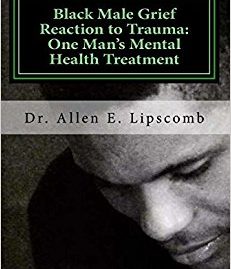
“Black Male Grief Reaction to Trauma:: A Clinical Case Study of One Man’s Mental Health Treatment” by Dr. Allen E. Pipscomb
“The law perpetuates an academic system of oppression in the lack of recognition to deconstruct [White supremacy],” said Allen E. Lipscomb, author of the 2016 book “Black Male Grief Reaction to Trauma: A Clinical Case Study of One Man’s Mental Health Treatment.”
Lipscomb also said that the law does not take into consideration the person-in-environment perspective and the mental health needs of some students.
“What does trauma look like? What are [the impacts of] additional stressors on intersectional identities,” for Blacks, poor people, or queer and transgender people, Lipscomb asked. “These identity markers also play a crucial role in the student’s ability to succeed, academically speaking, and this law must look at all of the nuances that impede a student’s ability to function and succeed within an oppressive educational system.”
Kim L. Defibaugh, the president of the National Art Education Association (NAEA) in Williamsburg, Va., said that the newest incarnation of federal legislation guiding K-12 education maintains the basic components of state plans and district report cards as accountability measures.
“A major change from the previous legislation is that it removes responsibility for outlining and monitoring implementation of the law from the U.S. Department of Education and returns it to the states,” Defibaugh said.
Defibaugh added that another encouraging key point in the language of the law, is the section that describes the “well-rounded education” provision, Section 8002.
“Mentioned throughout ESSA, it lists the arts as a subject essential to providing students a comprehensive and enriched educational experience,” Defibaugh said. “The National Art Education Association defines visual arts as a core academic subject and supports inclusion of a rigorous, high quality, comprehensive, sequential, and authentic visual arts program in every school for every child.”
Defibaugh said that individual states are still required to submit a plan to notify the U.S. Department of Education and local stakeholders about accountability systems, standards and assessments. The NAEA believes that a variety of authentic assessments, which are developmentally appropriate for all learners, are vital to best practices in art education, she said.
Defibaugh continued: “Under ESSA, states now have the flexibility to develop expectations for learning in the arts that meet the needs of the diverse population of students in their schools.”
Under sections describing the Assistance for Arts Education program (Section 4642) and a federal grant program (Section 4103), each state that receives an allotment for a fiscal year shall offer well-rounded educational experiences to all students, including female students, minority students, English learners, children with disabilities, and low-income students who are often underrepresented in critical and enriching subjects, which may include activities and programs in music and the arts.
“A broader focus on moving away from a simple reliance on test scores is wise and is a partial victory,” said Michael W. Apple, a professor of Curriculum and Instruction and Educational Policy Studies at the University of Wisconsin, Madison. “This is important to recognize since ‘No Child Left Behind’ and its process of blaming and shaming was disastrous in many ways, especially to many poor and minority communities.”
Apple cautioned against adding “rhetorical reforms” that, when put into practice, either give lip service to struggling schools or create more bureaucratic rules that take attention away from other extremely necessary and more robust reforms.
“For example, while I support a bill that puts more of a focus on a larger range of subjects and school experiences and evidence, will this prevent the current cycle of massive school closings in urban areas,” Apple said. “Will it deal realistically with the very real disproportionate funding that exists? Will the funding for the ESSA be sufficient? What will happen with a much more conservative Congress and [White House] that want to put much more money and support behind privatized education and who have continued to exhibit a lack of understanding of the realities of minority communities?”
Educators at the MacPhail Center for Music in Minneapolis credit the Every Student Succeeds Act (ESSA) with increasing awareness about their historic music program.
“MacPhail is one of the nation’s oldest and largest music education non-profits,” said Claire Forrest, the digital communications and public relations coordinator at the center. “We serve 15,500 students, transforming lives and communities through exceptional music learning for all ages, backgrounds and abilities.”
The center boasts 245 teachers with instruction in 35 instruments, including voice. Youth can explore the world of music in an age-appropriate and fun environment.
Forrest noted that certain provisions included in ESSA will provide educators with more tools to assist students. Those provisions include the requirement that all students in America be taught to high academic standards that will prepare them to succeed in college and careers.
ESSA was enacted to help increase the effectiveness of public education in every state. Under ESSA, states have greater flexibility under federal regulations. The law also ensures that every child, regardless of race, income, background, or where they live has access to a high-quality education.
The law also helps to support and grow local innovations, including evidence-based and place-based interventions developed by local leaders and educators.
Forrest and others credit the provisions under ESSA with boosting more interest in the program and gaining even more tools to assist students.
“Students learn in many ways and ESSA acknowledges and supports that with the emphasis on well-rounded curriculum and well-rounded students,” said Paul Babcock, president and CEO of the MacPhail Center for Music. “The inclusion of music and arts both supports student engagement in creative arts and allows students to learn through active participation in arts making.”
Babcock continued: “These are items important to all students and especially important to students in underrepresented communities where opportunities are limited.”
Babcock said that early exposure to the arts help to level the playing field and allow students’ talents to be nurtured in ways that are vital to their future success in life and the workplace.
And MacPhail offers dozens of ways to explore those talents.
It’s “Sing, Play, Learn” program allows young ones to experience the joy and the benefits of music while it’s “Suzuki” program is one of the largest and most established of its kind in the country, Babcock said.
Students learn music fundamentals, technique and appreciation from some of the most qualified musicians around and they can develop musical skills in a fun, collaborative setting with group music lessons, classes, and ensembles or in private lessons at MacPhail.
The center also hosts summer camps and music therapy options to help children improve their physical, psychological, cognitive, behavioral and social functioning through clinical and evidence-based research and practices by working with an experienced, board-certified music therapist.
“In our early childhood and school partnership programs, students often do not have access to music education due to the constraints on school time and budgets,” said Babcock. “The focus of school time and resources in many of those cases is put towards subjects that are being tested and how schools are being measured.”
Babcock said that, as a result, music and arts education is often ignored. Babcock noted that when McPhail’s School Partnership programs are being instituted at schools that did not have music, the students have demonstrated gains in social, emotional and executive functioning skills; they students also become more engaged in their communities.
“These advancements for the students are directly benefiting students’ attendance at school and therefore their accomplishments in school,” said Babcock. “ESSA’s focus on the well-rounded student provides the opportunity for resources to be directed to music and the arts, therefore, removing the time and resource limitation.”
SBOE OSSE’s ESSA Draft Proposal
102 5th St. NE, WDC 20002
Dear members of DC’s state board of education,
I am Valerie Jablow, a DCPS parent. I am sending you all this via email because it is the only way I can get timely feedback to you on OSSE’s response to your recommendations on ESSA. I urge you to vote NO on OSSE’s ESSA proposal.
Yesterday afternoon, I found out about OSSE’s response to public comment on its ESSA draft proposal.
I didn’t get to read that response until this morning, while eating breakfast and trying to get my kids out the door.
Then I read that OSSE would promulgate a new draft plan by the end of today, which I have not yet seen.
How do you keep up?
Perhaps more importantly, how does any parent, teacher, or administrator keep up?
Back in November, I and other parents of public school students in DC testified before you about the horrible effect of a test-heavy emphasis in accountability on students and schools in DC.
In February, when the superintendent of OSSE and her chief of staff held a public meeting in Ward 6 on ESSA, they touted the feedback they had already received in 50 meetings with 100 different groups. And they repeatedly said that teachers, principals, and parents wanted the heavy-test emphasis of its draft proposal.
Jaws dropped in the room that night. Who were those people who wanted testing to dominate accountability? Certainly not anyone we knew in our schools!
Thus, several weeks ago I made a FOIA request of OSSE, for a list of meetings, participants, and feedback received in all its meetings on ESSA from such groups and individuals from January 1, 2016 through the end of February 2017.
Right now, the best evidence we have for such feedback is OSSE’s response document from yesterday—in which “many” and “some” commenters are said to have said something, all of which is not necessarily reflected in what OSSE is now proposing to do with ESSA!
Thus, I hope that my FOIA request will allow me and others to find out what the Chesapeake Bay Foundation had to say about ESSA in DC public schools—as well as the other organizations whose staff met with OSSE on ESSA implementation for more than a YEAR, while all of us DC citizens (who, unlike the Chesapeake Bay Foundation, actually have children and/or taxes in this game) had only 33 days to comment on the proposal. (Which is three days more than the federal minimum of 30 days for public comment–and a few days more than the DCPS chancellor got.)
Perhaps the most radical thing in OSSE’s draft calls for schools being taken over by other operators when their test scores do not go up after 4 years (p. 59).
As you know, even with the changes it is proposing, OSSE is still placing a heavy emphasis on test scores and attendance. At the same time, there is nothing in OSSE’s accountability framework that penalizes schools whatsoever for high suspension and expulsion rates.
So what is to stop a school from suspending and expelling its way into higher attendance rates or higher test scores?
Nothing.
And where will those students go when they are expelled or encouraged to leave?
To their by right schools!
So what does OSSE’s proposal do to take this differential into account and its effect on the scores of receiving schools?
Nothing.
This is what you are voting for with OSSE’s policy here.
As you know, our city creates new charter schools whenever and wherever, without any regard for the effect on existing schools, neighborhoods, or unfilled seats.
As a result, DCPS is losing about 1% per year of “marketshare,” because growth in DC public school seats does not match growth of overall enrollments or of our student population. Just next week, for instance, the charter board will hear comments on proposals by two charter operators—KIPP DC and DC Prep—to create five new schools and 4000 new seats. The board will vote on those proposals in April. The board has also received applications for eight new charter schools beyond that, which it will vote on in May.
At the same time that the charter board is considering 13 (!) new schools, DC has more than 10,000 unfilled seats at existing public schools. (Data from 21st Century School Fund, using current audited enrollment numbers and MFP.)
So what will happen ten years from now, when these ESSA rules are up for re-assessment?
Absent any change from city leaders in our public school governance, DCPS will certainly be the smallest school system. This means more DCPS closures.
And absent any change in this OSSE policy, it means that some schools in DCPS will just become a place for kids off’ed from other schools, as those other schools chase better attendance and higher test scores—and thus create an even faster metric by which receiving DCPS schools will be taken over or closed altogether, because there is no accounting for this dynamic whatsoever in this policy or any city governance of our public schools.
This is what you are voting for with OSSE’s policy here.
One of the aims of OSSE’s ESSA policy is to provide a way to compare schools fairly and to have a common system of accountability between them. But this betrays a facile notion of how our schools actually work.
As you know, one school system in our city is bound to uphold a RIGHT to education. That is DCPS. The other system, charter schools, is not bound to uphold that RIGHT. That immediately differentiates the two sectors in a way that cannot be compared. It doesn’t mean one is better than the other—it simply means that they are different by design. Why wouldn’t you have a system of accountability that takes that difference into account instead of actively denying it even exists?
Moreover, there is nothing common between those two sectors in expulsion rules; suspension rules; facilities requirements; curricula; teacher training; and teacher retention rates—all of which are important not only to student achievement, but also in accountability to the public. OSSE’s proposal doesn’t acknowledge any of this.
In fact, OSSE has made some rather huge assumptions in its draft proposal, which distort true accountability.
To wit:
That student satisfaction = school success = higher attendance rates. (See p. 5 of the response document.) What evidence is given to show attendance is 100% (or some other percentage) in the control of each school? What evidence is given to show that student satisfaction means the school is “successful” and that students will attend at higher rates? Indeed, what is “success” in this scheme if not mainly high test scores?
That one of the purposes of the new rating system is to facilitate school choice by parents. This is perhaps the most grotesque distortion of ESSA possible. The point of school accountability is not to facilitate school choice, but to help students and to help schools help them. What assurance is here that parents and teachers will be able to use these test results and other criteria measured to help students learn better, except only in a punitive way, to avoid censure or takeover? Facilitating school choice should be the LAST thing that anyone is concerned about when it comes to helping our kids learn!
These assumptions and distortions are what you are voting for with OSSE’s policy here.
Finally, a note about compromise.
OSSE characterized its response yesterday to you and the public as a compromise.
But you, collectively, put together ten recommendations on OSSE’s draft proposal as a compromise before that—most of which have not even made it into OSSE’s response document.
So how much of a compromise was OSSE’s response yesterday—and for whom is it a compromise?
Here is a more concrete example:
OSSE’s rationale for not measuring high school growth is that different groups of high school students take different PARCC math tests and that it distorts scoring when those scores are combined.
OK. But right now, OSSE groups together middle school accelerated math test scores with regular math test scores and blithely spits out a number for both achievement and growth. That practice does indeed distort test scores—but OSSE has determined that’s OK with middle schools.
What sort of compromise is this?
I can attest that OSSE’s practice with those middle school scores has actively hurt my DCPS middle school, because a relatively large portion of its student body takes those accelerated math tests—whereas most other middle schools avoid those tests or have only a small fraction of their students take them.
So, instead of giving up on measuring high school growth or accurate middle school reporting, how about reporting data more responsibly (i.e., separate out results for accelerated tests)–or just using a different measure of math achievement than PARCC?
For all these reasons, I ask you to please not accept what OSSE is offering now. It is only a compromise of our ability to have rich, nuanced, and accurate assessments, which we desperately need and are not getting.
Your voting NO to OSSE’s proposal will give all of us time to make a policy of accountability that will reflect well on each school and every child. Thank you.
AMERICAN FEDERATION OF TEACHERS – The 2018 budget proposal released by the White House on March 16 “takes a meat cleaver to public education” and ignores promised investments in the types of skills, training and other vital family supports that Trump rode to the White House in 2016, AFT President Randi Weingarten says.
President Donald Trump’s budget plan axes $54 billion from nondefense discretionary funding; the Department of Education would take a hit of $9 billion, or 13.5 percent. Title II funding, which currently provides $2.4 billion under the Every Student Succeeds Act for professional development and class-size reduction, would be eliminated, as would the 21st Century Community Learning Centers program, which is a $1.2 billion investment in community schools, before- and after-school programs, and summer programs.
Higher education supports also take a hit: Trump’s budget eliminates $732 billion in federal funding offered through the Federal Supplemental Educational Opportunity Grant program. It calls for level funding of the Pell Grant program, but raids the so-called Pell surplus, stripping $3.9 billion from those reserves, which could be used to help more low-income students.
“These are the biggest cuts to the education budget we can recall—even during times of great fiscal stress,” Weingarten says. “Only someone who doesn’t know what public schools do and what kids need would contemplate or countenance these kinds of cuts.”
Spared from this scorched-earth proposal would be dollars for public and private school choice. Trump’s plan lavishes $1.4 billion on programs in this area, ramping up to an annual total of $20 billion, with an estimated $100 billion extra when matching state and local funds are factored in. The Trump budget includes a $168 million hike for charter schools, and $250 million for a new private school choice program. The plan also boasts a $1 billion increase for Title I that is dedicated to public school portability—a “dollars follow the student” scheme that works like vouchers, one that bipartisan majorities in both chambers of Congress expressly rejected when the Every Student Succeeds Act was approved in 2015.
Title I portability, combined with funding for new private school vouchers, is a blueprint for disaster in American public education. The White House and Education Secretary Betsy DeVos are angling for “both backdoor and ‘front-door’ voucher programs that further the Trump administration’s ideological crusade against public education,” Weingarten warns.
Education is by no means the only vital interest that gets hammered in Trump’s plan. The environment, labor, agriculture and diplomacy also are huge targets for reductions. The Department of Health and Human Services would lose $15.1 billion, or 17.9 percent. The National Institutes of Health would suffer a $5.8 billion cut.
Funding would fall $2.5 billion, or 21 percent, at the Labor Department under Trump’s budget. It eliminates training grants through the Occupational Safety and Health Administration. And it weakens federal support for job training and employment service formula grants—shifting more of the burden to states, localities and employers when it comes to expanding apprenticeships and other proven job generators.
“These cuts, if enacted, will turn into real-life effects on kids. They do what we feared would happen when Education Secretary Betsy DeVos was nominated: defund public schools with the aim of destabilizing and destroying them,” Weingarten says. And much of what Trump put on the table, she adds, is right out of the pro-school-choice playbook that DeVos used to cripple education across Michigan.
“When DeVos was nominated, we warned that she would use her office to wage an ideological attack against public education, and this budget is the latest confirmation of her efforts to rob the future to push failed voucher strategies.”



 Considering education regulations from the previous administration have been under review, the department sought to revise the original state plan template to reflect only what is “absolutely necessary,” according to the statute.