Nearly three months—and six school shootings—since President Donald Trump created a commission to seek solutions to school violence, the Cabinet-level panel is being slammed for what critics see as its slack pace, lack of transparency, and limited representation.
Advocates, parents, and educators note that the commission, which is led by U.S. Secretary of Education Betsy DeVos, has met only once since it was set up in the wake of February’s massacre at Marjory Stoneman Douglas High School in Parkland, Fla. They say there’s been very little outreach to the education community. And they worry that the commission seems to have already made up its mind about where to go on school safety.
“It really begs the question of how seriously they are taking this situation,” said Myrna Mandalowitz, the director of government relations at the School Social Work Association of America. “It’s past time for this commission to meet and get the ball rolling.”
Besides DeVos, the commission includes Attorney General Jeff Sessions, Secretary of Health and Human Services Alex Azar, and Secretary of Homeland Security Kirstjen Nielsen. It has had one organizational meeting, on March 28. Since the commission was first announced on March 11, there have been six school shootings resulting in death or injury, according to Education Week tracking of such incidents…
Read the full article here: May require an Education Week subscription.
Jayme S. Ganey, Special to The Informer via DiversityInc.
There is no sanctuary for children in President Donald Trump’s racist world, and now schools can be a tool for deporting children and parents.
Education Secretary Betsy DeVos said Tuesday before the House Education and Workforce Committee that schools and local communities decide whether to call U.S. Immigration and Customs Enforcement if they suspect their students are undocumented.
With reports presented at the hearing of parents being arrested by ICE outside their children’s schools, DeVos gave the same blanket response to every question:
“I would just say we are both a nation of laws and we are a compassionate people,” she said. “And I think it’s important that we follow the laws of the land, and if it’s important that laws be changed I encourage this body to do so.”
But one of those laws is a ruling from 1982’s Plyer v. Doe that guarantees the right to education for all immigrant children. And ICE was discouraged from entering schools previously by Homeland Security, but there are exceptions. Some schools have protected students assuring them that without legal pressure, they will not out the children and families.
DeVos’ remarks put no support behind communities trying to provide sanctuary.
Mexican American Legal Defense and Education Fund (MALDEF) President Thomas Saenz said in a statement, “Her testimony … stems either from an astounding ignorance of the law or from an insupportable unwillingness to accurately advise local school districts. Either of these indicates a severe dereliction of duty.”
Rep. Adriano Espaillat, who confronted DeVos with the issue at the hearing, released a statement saying: “Sec. Betsy DeVos is unqualified to lead the U.S. Department of Education, and her reckless statements regarding undocumented youth, not only conflict with the law, but will lead to fear and intimidation among immigrant students across the country.”
The students and staff of Dr. Martin Luther King Jr. Charter School for Science and Technology had a busy Monday morning (May 21). In addition to a graduation ceremony staged for the Lower 9th Ward school’s kindergarteners, students were given an opportunity to test out their newest fitness gear alongside members of the New Orleans Saints team.
The New Orleans Saints and UnitedHealthcare, the country’s largest health insurer, devoted new fitness equipment to the students that was positioned in a “Get Fit” youth fitness zone designated on the second floor of the school. The football players showed 100 students how to properly use the fitness gear in order to encourage students to stay active.
New Orleans Saints Cornerback PJ Williams, Safety Kurt Coleman, Cornerback Arthur Maulet, and Wide Receiver Robert Meachem each spent their morning demonstrating to students how their new fitness equipment is supposed to be used. The initiative at the C-rated school comes a year after the Data Resource Center for Child and Adolescent Health deemed Louisiana No. 8 in child obesity…
How does an individual’s decision to drop out of high school affect the rest of us? And, conversely, how does a student graduating from high school benefit all of us?
Those were the questions the Alliance for Excellent Education (All4Ed) sought to answer when it began working on an economic model that would demonstrate the economic impact of a 90 percent high school graduation rate.
Individuals who drop out of high school are far more likely to spend their lives periodically unemployed, on government assistance, or cycling in and out of the prison system than individuals who earn a high school diploma. But individuals are not the only ones affected when they do not graduate.
To quantify how a student’s decision to drop out affects the rest of us, and, conversely, how a student graduating from high school benefits all of us, the Alliance for Excellent Education (All4Ed) released new data demonstrating the economic impact of reaching a 90 percent high school graduation rate. The data is available for the United States as a whole, all fifty states, and roughly 140 metro areas, from Anchorage, Alaska to Winston-Salem, North Carolina and many places in-between.
During a time when future success is so closely linked to educational outcomes, one in six students do not earn their high school diploma. Individuals who drop out of high school are far more likely to spend their lives periodically unemployed, on government assistance, or cycling in and out of the prison system.
But what if the United States were able to achieve a 90 percent high school graduation rate? How would that benefit the nation?
For the Class of 2015, which had a graduation rate of 83.2 percent, a 90 percent graduation rate would have meant an additional 250,000 students would have walked across the Commencement Day stage.
These graduates would collectively have earned $3.1 billion ANNUALLY in additional income.
That additional income isn’t going under the mattress. It’s being spent in local grocery stores, restaurants, and other businesses, powering national, state, and local economies.
And these new graduates are also contributing more in the form of tax dollars—roughly $664 million collectively by the midpoint of their careers. That tax revenue will go toward public schools, roads, and a variety of other public goods.
In total, the collective spending power of these new graduates will lead to greater opportunities for the nation, including $5.7 billion in economic growth and more than 14,000 new jobs created…
The New School has launched the Digital Equity Laboratory, a project-based center that identifies and supports strategies to transform how technology is understood and used to drive racial, gender and economic equity and disrupt the use of technology to produce and reproduce inequity in our social, economic and civic life. It will focus on cross-sector strategies to expand broadband access to communities, particularly low-income communities of color, that have been systematically excluded, marginalized and targeted by many technology systems; ensure that smart-city innovations benefit those communities; and understand the equity implications of big data, algorithms and new edge technologies. The DEL will be housed at The New School’s Milano School.
“Technology is neutral, but people are not,” Maya Wiley, founder and co-director of the DEL, and Greta Byrum, co-director of the DEL, said in a statement. “With the fast pace of technological change to our job markets, how we communicate with one another and the data produced and collected about us, and how it is used, technology has great potential to drive social benefits democratically or deliver social, economic and civic devastation for some. We no longer have a digital divide. We have a technological chasm. The laboratory will provide a space for people of diverse disciplines to collaboratively develop approaches and strategies to protect democracy; increase the economic, social and civic health of our communities, particularly low-income communities of color; and support innovation that disrupts inequality, rather than reproducing it.”
Bruce Fuller, a sociologist at the University of California, Berkeley, works on how schools and civic activists push to advance pluralistic communities. He is a regular opinion contributor to edweek.org where he trades views with Lance Izumi, on the other side of the political aisle.
This blossoming spring of teacher uprisings—marching on state capitols, winning hefty pay raises—cheers any citizen who knows that robust societies depend on vibrant schools.
But arid summers may await the nation’s educators, as the Trump-tweaked U.S. Supreme Court seems ready to eviscerate these same teacher associations who battle each day for better schools.
While hearing oral arguments in the Janus v. American Federation of State, County, and Municipal Employees Council 31 case in February, justices voiced skepticism over compulsory union dues, the life blood of local associations that mobilize the nation’s 3.2 million teachers.
Still, it’s the wildcat strikes moving across the nation—ignited mostly by young and passionate teachers—that may reshape the future of labor unions…
Read the full article here: May require an Education Week subscription.
By Lynette Monroe (Program Assistant, NNPA ESSA Public Awareness Campaign)
Salome Thomas-EL, a charter school principal and award-winning national education expert, captivated an audience of over 500 educators with his keynote address on overcoming barriers to success at the 2018 National Title I Conference in Philadelphia, Penn.
Title I schools are characterized by the additional funds they receive to meet the needs of their most vulnerable students. Title I funding provisions are designed to improve the academic achievement of the disadvantaged and to ensure that all children have a fair, equal, and significant opportunity to obtain a high-quality education. The National Title I Conference engaged educators at all levels around the relationship between cultural competence and best academic practices.
Principal EL leads Thomas Edison Charter School, a tuition-free, public charter school in Wilmington, Del. According to the school’s website, more than 95 percent of students that attend Thomas Edison live at, or below the poverty level.
Principal EL shared the story of the Thomas Edison Charter School chess team that competed and won the United States Chess Federation (USCF) National Elementary Chess Championship in Dallas, Texas on Sunday, May 11, 2014.
Edison was the only school from Delaware competing in the National Tournament, but persevered to bring home Delaware’s first National Scholastic Chess Championship, the school’s website said.
“Thomas Edison is the home of one of the most-fierce, all-female chess teams in the nation,” the school’s website said. “They have won the Mid-Atlantic All-Girls Chess Championship three of the past four years.”
Principal EL left the crowd with four C’s (Crazy, Curious, Consistent and Culture of Love) that he has used to overcome barriers to success in the classroom:
Crazy—Every child deserves to have at least one person be crazy about them.
Curious—It is not enough for educators to care about their students; they must be curious about their lives outside of school, as well.
Consistent—Often times vulnerable youth grow accustomed to inconsistencies from adults in their lives. Principle EL challenges educators to stay consistent, despite the challenges that may occur.
Culture of Love—Sometimes the children who need love the most, ask in the most unloving ways. Principal EL also challenges educators to create a culture of love for all students.
Similar stories of triumph were shared from educators from all over the country, highlighting why diversity and representation in teaching is so important.
Dr. Tommy A. Watson, the principal of Palmer Lake Elementary School in Brookland Park Minn., grew up in Denver, Colo. As a child, both of his parents were addicted to heroin and were professional shoplifters. He also spent a lot of time in foster care and was homeless as a senior in high school. Today, Dr. Watson travels the country sharing his story with at-risk youth, leaving behind a message of hope.
“When I went off to college, my mother was in prison, my father was in prison and my older brother was in prison. My older sister was back in Denver on drugs…I really saw education as my only way out,” Dr. Watson explained, as he detailed his motivation to share the power of education in his life.
Dr. Robert Kirton, the CEO for DNA Educational Solutions and Support also talked about his personal experiences as an adolescent and how he uses those experiences to shape the education policies that he advocates for.
[/media-credit] Dr. Robert Kirton, the CEO for DNA Educational Solutions and Support delivers remarks during the 2018 National Title I Conference in Philadelphia, Penn. (Travis Riddick/NNPA)
“My thing is going from risk to resiliency. I started off pretty sluggish. I got in trouble all the time while in school. I got a young lady pregnant, while in high school,” Dr. Kirton said. “She left me with the baby; she didn’t see him again until we both graduated from college. He graduated with his bachelor’s and I graduated with my doctorate.”
According to Dr. Kirton’s biography, the educator has a documented success that includes a cumulative graduation rate above 95 percent.
Dr. Kirton’s personal story of risk to resiliency supports his educational approach. His straight-forward, disciplined strategy focuses on ensuring students feel safe and understand the connection between their actions and consequences. His method to “suspend students to school” is a refreshing approach in an educational system that disproportionately suspends and expels Black children.
When asked about the importance of parental engagement, Dr. Kirton answered, “I engage parents as partners…[you have to] bring them into the fold and make them apart of the team.”
Dr. Kirton continued: “When parent participation is not an option, I find a parent-like figure to fulfill that crucial part.”
Learn more about the Every Student Succeeds Act and the importance of diversity and inclusion in teaching at nnpa.org/essa.
Lynette Monroe is the program assistant for the NNPA’s Every Student Succeeds Act Public Awareness Campaign and a master’s student at Howard University. Lynette’s research areas are public policy and national development. Follow Lynette on Twitter @_monroedoctrine.
May 19, 2018 – Allison Kerley Townsend, a third-grade teacher at Barnwell Elementary School in Fulton County, is the 2019 Georgia Teacher of the Year, State School Superintendent Richard Woods announced tonight. As Georgia Teacher of the Year, Townsend will serve as an advocate for public education in Georgia.
“It is very clear to me that Allison Kerley Townsend is a teacher who walks into her classroom every day with her focus in exactly the right place: what do these students in front of me need to learn, and how can I help them learn it?” State School Superintendent Richard Woods said. “Then she brings all of her creativity, ingenuity and skill to the fore to accomplish that goal. I am honored to recognize her as the 2019 Georgia Teacher of the Year and look forward to working with her to tell the best story I know – the story of Georgia’s public schools, and the lives changing within them every single day.”
Townsend graduated from Clemson University in 2012 with a bachelor’s degree in elementary education. Since then, she has taught Pre-K, third-, fourth-, and fifth-grade students.
As a teacher, Townsend strives to give each child a voice in their learning, and inspires them to grow beyond “engagement” to “ownership.” She came away from her time as a Pre-K teacher with the conviction that all children start out as curious and excited learners, and that her goal as an educator should be to nurture their passion for learning.
“Some people believe that children are the ‘leaders of tomorrow,’” Townsend said. “I like to challenge this idea. We cannot ignore the incredible impact children can have on the world today, if we let them. My mission is to help students take ownership of their learning and have an impact beyond the classroom…whether they are Skyping a scientist across the country, blogging about how they believe we should combat pollution, or sharing the inspiring music videos we create as a class.”
Townsend is also dedicated to having an impact on students and teachers beyond her own classroom and making her mark on education at the global level. From presenting at conferences to using Twitter as a window into her classroom, she has made connections with educators all over the world.
“I have helped a teacher in North Carolina design an authentic project-based learning unit for her students based on nutrition and fractions,” Townsend said. “I have Skyped with a teacher in Virginia to teach him how to implement student-led conferences. I have even had a teacher across the world in Vietnam reach out to me to let me know that she shared my students’ personal mission statements with her class, and that inspired them to write their own, too. I am passionate about inspiring students and teachers around the world and believe that our impact does not have to wait for ‘tomorrow.’ Every single one of us can help change the world today.”
As Georgia Teacher of the Year, Townsend will represent Georgia teachers by speaking to the public about the teaching profession and potentially conducting workshops and programs for educators. She will also participate in the competitive selection process for the 2019 National Teacher of the Year.
The Arizona State University and Phoenix Seminary graduate has been on that mission since she gave birth to a son, years ago.
Her prayer, she said, is that she’ll be a “radiant light in dark spaces” who leaves a legacy of hope, peace and love.
Wood and other parents in the Phoenix area’s Black Mothers Forum are seen as game-changers in the fight for education equality for Black children.
Led by Wood, who has served as a pastor in a women’s prison and as Chief of Staff for the Phoenix City Council, the group has taken the Every Student Succeeds Act (ESSA), the education law passed during the Obama Administration, very seriously. The Black parents’ group is using ESSA to leverage their awareness and involvement in their children’s education and to ensure that African American students excel in the public school system.
“We, as Black mothers, have come together to collectively address the concerns that we have with our Black sons and daughters being pushed out of their schools at an alarmingly higher rate than their White peers all over the nation,” Wood said.
The mission of the Black Mothers Forum, Wood explained, is to educate parents on their rights with respect to student discipline and a culturally-inclusive curriculum, while also getting organized through focus groups that allow members of the forum to execute a course of action to effectively make structural changes.
“We do this by meeting multiple times a month and having various experts come in from various organizations to educate and train our mothers on knowing their rights, sharing a culturally-integrated curriculum and learning [the signs and symptoms] of any mental health challenges our children may be experiencing,” Wood said.
For instance, the group has entered partnerships with the ACLU’s Demand 2 Learn program, Arizona State University’s Center for the Study of Race and Democracy, and other initiatives.
Members of the Black Mothers Forum, also completed a 13-week course on Black history to help develop a deeper understanding of their ancestors so that they could properly inform their children.
“We attend high school and grade school district board meetings regularly and address the disproportionate suspensions and dismissals of our students of color for minor infractions,” said Gwendolyn Payton, a Black Mothers Forum member, who also serves in the Equality division of the organization. “As a result of speaking out, schools are contacting us to come on campus and be visible and interact with our students of color. We challenge the schools to include more culturally diverse curriculum and activities and to hire more teachers and principals of color.”
In February, when a Black Phoenix charter school student was pulled out of school after officials claimed the boy’s hair braids violated school policy, the Black Mothers Forum sprang into action to defend the youth causing the district to issue a mea culpa and welcome the child back to school.
“The dress code at the school was specifically created as another means of targeting and harassing our Black children,” Wood said.
But, it’s just one reason why the group must encourage Black mothers to attend school board meetings and request study sessions be conducted publicly to address the disproportionate disciplinary practices with respect to Black children, Wood said.
“When we show up in large numbers to address an issue we have seen positive results,” Wood said. “We have found that in order to dismantle the school to prison pipeline it starts with us focusing in on ensuring our children are in safe and supportive learning environments and that means we need to address the punitive disciplinary actions administered by implicitly biased school administers and teachers.”
Wood continued: “We strongly believe that, as parents, we have the power to change the current school system when we collectively communicate the same message.”
According to Wood, that message is simple:
“We, as Black mothers, will no longer remain silent while our children are blatantly disrespected, threatened, harassed, intimidated, provoked, neglected and set up to fail through policies, disciplinary practices, curriculum, regulations and/or laws deeply rooted in racial stereotypes.”


 Nearly three months—and six school shootings—since President Donald Trump created a commission to seek solutions to school violence, the Cabinet-level panel is being slammed for what critics see as its slack pace, lack of transparency, and limited representation.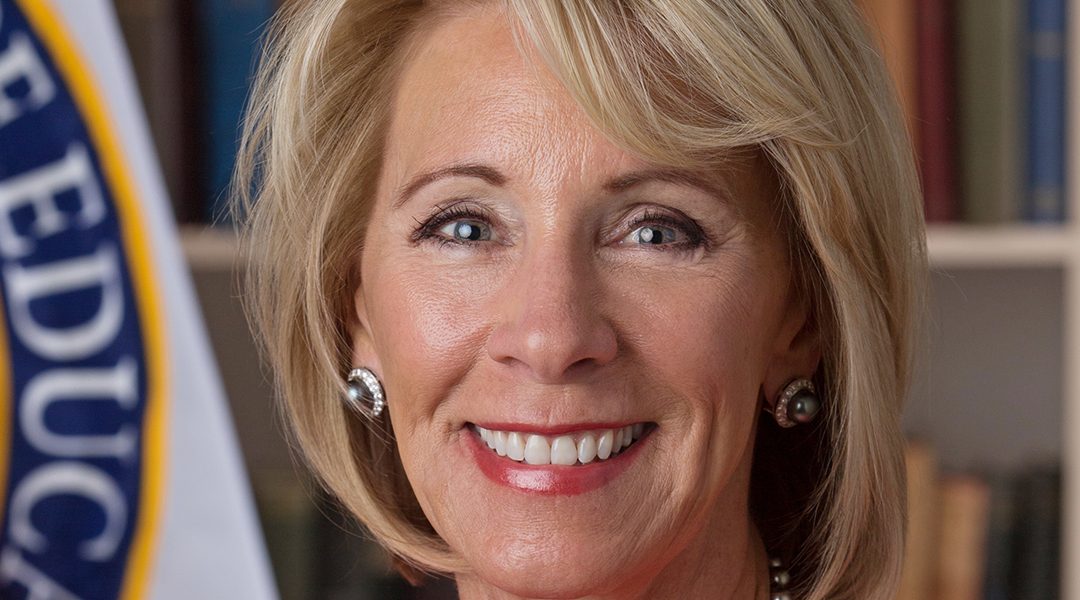
 Jayme S. Ganey, Special to The Informer via DiversityInc.