By voting to enshrine a divisive figure, Congress traded principle for optics, exposing the cost of symbolic gestures over real reform.
By Dr. Frances Murphy Draper
AFRO CEO and Publisher
Last week the U.S. House of Representatives voted overwhelmingly to establish Oct. 14, the birthday of Charlie Kirk, as a National Day of Remembrance. Ninety-five Democrats joined Republicans to pass the resolution. Only 58 voted “no,” while 38 voted “present,” and 22 did not vote at all.
Credit: AP Photos
The senate, when considering their own resolution to honor Kirk with a national day, voted in favor– unanimously.
A horrendous murder, but a troubling choice
Kirk’s murder was horrendous, and no family deserves the pain now borne by his wife and children. Every human life is sacred. Yet it is more than ironic — it is alarming — that Congress chose to elevate to national remembrance a man whose public words often demeaned Black women, belittled immigrants and dismissed civil rights progress. By attaching his name to a national day, Congress risks legitimizing rhetoric that was harmful and divisive.
The irony runs deeper: Oct. 14 is also the birthday of George Floyd, whose murder in 2020 under the knee of a Minneapolis police officer shook the world. Floyd’s death unmasked the deep racism of American policing, ignited global protests and forced a reckoning that this country still resists. His name is etched into memory through marches, vigil and murals. But not through Congress.
From heinous act to political weapon
In the aftermath of Kirk’s death, some have used the tragedy as proof of political persecution, as a weapon in cultural battles and as justification for even harsher rhetoric against immigrants and communities of color. This, too, is dangerous. A heinous act should not become an excuse to spread more hate.
Kirk himself was not a neutral commentator. He once claimed Michelle Obama, Joy Reid, Sheila Jackson Lee and Ketanji Brown Jackson lacked “the brain processing power to be taken seriously” and had to “steal a White person’s slot.” He called the Civil Rights Act of 1964 “a huge mistake” and invoked replacement theory language to stoke fear about immigrants. These are not conservative ideas in the democratic tradition. They are words that wound, words that divide, words that weaken the very democracy he claimed to defend.
To honor Kirk with a national day at all is distortion. His murder must be condemned, but his public record makes him unfit for exaltation. Congress’s action sends a dangerous message: that divisive words can be legitimized even as the lives of the oppressed are ignored.
The courage to vote “No”
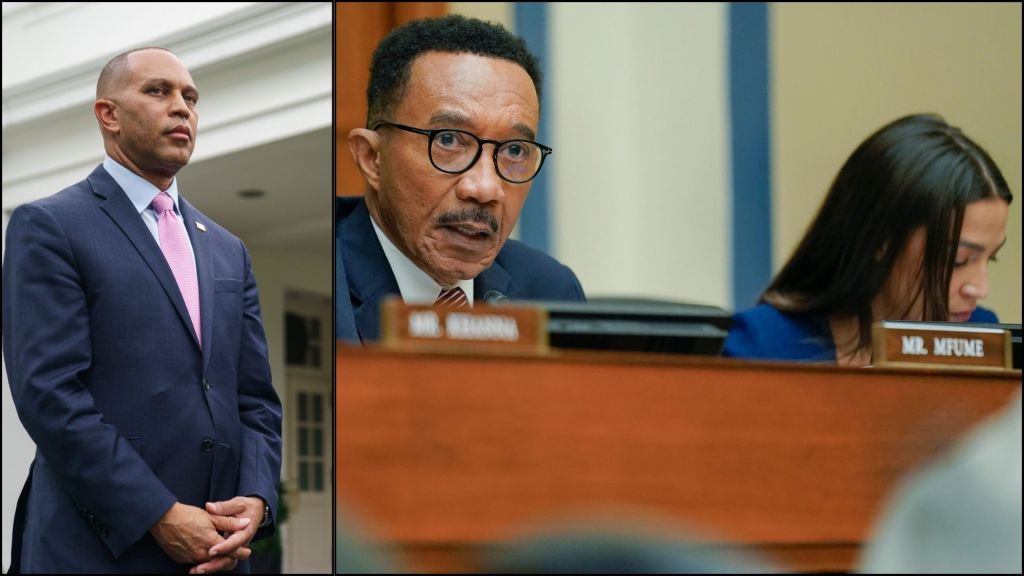
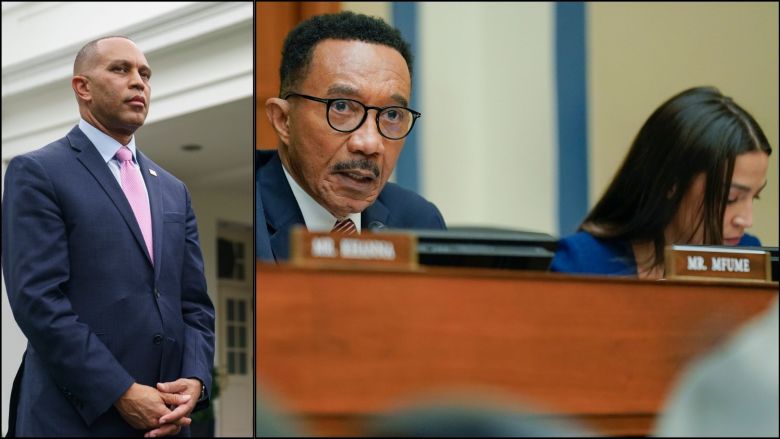
Not everyone went along. Rep. Kweisi Mfume (D-Md.), Rep. Alexandria Ocasio-Cortez (D-N.Y.), and dozens of other Democrats — many from the Congressional Black Caucus and the party’s progressive wing — voted “no,” holding firm to principle. They recognized that condemning violence does not require sanctifying divisive rhetoric. These leaders deserve credit for refusing to let grief be weaponized into political ritual.
House Minority Leader Hakeem Jeffries (D-NY-08) and others, however, justified their support by stressing that the resolution was nonbinding and did not endorse Kirk’s views. Some even called it a Republican “trap” designed to divide Democrats. Yet these explanations raise their own troubling questions: If Kirk’s views are rejected, why vote to elevate his name at all? And why would leaders who have carried the mantle of civil rights choose optics over principle at such a moment? In politics, the votes cast matter more than the disclaimers offered after the fact.
Symbolism fast-tracked, reform delayed
The George Floyd Justice in Policing Act tells a different story. Passed once by the House but stalled in the Senate, it has been reintroduced in 2025 by Rep. Glenn Ivey (D-Md.). Yet at the very moment reform is being revived, federal oversight and accountability tools are being rolled back. The contrast is stark: symbolic gestures are fast-tracked, while substantive change is pushed aside.
If Congress truly wishes to honor lives, it should begin by enacting reforms that protect lives today. Pass tougher gun laws so that fewer families are torn apart by violence. Advance police accountability so that no more unarmed Black men and women die without justice. Protect communities still living with the daily reality of systemic racism. Symbolic gestures may win headlines and offer short-term political cover, but substantive reform saves lives.
What we choose to commemorate is never neutral. It reveals whose stories we elevate and whose we ignore. That is why this vote is so troubling. Why did some Democratic leaders — Black and White — who know the weight of history go along? Their explanations may stress political traps or nonbinding language, but the truth is simpler: leadership failed when it mattered most.
True leadership is measured not by symbolic gestures but by the courage to act. Until that courage is embraced, justice will remain deferred, and remembrance will remain a tool of politics instead of truth.
The post What were they thinking: A betrayal of leadership? appeared first on AFRO American Newspapers.