By D. Kevin McNeir
Special to the AFRO
kmcneir@afro.com
While the inevitability of change serves as an unavoidable aspect of the human condition, 2025 was a year in which those who live or work in Washington, D.C. faced challenges, controversies and surprising conclusions that might best be described as unprecedented.
As the nation’s capital, one would expect many of the changes to occur within the political terrain. However, Washingtonians also experienced a new frontier in the entertainment, sports, business and education terrain.
Below are noteworthy occurrences that impacted D.C.’s African-American community– some for the better, others for the worst.
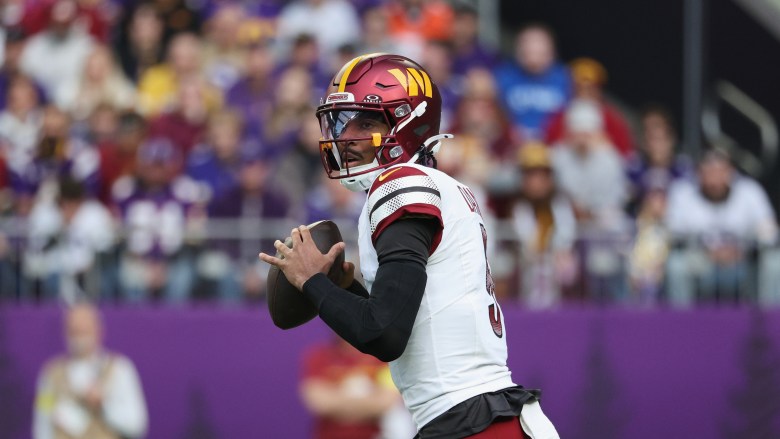
- For the Washington Commanders, what a difference a year makes
After reaching the NFC Championship game during the 2024-2025 season, Commanders fever was running high this year, with fans looking for more last second heroics fueled by last season’s Rookie of the Year quarterback, Jayden Daniels. But the team floundered and failed to make the playoffs, unable to repeat their 12-5 record and ending the current season at 4-11 amidst a bevy of injuries, including several experienced by Daniels. Win or lose, D.C. football fans love their Commanders and hope for better things next year.
- Trayon White defies the odds to regain Ward 8 D.C. Council seat in special election Political rivals Sheila Bunn and Trayon White shook hands and exchanged pleasantries outside of the local favorite Player’s Lounge in Southeast Washington after White emerged victorious, despite previously being ousted from the council by his peers and facing federal charges for bribery and accused of steering government contracts to selected individuals.
White was declared the winner of the City Council Ward 8 special election on July 15 by the Associated Press shortly before 11 p.m.
“I’m elated and encouraged because despite the naysayers, the voters have spoken,” White said, adding, “We sent a message to the D.C. Council that Trayon White is here to stay.”
With 80 percent of the vote in, White garnered 1,987 votes (29.7 percent), followed by fellow Democrats Bunn with 1,627 votes (24.3 percent), Mike Austin (1,584 votes, 23.7 percent) and Salim Adolfo (1,495 votes, 22.3 percent).
Residents must now await the outcome of his trial, which begins around March 23, 2026, after the date was pushed back from an original January 2026 setting.
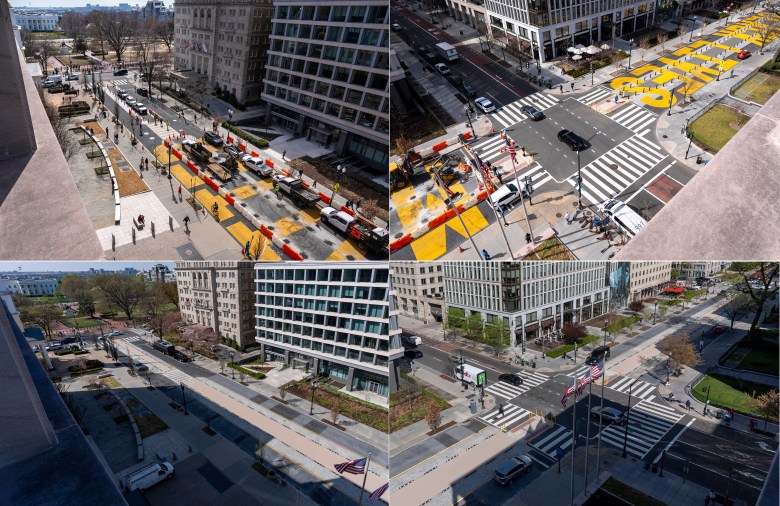
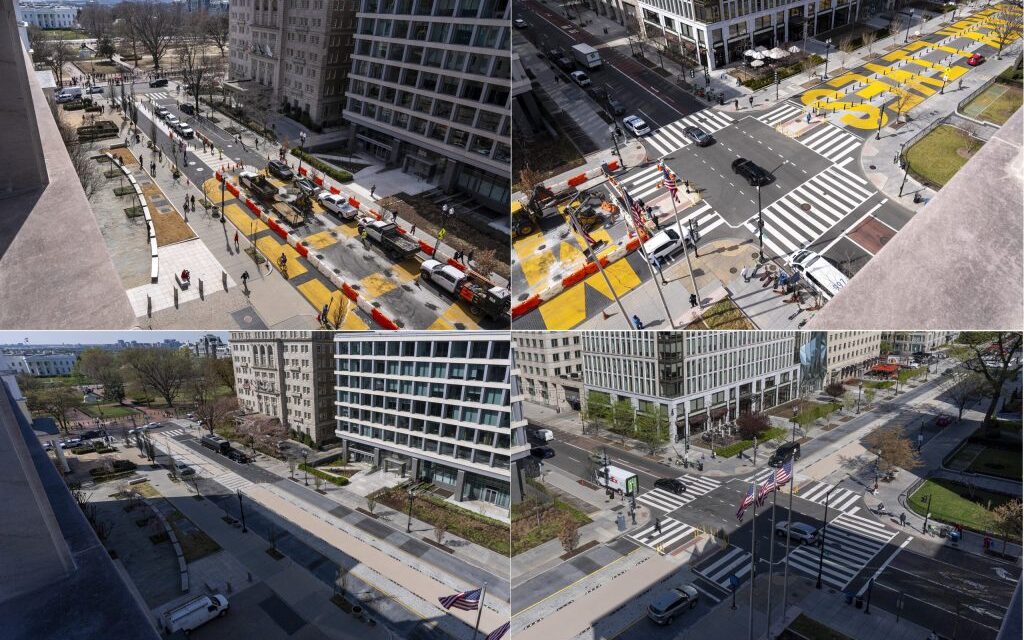
- Pressure from congressional Republicans leads to the elimination of Black Lives Matter Plaza
City crews in Washington, D.C., began removing the “Black Lives Matter” mural and dismantling the plaza on March 10, 2025 – an action that was the result of pressure from Republican members of Congress who vowed to withhold federal transportation funding unless the street mural was removed, and the area renamed “Liberty Plaza.” Mayor Muriel Bowser ordered the removal to avoid numerous financial penalties.
Rep. Andrew Clyde (R-Ga.) introduced legislation in March which called for the removal of the mural and the renaming of the plaza to secure federal funding. The plaza and mural, located on 16th Street, was created in June 2020.
Bowser acknowledged the historical significance of the site but said removal and remodeling of the area had to be done to avoid “disastrous” loss of federal funding for the city.
- Kamala Harris shows that she still has voters’ support after garnering sold-out D.C. crowds on book tour
For only the second time since losing a hard-fought race for the White House in 2024 and bidding adieu to Washington, D.C., former vice president Kamala Harris returned to the capital on Oct. 9, garnering the pomp and circumstance often reserved for popes, potentates and Hollywood’s superstars.
Harris’ return to D.C. and appearance at the Warner Theatre represented the latest leg on a nationwide tour as she discusses her new book, “107 Days.”
Harris may have lost her bid for president last year, but from the long lines of eager ticketholders for two fireside chats, both of which sold out, it remained clear that many Americans still support the former vice president.
“People are in pain and on edge today and they’re fearful of what the next three years will bring,” she said. “I hope my book and the conversations I have with Americans on this tour allow people to see that we are in this fight together.”
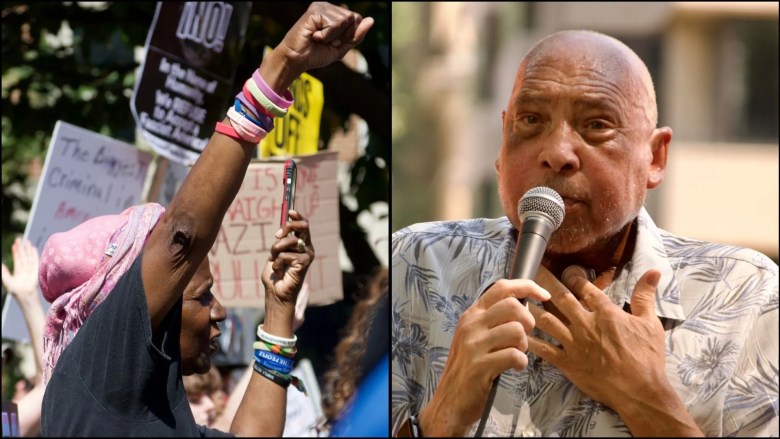
- Washingtonians express mixed but predominantly negative feelings about deployment of the National Guard to the District
In August, the president, based on unsubstantiated data that Washington, D.C. was facing troubling, deadly and unprecedented crime and homicide rates, deployed the National Guard to Washington, D.C. Many viewed it as presidential overreach and a real threat to the city’s limited autonomy.
In addition, many Washingtonians, at least those willing to speak on the record, said the presence of armed troops was frightening and did not make them safer, despite the administration’s claims of tackling “out of control” crime. Local officials, including Mayor Muriel Bowser and the D.C. attorney general, strongly criticized the move as authoritarian and an unlawful use of federal power.
Moreover, residents said they were leery of the Trump administration’s motives and considered the deployment as a political power move intended to target the city because of it being mostly Black and led by Democrats. Though the deployments began in Los Angeles, and then D.C., the president soon sent them to Portland, Ore., Chicago and Memphis, Tenn.
Shown here, Sheila Carson (left) and Rev. Graylan Scott Hagler protesting the federal takeover of Washington, D.C. at an Aug. 16 rally and march to the White House.
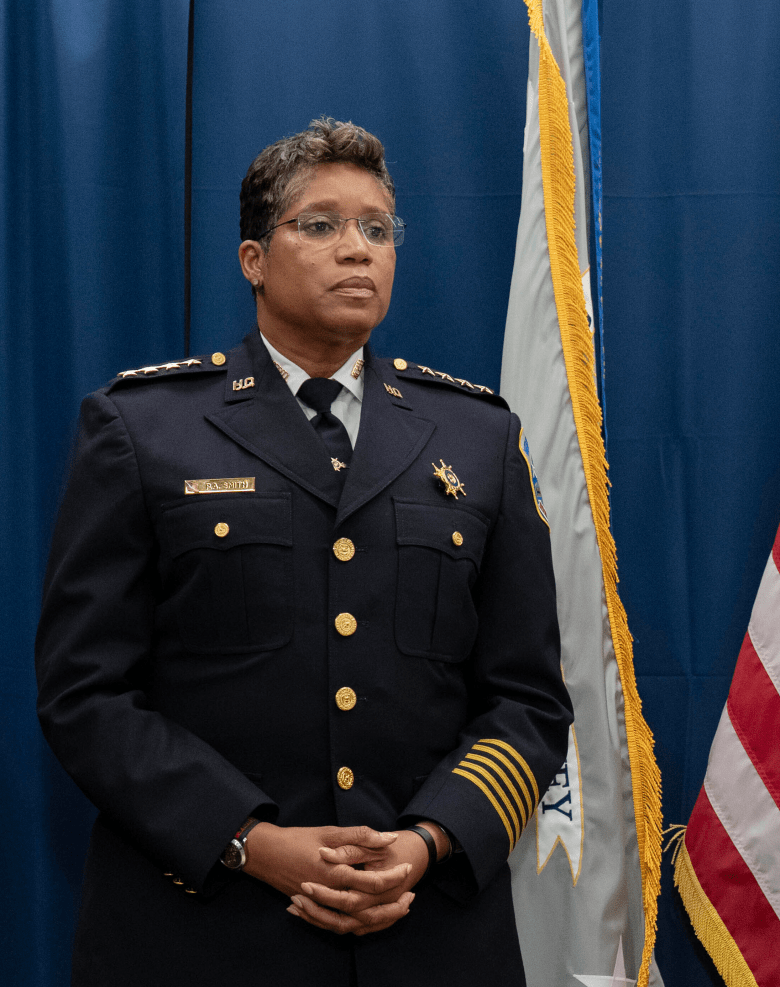
6. Smith gives impassioned farewell speech, challenges ‘haters’ as interim MPD chief steps up
On Dec. 8 Bowser announced that MPD Chief Pamela A. Smith would be stepping down. She released a statement affirming Smith’s efforts and success in reducing the city’s homicide rate. Days later, she was accused by Republicans in Congress of manipulating crime data.
Smith, who joined MPD in 2022 as its chief equity officer, counts as the first African-American woman to serve as police chief – a role in which she served in an acting capacity in July 2023 before being unanimously confirmed by the D.C. Council on Nov. 7, 2023.
Bowser announced Dec. 17 the appointment of Jeffery Carroll as interim police chief in the District.
According to a news release from Bowser’s office, Carroll currently serves as Metropolitan Police Department (MPD) executive assistant chief of specialized operations, a position to which he was appointed by Smith in November 2023.
On Friday, Dec. 19, in a press conference that has since gone viral, Smith addressed colleagues and delivered a pointed message to those who she identified as her “haters,” vehemently denying allegations that she manipulated crime data.
“Never would I compromise my integrity, never would I compromise 28 years in law enforcement for a few folks who couldn’t stand to be held accountable,” Smith said during her 13-minute speech. “And if I had to do it all over again, I’d do it again.”
Smith concluded her remarks with references to her faith and belief in a higher power.
“I’m going to the Bible when I say to my haters, F you,” she said, noting that the “F” stands for another powerful “F-word.”
“I forgive you,” she said.
“The same folks who said in that report that they changed their numbers– and I did not, the report is very clear, I did not direct anyone– you should investigate those folks,” said Smith, before doing her final walk out.
The post Year of unprecedented change leaves Washingtonians in a state of flux appeared first on AFRO American Newspapers.