SPEAKIN’ OUT NEWS
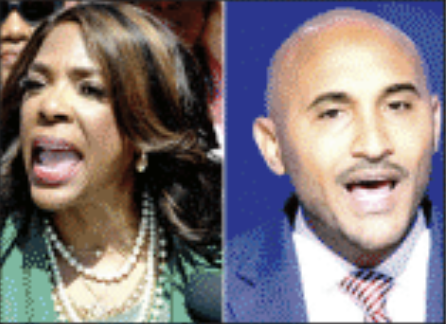
Montgomery, Ala. — Alabama’s two Democratic members of Congress, Rep. Terri Sewell and Rep. Shomari Figures, voted last week against a House resolution honoring the life of conservative activist Charlie Kirk, who was fatally shot Sept. 10 during an event at Utah Valley University.
Kirk, 30, was assassinated by Tyler James Robinson, a 25-year-old registered Republican who, according to voter registration records, was enrolled in the GOP and raised in a conservative household. Investigators say Robinson had grown disillusioned with prominent conservative figures and told friends he believed Kirk was “spreading hate.”
The House measure came days after the U.S. Senate unanimously passed a similar resolution.
ALGOP Chair Condemns the Vote
Alabama Republican Party Chair John Wahl criticized the decision, saying the resolution should have been an opportunity for unity.
“Charlie Kirk loved this country and his generation. He dedicated his career to giving a voice to young conservatives across this nation,” Wahl said in a statement. “Even if someone disagreed with his political views, his tragic death should be an opportunity for all of us to come together in condemning violence and recognizing the value of every human life.”
Sewell Explains Her Opposition
Rep. Sewell released a statement clarifying that she condemned Kirk’s assassination but objected to honoring him because of his record of inflammatory remarks about African Americans.
“If condemning violence was the purpose of today’s resolution, it would have my full support,” Sewell said. “Unfortunately, the resolution House Republicans brought to the floor included divisive language glorifying the viewpoints Charlie Kirk espoused.”
Speakin’ Out News researched and found some specific examples of his views on race.
Kirk once declared, “We made a huge mistake when we passed the Civil Rights Act.” (Wired)
On his podcast, he argued, “Blacks were actually better off in the 1940s … They committed less crimes.” (Media Matters)
He questioned the legitimacy of Black professionals, saying, “If I see a Black pilot, I’m going to be like, ‘Boy, I hope he’s qualified.’” (The Guardian)
Referring to Black women, Kirk said, “If I’m dealing with somebody in customer service who’s a moronic Black woman, I wonder is she there because of her excellence, or is she there because of affirmative action.” (The Observer)
In criticizing affirmative action, Kirk specifically targeted Black female leaders, saying: “If we would have said that Joy Reid and Michelle Obama and Sheila Jackson Lee and Ketanji Brown Jackson were affirmative action picks, we would have been called racists. Now they’re saying it for us … You do not have the brain processing power to otherwise be taken seriously.” (The Observer)
“As a Black woman and the representative of our nation’s civil rights district, I cannot vote to celebrate an ideology that runs counter to the values that so many of our fellow Alabamians fought, bled, and died for,” Sewell said.
Figures Also Speaks Out
Rep. Shomari Figures echoed Sewell’s condemnation of Kirk’s murder but also explained his decision to vote against the House resolution:
“As I did on the day this incredibly unfortunate assassination happened, I strongly condemn the assassination of Charlie Kirk. It was completely unjustifiable and unacceptable, and my prayers are with his family.
House Republicans could have offered the Senate resolution that passed unanimously, but chose not to. But as a Black representative of a historical civil rights district in Alabama, I cannot support a resolution that includes language that honors the ‘leadership and legacy’ of a man whose ideology and words consistently demeaned, disrespected, and ridiculed Black people.
People died in Alabama in pursuit of equal treatment in the form of a Civil Rights Act that he called ‘a mistake.’ He referred to Martin Luther King, Jr. as an awful person and repeatedly insulted the intelligence of Black women, said that Black people were better during Jim Crow, and even used his platform to encourage an ‘amazing patriot’ to bail out of jail the man who broke into the home of a member of Congress and beat her husband nearly to death with a hammer.
While I fully support his right to say all of those things, and condemn his death in the strongest possible terms, what I cannot do is support a resolution honoring that type of legacy of inflammatory, divisive, and harmful rhetoric.”
— Rep. Shomari Figures (ABC 33/40)
Divisions Deepen
While supporters hailed Kirk as a passionate voice for conservative youth, critics highlight a long record of remarks disparaging African Americans and civil rights leaders. His assassination — carried out by a fellow Republican, registered with the party and raised in a conservative household, who later grew disillusioned with his message — has only deepened political fractures, exposing tensions not just between left and right, but within conservative ranks themselves.
In Alabama, the fallout has extended to universities, where professors and staff have faced consequences for comments critical of Kirk in the wake of his killing.
Looking Ahead
Amid the grief and polarization, leaders across the political spectrum continue to call for restraint, dialogue, and a rejection of violence. While views on Charlie Kirk’s legacy remain starkly divided, many agree that his death is a sobering reminder of the need to strengthen democratic values, promote civil discourse, and find common ground. The hope, for both Alabamians and the nation, is that from this tragedy can come a renewed commitment to listen, to disagree without hatred, and to work together toward a more just and peaceful future.