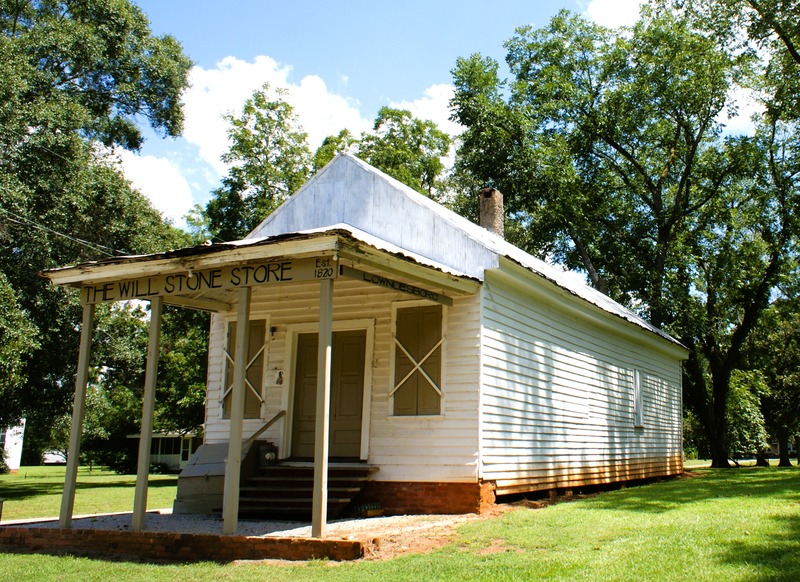
In the quiet town of Lowndesboro, Alabama—home to just 79 residents today—a small wooden building stands as a powerful link to the past. Known as the Will Stone Store, the nearly 200-year-old structure is the only remaining commercial building to survive a devastating fire that tore through the town’s business district on October 9, 1927.
The blaze, reported in The Birmingham News at the time, destroyed nearly every business in the town of 264 people, causing an estimated $7,000 to $10,000 in damage. Only two stores survived; one, DeBardelaben’s, was later demolished. The Will Stone Store remains—and now, it’s being carefully restored.
The building, also known historically as the Old Indian Trading Post, the Stone-Dryer Store, and the Jimmy Crum Store, dates to around 1820—predating the official founding of Lowndesboro. The store was donated to the town in 2011 by Reg and Lila Dryer and is now operated by the Lowndesboro Landmarks Foundation.
“It’s not open full-time, but we use it for community events,” said Lea Graves Ingram, who manages the store. “We hosted a Fourth of July cookout with vendors, decorated for Halloween, and had trick-or-treaters. We also sell local cookbooks, T-shirts, and bumper stickers.”
A historical marker nearby explains that Lowndesboro, situated along the Alabama River, evolved into a bustling township in the 1830s. With cotton warehouses and nearby ports, it attracted visitors and commerce, once boasting hotels, six doctors, two taverns, a Masonic Hall, and a thriving retail scene.
That vibrant era ended abruptly in 1927 when fire destroyed livery stables, stores, and even the post office. According to reports, the town’s postmistress heroically saved the mail before flames consumed the building.
Lowndesboro’s historic district was added to the National Register of Historic Places in 1973. The district includes plantation homes, churches, and a C.M.E. church crowned with the cupola from Alabama’s first capitol in Cahaba.
The town also bears painful memories. On March 25, 1965, civil rights activist Viola Liuzzo was murdered just outside Lowndesboro by the Klan while transporting Black youths from Selma. A monument now honors her sacrifice on U.S. Highway 80.