By Tavon N. Thomasson
Special to the AFRO
tthomasson@afro.com
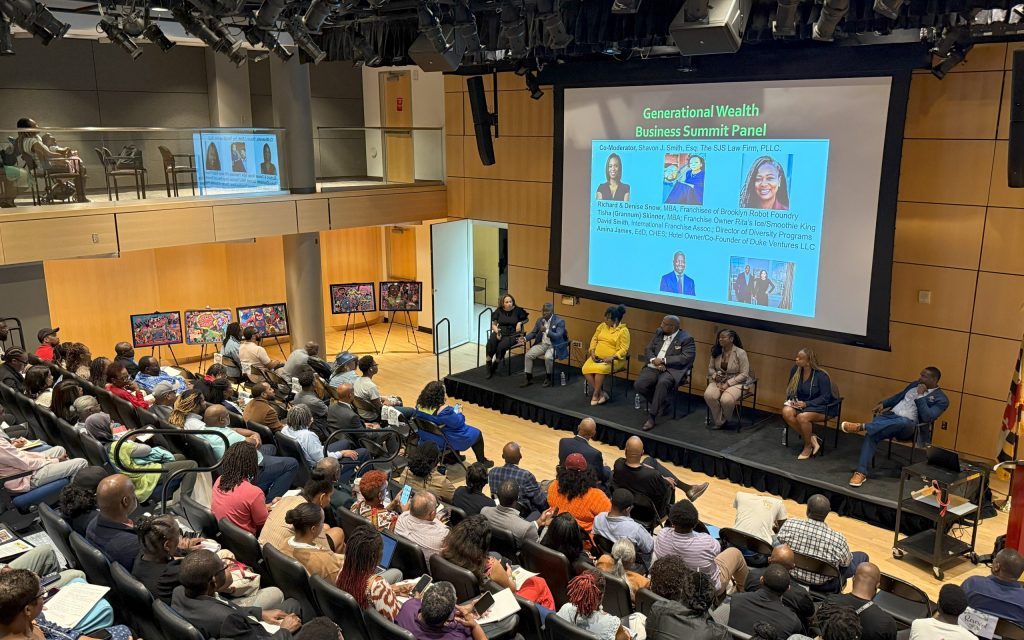
Black entrepreneurs and franchise leaders gathered at the Reginald F. Lewis Museum in Baltimore on Sept. 27 to explore how ownership and franchising can create generational wealth.
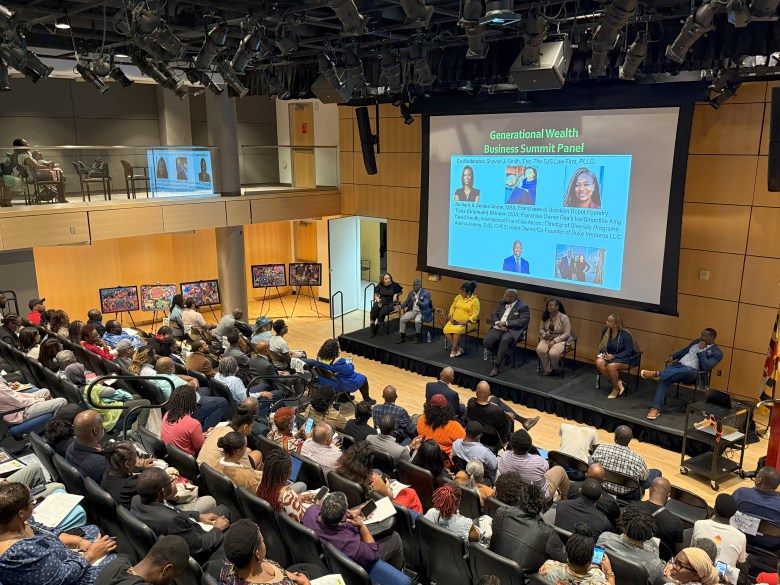
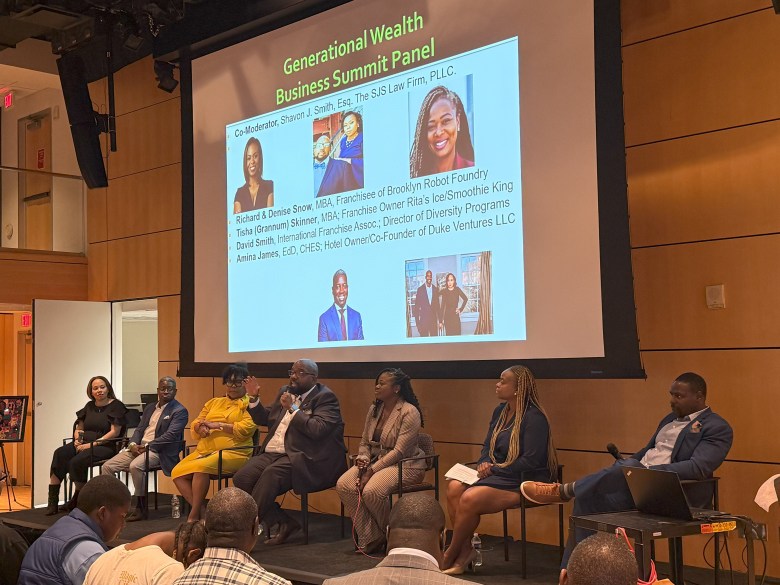
Now in its 11th year, the Generational Wealth Business Summit has grown into a major event under founder Sharif Small. A seven-person panel anchored this year’s gathering, which packed the museum’s theater with attendees eager to learn how buying existing franchises can create wealth.
“Everybody says they want to build wealth, but do they want to put in the time and effort?” said Small. “We had a good audience that really wanted to come and learn.”
Passion meets business
The panel began on a personal note as entrepreneurs explained why they chose the business they now own.
For Tisha Skinner, who owns multiple Smoothie King franchises, the choice was about providing healthier options to her community as much as it was about making money.
“Every smoothie has a purpose. If you have multiple sclerosis, there’s a smoothie for that. If you’re battling cancer, there’s a smoothie for that,” said Skinner during the panel. “I stuck with that franchise because I felt like I was not only growing wealth for my family, but also helping the community that I serve as well.”
She also emphasized the importance of choosing a business you’re passionate about, a point echoed by many of the other panelists.
“Owning a business, there’s good times and there’s a lot of bad times,” said Skinner. “There’s going to be challenging days when you don’t want to wake up, but if you’re passionate about what you do, you’re going to wake up on those days.”
Know before you buy
While passion was seen as essential, the panelists stressed passion alone won’t be able to pay the bills.
“The important part is doing your due diligence,” said David Smith, of the International Franchise Association, during the panel. “Nobody should be rushing you into a franchise agreement. Think about what you’re passionate about, but also what is making money. We’re in business to make money, not to lose money.”
Richard Snow, co-owner of Brooklyn Robot Foundry, said the process of finding the right opportunity begins not with the market, but with an honest look at yourself.
“Get a personal financial statement, see where your net worth is at, see where your liquidity position is at,” said Snow during the panel. “That’s going to dictate what type of brand and how much of something you can actually buy.”
Skinner illustrated her own unconventional way of researching a business.
“I would sit outside their store from the time they opened to the time they closed, and I would count the people going in,” Skinner told the audience. “Then I would go in and buy a smoothie, and I would look at my receipt number — ‘OK, I’m customer number 56, and I spent this much.’”
With those numbers, she could estimate daily sales and decide if the store was worth owning.
For those who didn’t want to go as far as Skinner’s hands-on approach, David Smith suggested using franchise.org, a website that lists more than 1,000 franchise brands. Users are able to filter by industry and investment size to find opportunities that match their budget.
Financing the dream
As the discussion turned to budgets, panelists addressed financing — often the biggest barrier to ownership.
“I went to about 10 banks and they all told me no,” Skinner said during the panel. “I just kept going, and the bank I was afraid wouldn’t give me a loan ended up being the last one I went to out of desperation. They were the ones that gave me my Small Business Administration (SBA) 7(a) loan.”
She admitted the leap into franchising came at a steep cost, investing her retirement savings and relying on her mother, who took out a loan on her house. Still, the franchise model helped ease those conversations. With a proven system and lower failure rate, banks were more willing to finance her.
Amina James, who co-owns hotels in Memphis, Tenn., and Lake Charles, La., said entrepreneurs must also be able to explain returns clearly.
“I had to learn how to explain numbers to my investors, because who’s going to want to give you $150,000 if you can’t explain what their return will be and how you got to that place?” James told the audience.
Teaching ownership early
Later in the panel, Sharif Small argued that building generational wealth begins at home. He urged parents to put children on payroll early.
“Instead of paying them allowances, you pay them wages — and it’s tax deductible to the business,” Small told the audience. “You can put each kid on payroll for up to $15,000, and you don’t have to report any taxes while still claiming them on your tax returns.”
By putting the wages into an Individual Retirement Account (IRA), parents can turn short-term savings into long-term growth that benefits their children well into adulthood.
“When they get to age 18, they’ve got money for college,” Small told the audience. “If they don’t go to college, the first $10,000 they can take out on a down payment on the house.”
Such strategies, he added, help families build businesses that can be passed down.
“This is how you create wealth and other streams of income,” Small told the audience. “You’re in business for yourself, but don’t be in business by yourself. This is how you create a family business.”
Takeaways for attendees
By the end of the summit, attendees described the atmosphere as electric, with many leaving energized by both the ideas and the practical steps they could apply.
I noticed a lot of great energy and a lot of aspirational energy,” said Tracy Akinade, an attendee. “People were soaking up every bit of information and trying to see what applies to their circumstance and to their goals.”
That sense of possibility, she said, was matched by the practical advice offered throughout the day.
“I think what was important was demystifying the fact that this is a viable opportunity for all people,” said Akinade. “Franchising can be that first step to understand the functionality of running a business before even branching off to do something different.”
The post Generational wealth summit highlights franchising as a way forward appeared first on AFRO American Newspapers.