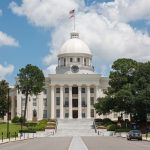
A federal court in Alabama denied Secretary of State Wes Allen’s emergency request for a stay in a congressional redistricting case. (Wikipedia)
” data-large-file=”https://www.birminghamtimes.com/wp-content/uploads/2026/05/Alabama_State_Capitol_Montgomery_West_view_20160713_1-1024×819.jpg” />
The future of Alabama’s primary election now rests in the hands of the U.S. Supreme court.
Friday, a federal court in Alabama denied Secretary of State Wes Allen’s emergency request for a stay in a congressional redistricting case, saying they lack the authority to intervene while the case is appealed to the nation’s highest court.
Allen had argued that the Supreme Court’s decision in Louisiana v. Callais, changed the legal standards governing Section 2 of the Voting Rights Act. Adding that the Callais ruling justified revisiting Alabama’s long-running redistricting litigation.
The judges rejection of Alabama’s emergency request comes as a contentious Special Session wrapped up in Montgomery Friday, where lawmakers passed two bills, creating a special primary election.
That special election would only take place if the U.S. supreme court lifts an injunction that requires Alabama to use a court-drawn map through 2030.
Attorney general Steve Marshal has made an emergency request for the nation’s highest court to reconsider the case.
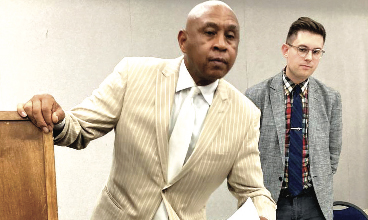
U.W. Clemon, a lawyer in one of the civil rights cases that gave Alabama its current congressional map, says he believes the court will reject Alabama again.
For now, Alabama’s May 19th Primary Election will move forward, under the current congressional map, unless the Supreme Court intervenes.
“I encourage everybody, particularly those who have been denied the vote in the past. I encourage all of you to go out on May the 19th and exercise your God-given and constitutionally given right to vote,” said Clemon.
Attorneys for plaintiffs who sued to create the current maps have until 5 p.m. Monday to submit responses to associate justice Clarence Thomas. There is no indication of when Thomas or the full court might rule.