SPEAKIN’ OUT NEWS
The federal government may have reopened last week, but a last-minute provision inside the shutdown-ending funding bill has sent shockwaves through Alabama’s already struggling hemp market. Authored by U.S. Sen. Mitch McConnell, R-Ky., the amendment imposes an effective national ban on nearly all hemp-derived THC products by introducing an ultra-restrictive 0.4 milligrams of total THC per container limit.
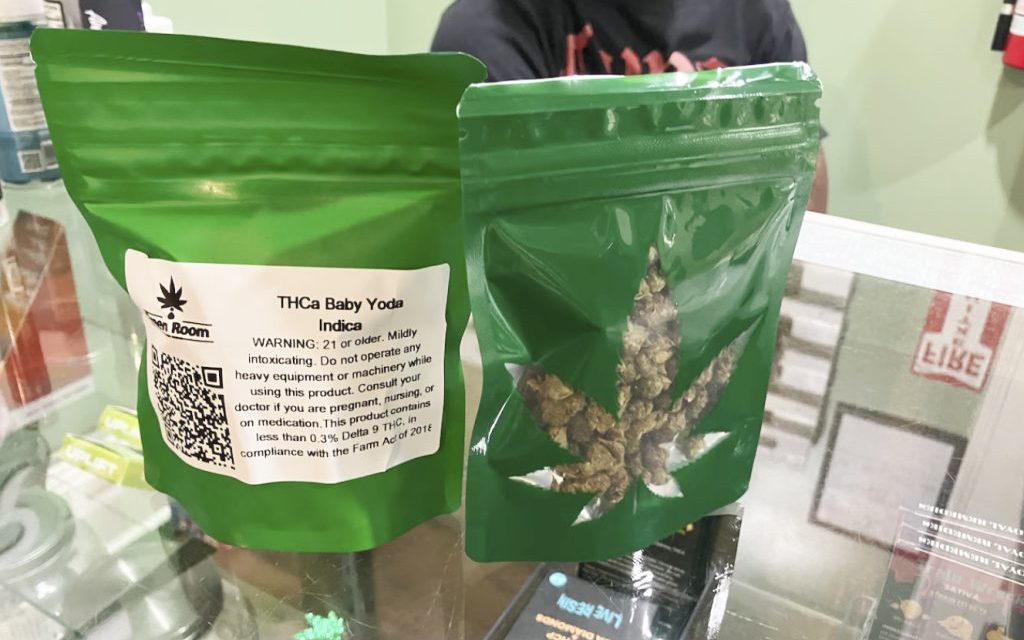
The move seeks to close a “loophole” in the 2018 Farm Bill that enabled the sale of intoxicating hemp products, including Delta-8 and Delta-9 THC. A Senate Appropriations summary says the provision blocks “unregulated sale” of these products in gas stations, corner stores, and online spaces, while preserving non-intoxicating CBD and industrial hemp.
The impact, hemp advocates warn, could be catastrophic—eliminating 95 percent of products now on the market and destabilizing an industry valued between $24 and $28 billion.
The Alabama Cannabis Coalition (ACC), which has pushed back against Alabama’s new hemp law HB 445, condemned the federal action. “The Alabama Cannabis Coalition will not stand by while Congress threatens farmers, businesses, and the safe access that Alabamians depend on,” ACC leadership said. “The people deserve transparency—not backdoor prohibition.”
Manufacturers argue the answer isn’t prohibition but regulation. “What we really need is clear regulation, not prohibition,” said Chris Karazin, CEO of Carolindica, adding that a ban will only push products “to the illegal market.”
There is one temporary reprieve: the ban includes a 365-day implementation delay, giving industry groups time to pressure Congress into replacing the ban with a regulatory framework. The U.S. Hemp Roundtable says it intends to do exactly that.
In Alabama, the consequences are expected to be especially severe. HB 445—signed by Gov. Kay Ivey in May—banned smokable hemp, restricted high-potency gummies, and placed retailers under Alabama Alcoholic Beverage Control Board oversight. Under the law, any more restrictive federal regulations automatically supersede state rules.
“HB 445 already cut us off at the knees… there are over 330,000 jobs at stake here,” said ACC communications director Jennifer Boozer Stewart.
Advocates argue the federal ban was driven in part by lobbying from alcohol industry groups, who view hemp beverages as competition.
For now, the future of hemp in Alabama—and nationwide—depends on whether Congress reconsiders before the one-year deadline runs out.